IDF Chief Warns Northern Front Ceasefire Remains Unstable Amid Ongoing Tensions with Hezbollah
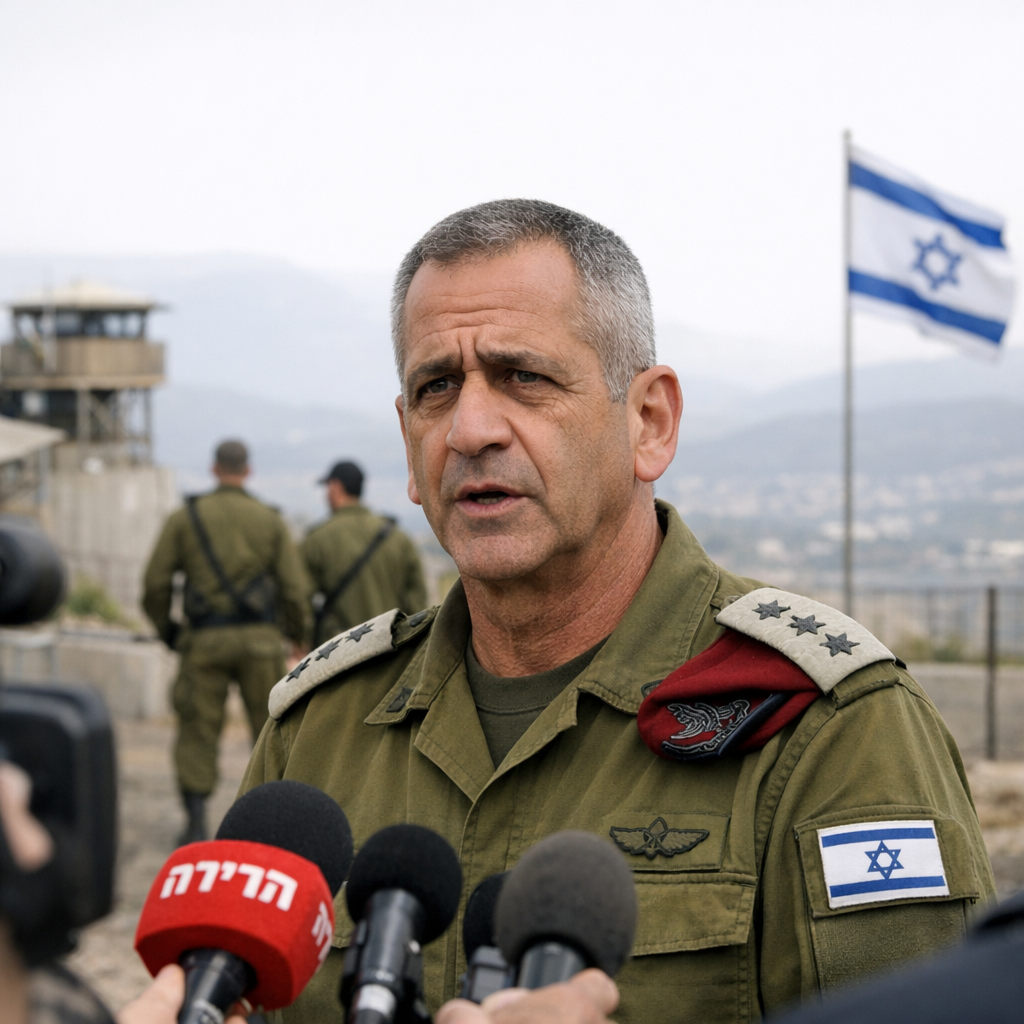
The Israeli military’s top commander warned that the current ceasefire with Hezbollah remains tenuous during a recent visit to troops stationed along the northern border, underscoring ongoing concerns about the durability of calm in southern Lebanon. The remarks, reported in the i24NEWS article “IDF chief visits troops in southern Lebanon, warns ceasefire is fragile”, reflect the Israeli defense establishment’s cautious posture despite a relative lull in hostilities.
According to the report, Israel Defense Forces Chief of Staff Lt. Gen. Herzi Halevi traveled to the front lines in southern Lebanon, where he met with commanders and soldiers tasked with maintaining security in a region that has seen repeated escalations since the outbreak of the Gaza war. Halevi emphasized that while active fighting has subsided, the operational environment remains volatile and liable to deteriorate quickly.
The visit appears intended both to boost troop morale and to reinforce preparedness amid uncertainty. Israeli forces have been on heightened alert along the northern frontier for months, following sustained cross-border fire exchanges with Hezbollah. Although recent understandings have reduced the intensity of clashes, military officials have consistently signaled that the risk of renewed confrontation persists.
Halevi’s comments reflect broader Israeli concerns that Hezbollah retains significant military capabilities and continues to operate close to the border, in violation of long-standing international arrangements designed to keep the area demilitarized. A key framework frequently cited is UN Security Council Resolution 1701, which calls for the disarmament of armed groups in southern Lebanon. Israeli officials have repeatedly called for stricter enforcement of those agreements, arguing that the current situation leaves northern communities exposed to potential attack.
The report indicates that Halevi stressed the importance of readiness and discipline among troops, noting that maintaining deterrence depends not only on strategic positioning but also on the ability to respond rapidly to any change in circumstances. His remarks suggest that Israeli leadership is unwilling to interpret the ceasefire as a lasting resolution, viewing it instead as a temporary pause that could break down under shifting political or military pressures.
The fragile state of the ceasefire reflects a broader regional dynamic in which local de-escalation remains tied to wider conflicts and negotiations. While diplomatic channels—often involving actors such as the United Nations Interim Force in Lebanon (UNIFIL)—have helped contain violence for now, the underlying disputes between Israel and Hezbollah—and their respective backers—remain unresolved.
In this context, Halevi’s frontline visit underscores a dual message: that Israel seeks to avoid renewed large-scale conflict, but is preparing for the possibility that it may not be able to. The balance between restraint and readiness continues to define the situation along Israel’s northern border, where even periods of relative quiet are marked by persistent strategic tension.