Bessent Outlines US Red Lines in Iran Talks
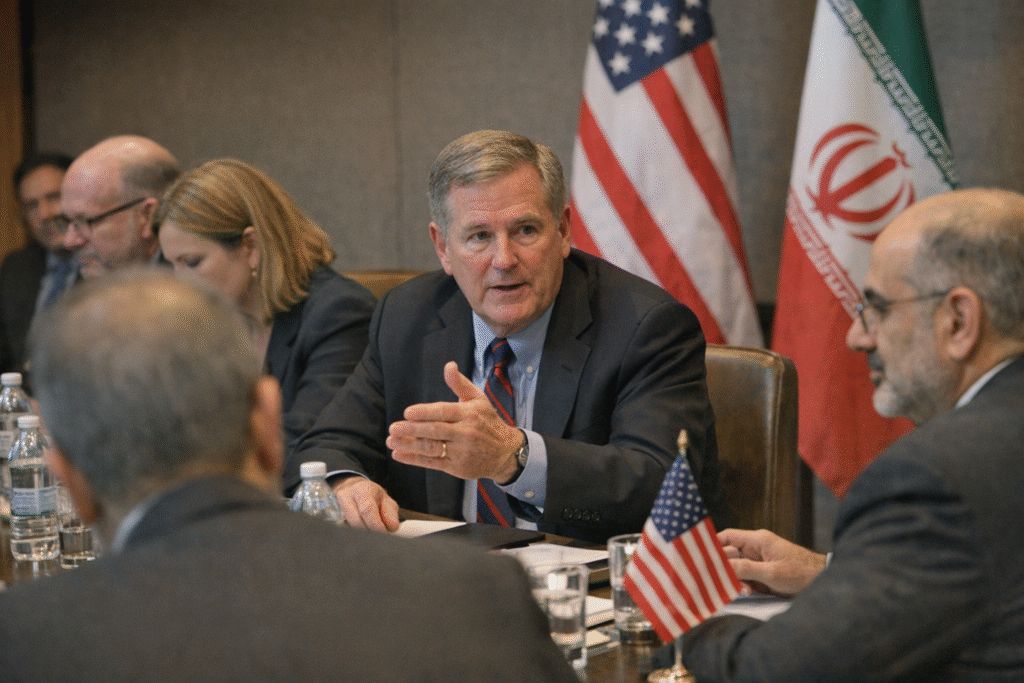
In remarks highlighted in the Wall Street Journal video “Secretary Bessent on Iran Deal: There Are Several Red Lines,” Treasury Secretary Scott Bessent outlined the Biden administration’s negotiating posture on Iran, signaling both a willingness to pursue renewed diplomatic engagement and a firm insistence on core U.S. conditions.
Speaking in the interview, Bessent emphasized that any prospective agreement with Tehran would need to address key areas of concern that have long defined U.S. policy toward Iran’s nuclear ambitions. He pointed to limitations on uranium enrichment, transparency in international inspections, and constraints on Iran’s broader regional activities as among the issues Washington considers non-negotiable. While he did not disclose specific tactical details, his comments suggested that the administration views these “red lines” as essential to any durable agreement.
The remarks come amid renewed international focus on Iran’s nuclear program, particularly as prior agreements have frayed and diplomatic channels have faced intermittent setbacks. Bessent indicated that economic tools, including sanctions, remain central to U.S. leverage. He framed these measures not simply as punitive, but as part of a broader strategy to bring Iran back to meaningful negotiations under terms acceptable to the United States and its allies.
At the same time, Bessent acknowledged the complexity of the diplomatic landscape. He noted that progress would require coordination with European partners as well as careful management of geopolitical tensions across the Middle East. His comments reflected an awareness that any new agreement would need to balance enforcement with incentives, an approach that has historically proven difficult in negotiations with Tehran.
The Treasury Secretary also underscored the financial dimensions of the standoff, pointing to ongoing efforts to restrict Iran’s access to global markets and limit revenue streams tied to its energy exports. These economic pressures, he suggested, are intended to shape Iran’s decision-making calculus without foreclosing the possibility of compromise.
While Bessent did not predict a timeline for potential agreement, his remarks conveyed cautious realism. He reiterated that dialogue remains preferable to escalation, but only if it produces verifiable and enforceable outcomes. As the Wall Street Journal video illustrates, the administration is attempting to navigate a narrow path—keeping diplomatic options open while maintaining clear boundaries on what it is prepared to accept.
The interview underscores the enduring challenge of Iran policy for U.S. officials: reconciling the urgency of nuclear nonproliferation with the limits of diplomatic leverage. Bessent’s articulation of “red lines” offers insight into how the administration is approaching that balance, even as the prospects for a comprehensive agreement remain uncertain.