Ferrari’s $640K EV Sparks Design Identity Clash
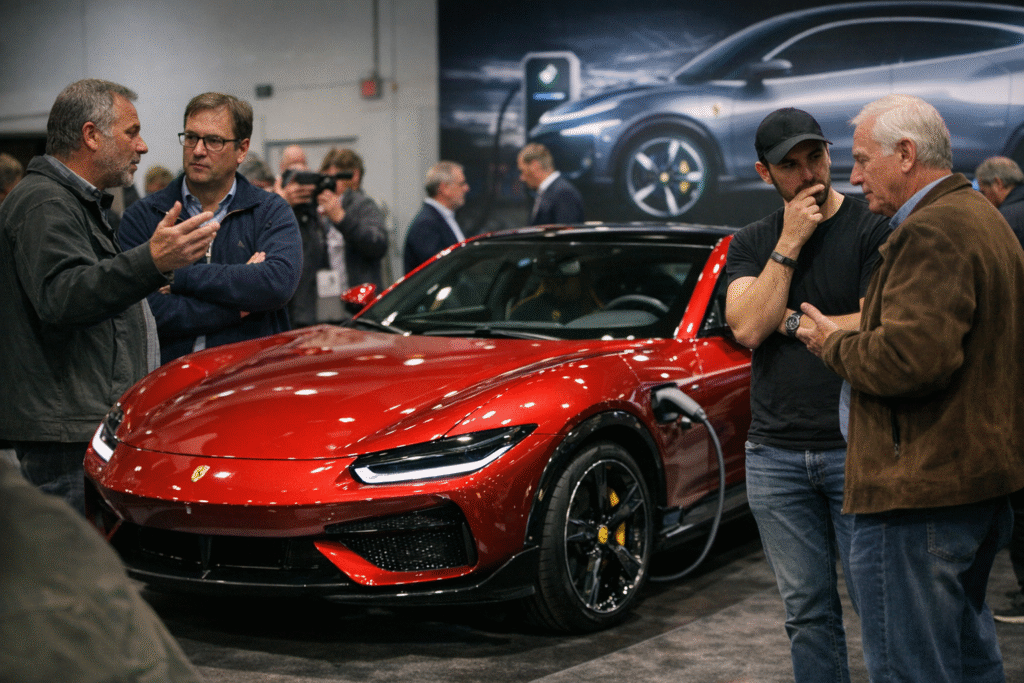
Ferrari’s unveiling of its first fully electric vehicle, reportedly priced at around $640,000, has ignited a wave of debate that extends well beyond performance metrics and into questions of identity, aesthetics, and brand legacy. The reaction, detailed in The Wall Street Journal article “Launch of Ferrari’s $640,000 EV Erupts Into a Storm About Its Looks,” underscores the delicate balance the Italian automaker must strike as it enters an era that challenges its historical DNA.
The controversy centers largely on the car’s design. Early images and descriptions have prompted polarized reactions among enthusiasts and critics alike, some of whom argue that the vehicle departs too sharply from Ferrari’s established visual language. For a brand whose reputation has long been tied to sculptural beauty as much as speed, the perceived deviation has become a focal point of scrutiny. Critics suggest that elements of the design appear constrained by aerodynamics and battery packaging requirements, producing proportions that diverge from the elongated, combustion-engine silhouettes traditionally associated with the marque.
At the same time, others defend the design as a necessary evolution. As Ferrari pushes into electrification, engineers and designers face structural realities that reshape everything from weight distribution to cooling needs. Supporters argue that the new model reflects a forward-looking philosophy, one that embraces technological change while attempting to preserve a sense of visual drama. They contend that expecting a fully electric Ferrari to look indistinguishable from its gasoline predecessors ignores the fundamental differences between the two platforms.
The debate highlights a broader tension confronting luxury performance brands. Electrification is no longer optional, driven by regulatory pressures and shifting market expectations, but it disrupts the sensory and emotional experience that has long defined high-end sports cars. Ferrari, in particular, has built its mystique around the sound and feel of its engines, qualities that do not translate directly into the electric era. As a result, design becomes an even more critical vehicle for conveying identity.
The Wall Street Journal report suggests that Ferrari may be using this moment to test how far it can stretch its brand without breaking it. By introducing a high-priced, limited-production EV, the company can gauge reaction among its most dedicated customers while refining its approach. This strategy mirrors how Ferrari has historically managed innovation, often debuting new technologies in exclusive, high-end models before integrating lessons learned into its broader lineup.
Yet the intensity of the reaction underscores the risks involved. Ferrari’s clientele is both loyal and exacting, and missteps can reverberate quickly in a community that closely watches every design cue and engineering decision. The criticism of the EV’s appearance suggests that for some buyers, emotional resonance remains inseparable from the brand’s traditional aesthetics.
Ultimately, the controversy may be less about a single vehicle and more about what it represents. Ferrari’s move into electrification is a signal that even the most tradition-bound automakers must adapt to a changing landscape. Whether the company can carry its distinctive identity into that future without alienating its core audience remains an open question, one that will likely shape not just the reception of this model, but the trajectory of the brand in the years ahead.