Trump Ramps Up Pressure on Cuba Amid Policy Shift
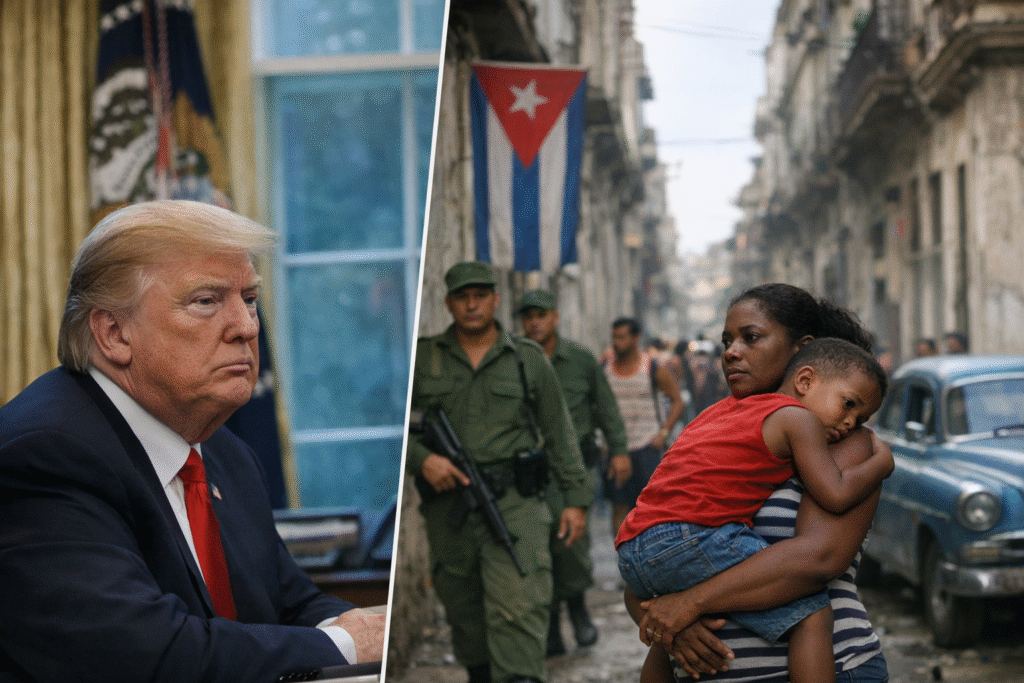
The Trump administration intensified its pressure campaign against Cuba, tightening economic restrictions and signaling a more confrontational posture toward the island’s government, according to a segment titled “WSJ Opinion: The Trump Administration Turns Up the Heat on Cuba” published by The Wall Street Journal.
The policy shift marked a sharp departure from the prior U.S. approach of engagement, reimposing limits on travel, curbing remittances, and expanding sanctions aimed at restricting Havana’s access to hard currency. Officials framed the measures as a response to what they described as continued repression by Cuban authorities and their support for allied governments in the region, particularly Venezuela.
Advocates of the tougher stance argued that economic pressure was necessary to push for political reforms and to counter Cuba’s regional influence. They contended that easing restrictions in earlier years had failed to produce meaningful democratic change, instead providing the government with additional resources without significant concessions on human rights or political freedoms.
Critics, however, warned that the renewed restrictions risked exacerbating economic hardship for ordinary Cubans while doing little to alter the behavior of the country’s leadership. They also raised concerns about the impact on Cuban-American families, particularly limitations on remittances and travel that had previously served as financial lifelines.
The measures formed part of a broader strategy to reshape U.S. policy in the Western Hemisphere, emphasizing pressure on governments seen as authoritarian or destabilizing. Analysts note that Cuba’s economic vulnerabilities, including reliance on tourism and remittance flows, made it particularly sensitive to such actions, though past experience suggests that external pressure alone has rarely driven rapid political change on the island.
The Wall Street Journal segment presented the policy escalation as a deliberate effort to reverse earlier détente and reassert leverage, reflecting longstanding debates in Washington over how best to influence Cuba’s political future. As the strategy unfolded, its effectiveness remained a subject of ongoing scrutiny among policymakers, regional experts, and affected communities.