Navy Pushes Autonomous Tech for Future Fleet
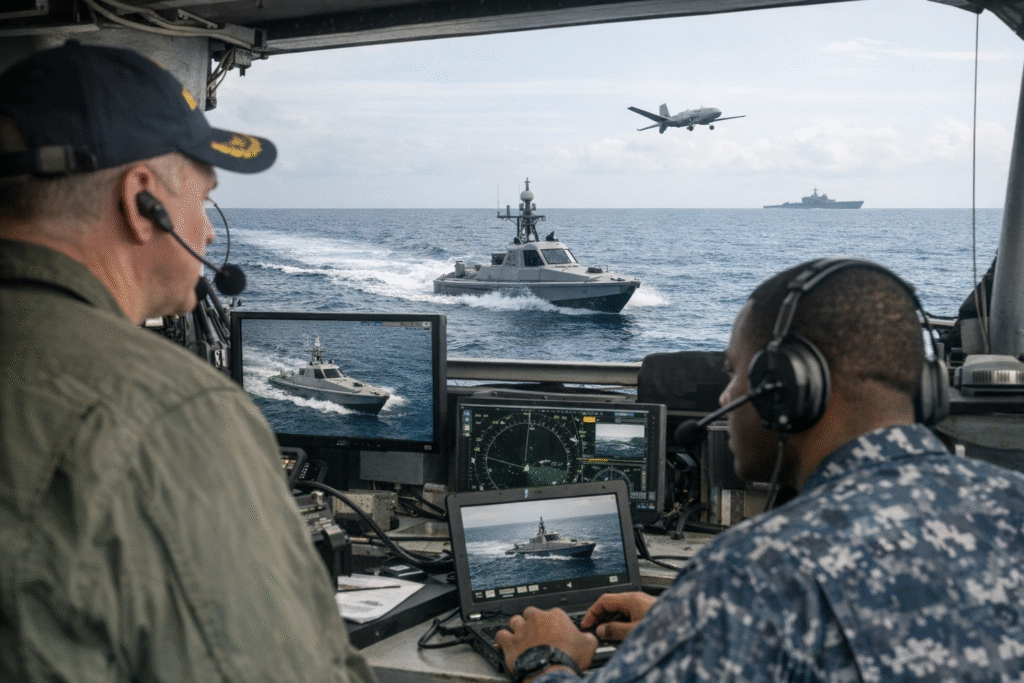
The U.S. Navy is accelerating efforts to integrate greater autonomy and advanced technologies into its future fleet, reflecting a strategic shift toward distributed and resilient maritime operations. The initiative, highlighted in Defense News’ video report “Navy looks to expand tech, autonomy for future fleet | Defense News Weekly (full episode 5.5.26)” published by Defense News, underscores the service’s growing emphasis on unmanned systems, artificial intelligence, and networked warfare to counter emerging threats.
Navy officials and analysts interviewed in the report point to a changing security environment in which peer competitors are rapidly modernizing their naval forces, investing heavily in long-range weapons, cyber capabilities, and autonomous platforms. In response, the Navy is pursuing a more flexible force structure that blends traditional crewed warships with a growing number of unmanned surface and undersea vehicles. These systems are intended to extend the fleet’s reach, complicate adversary targeting, and operate in high-risk areas without putting sailors directly in harm’s way.
A central component of this transformation is the integration of autonomy into routine naval operations. Rather than relying solely on remotely operated systems, the Navy is working toward platforms capable of making limited decisions independently, guided by advanced algorithms and supported by secure communications networks. This shift is expected to reduce the cognitive burden on human operators while enabling faster responses in contested environments where communications may be degraded or denied.
However, the move toward greater autonomy raises both technical and institutional challenges. Ensuring reliability in complex maritime conditions remains a significant hurdle, as does building trust among commanders and operators who must rely on machines to perform critical tasks. Cybersecurity is another persistent concern, with autonomous platforms potentially vulnerable to interference or exploitation if not properly safeguarded.
The Defense News report also highlights ongoing experimentation and testing efforts aimed at refining these technologies. Exercises involving unmanned vessels and integrated networks are helping the Navy evaluate how autonomous systems can be deployed alongside traditional ships. These trials are intended not only to validate technical performance but also to inform new operational concepts and doctrines suited to a more distributed force.
Budget constraints and acquisition processes continue to shape the pace of development. While there is broad support within the Pentagon for expanding unmanned capabilities, officials must balance investment in emerging technologies with the maintenance and modernization of existing platforms. The challenge lies in avoiding a gap between ambition and execution, particularly as timelines for deploying fully autonomous systems remain uncertain.
Despite these obstacles, the Navy’s leadership appears committed to advancing autonomy as a cornerstone of future fleet design. As highlighted in Defense News’ coverage, the service views these efforts as essential to maintaining a strategic edge in an increasingly contested maritime domain. The coming years are likely to serve as a critical testing ground for whether these technologies can transition from experimental concepts to reliable operational assets.