Sewage Crisis Strains California Border Coast
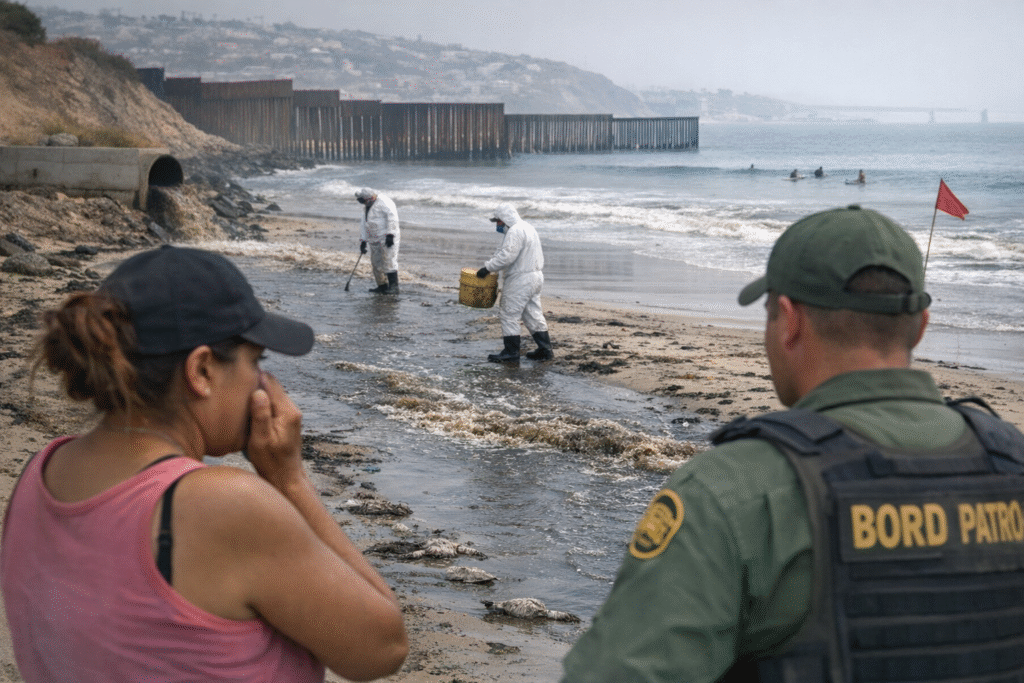
A growing environmental and public health crisis along the U.S.–Mexico border is drawing renewed scrutiny, as coastal communities in Southern California grapple with the consequences of persistent sewage contamination flowing north from Mexico. The issue, highlighted in The Wall Street Journal’s article “Sewage From Mexico Is Fouling California’s Coast” on WSJ.com, underscores the mounting strain on local infrastructure, ecosystems, and cross-border cooperation.
In Coronado, a coastal city near San Diego known for its beaches and military presence, residents and officials have become increasingly vocal about the impacts of untreated wastewater entering the Pacific Ocean via the Tijuana River. The contamination, often caused by overwhelmed or failing sewage systems in Tijuana, has led to frequent beach closures, foul odors, and concerns about waterborne illnesses. Local economies dependent on tourism and recreation have also felt the effects, as advisories deter visitors and disrupt business.
Environmental advocates argue that the problem has been decades in the making, exacerbated by rapid population growth in northern Mexico and insufficient investment in wastewater treatment infrastructure. During heavy rainfall, the situation often worsens, as stormwater mixes with raw sewage and flows across the border. In dry weather, infrastructure breakdowns and illegal dumping can still send significant volumes of contamination northward.
Public health officials in San Diego County have repeatedly warned about elevated levels of bacteria in coastal waters, sometimes forcing extended beach closures. Residents have reported respiratory issues and other symptoms believed to be linked to airborne pathogens carried inland from polluted waterways. Military training operations in the region have also been affected, raising additional concerns at the federal level.
Efforts to address the crisis have involved multiple layers of government on both sides of the border, but progress has been uneven. U.S. agencies, including the Environmental Protection Agency and the International Boundary and Water Commission, have allocated funding for upgrades to treatment plants and diversion projects. Mexican authorities have also committed to infrastructure improvements, though implementation has faced financial and logistical challenges.
Critics contend that existing measures fall short of what is needed to stem the flow of contamination. They point to bureaucratic delays, insufficient coordination, and the sheer scale of the problem as barriers to meaningful progress. Some local leaders have called for more aggressive federal intervention and binding bilateral agreements to ensure accountability and sustained investment.
The situation has also taken on broader symbolic weight, reflecting the complexities of environmental governance in a shared border region. While pollution does not recognize national boundaries, responsibility for addressing it often becomes entangled in political and diplomatic considerations.
As pressure mounts, policymakers face the challenge of balancing immediate mitigation efforts with long-term solutions. For communities like Coronado, the stakes are both practical and existential: safeguarding public health, preserving coastal ecosystems, and maintaining the economic vitality of a region closely tied to its natural environment.
The issue, as detailed by The Wall Street Journal, illustrates how localized environmental failures can evolve into international concerns, demanding coordinated responses that match the scale and urgency of the problem.