USS Gerald R. Ford Deploys to Tense Red Sea
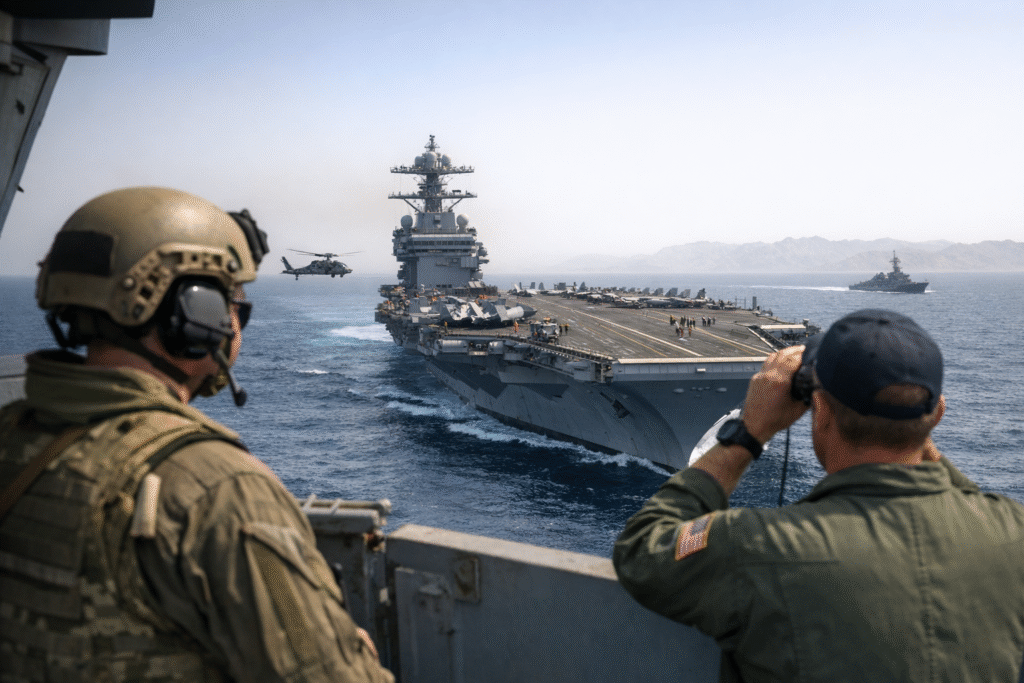
The U.S. Navy’s newest aircraft carrier, USS Gerald R. Ford, has begun operations in the Red Sea, marking a significant escalation in American naval presence in a region already strained by persistent instability and threats to maritime security. The deployment, first reported in the article “USS Gerald R. Ford Now Operating in the Red Sea” by USNI News, underscores Washington’s intent to reinforce deterrence and protect key shipping routes amid ongoing tensions.
According to the report, the Ford Carrier Strike Group’s arrival expands the U.S. military footprint in waters that have become increasingly contested due to attacks on commercial vessels and the broader fallout from regional conflicts. The Red Sea serves as a critical artery for global trade, linking the Mediterranean to the Indian Ocean through the Suez Canal, and disruptions there have had cascading effects on international shipping and energy markets.
The USS Gerald R. Ford, the lead ship of its class, represents a significant technological advancement in naval aviation and power projection. Equipped with an advanced electromagnetic aircraft launch system and enhanced sortie generation capabilities, the carrier is designed to deploy air power more efficiently than its predecessors. Its presence in the Red Sea signals not just a numerical increase in U.S. forces, but a qualitative one as well.
U.S. defense officials have framed the deployment as part of a broader effort to safeguard freedom of navigation and reassure allies in the region. In recent months, commercial and military vessels have faced threats from missile and drone attacks, particularly linked to ongoing hostilities involving Iran-backed groups. The presence of a carrier strike group provides a layered defense capability, combining air, surface, and subsurface assets.
The move also comes at a time when the Pentagon has been balancing demands across multiple theaters, including Europe and the Indo-Pacific. Sending one of its most advanced carriers to the Red Sea reflects an assessment that the risks to maritime commerce and regional stability warrant a substantial show of force.
While officials emphasize defensive objectives, the deployment carries broader strategic implications. It illustrates the continued centrality of naval power in U.S. foreign policy and highlights the challenges of managing simultaneous crises in different parts of the world. The Ford’s operations will likely be closely watched by both allies and adversaries as a measure of American resolve and capability.
As detailed in USNI News’ coverage, the carrier’s activities are expected to include flight operations, joint exercises, and potential support for ongoing missions aimed at deterring attacks on shipping. The duration of its stay in the Red Sea remains uncertain, but its presence alone is a clear signal of heightened U.S. engagement in one of the world’s most strategically vital waterways.