Gunfire Hits Ships Near Hormuz Amid Tensions
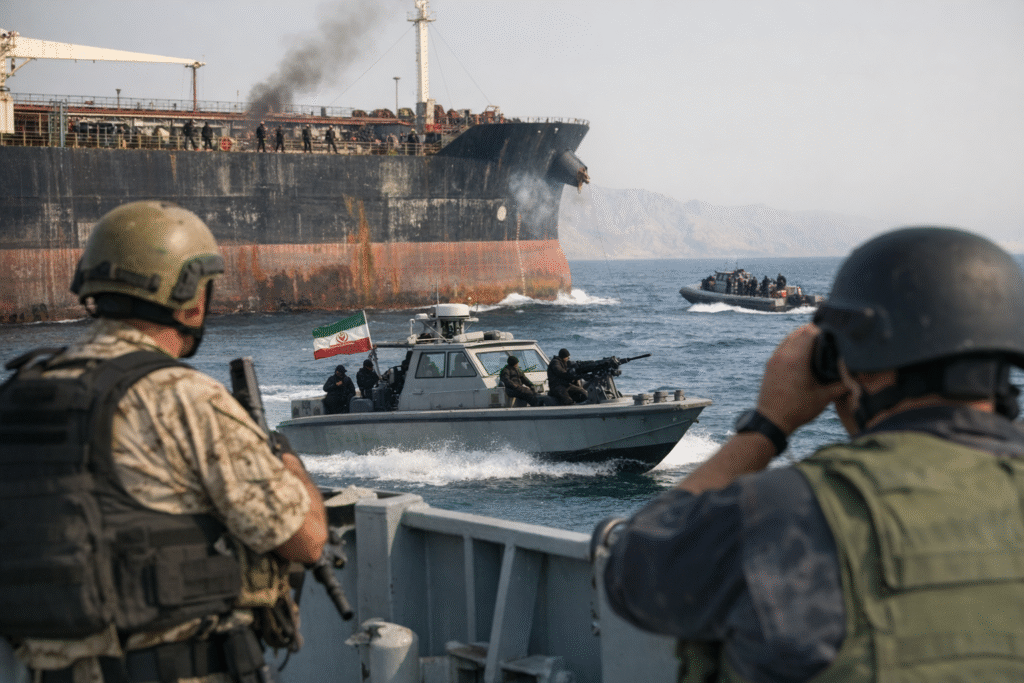
Commercial vessels in and around the Strait of Hormuz have reported coming under gunfire amid rising regional tensions, according to a report published by Defense News titled “Vessels report being hit by gunfire as Iran says Strait of Hormuz shut again.” The developments have renewed concerns about the security of one of the world’s most critical maritime chokepoints and the potential for broader escalation in the Persian Gulf.
Shipping operators and maritime security firms cited in the report said multiple vessels transiting near the strait experienced small arms fire, though the extent of damage and any casualties remained unclear. The incidents coincide with Iranian claims that the Strait of Hormuz has once again been closed, a move that would have immediate implications for global energy markets given that a substantial share of the world’s oil exports passes through the narrow waterway.
U.S. defense officials, speaking in the Defense News report, indicated they are closely monitoring the situation but stopped short of confirming a full closure of the strait. The Pentagon has previously emphasized its commitment to ensuring freedom of navigation in the region, where American naval forces maintain a regular presence. However, any sustained disruption could test the capacity of international maritime coalitions tasked with protecting commercial shipping.
The reported attacks appear to fit into a pattern of heightened confrontation between Iran and Western-backed maritime forces. While Tehran has periodically threatened to block the strait in response to economic sanctions or regional military activity, actual attempts to restrict passage have historically been limited and short-lived due to the strategic risks involved.
Energy analysts are watching closely, as even the perception of instability in the Strait of Hormuz can drive volatility in oil prices. Insurance costs for shipping through the region may also rise, adding pressure to global supply chains already strained by geopolitical uncertainty.
The Defense News report underscores the ambiguity surrounding the current situation, with conflicting claims and incomplete information complicating efforts to assess the scale and intent of the reported incidents. For now, maritime authorities and defense officials appear focused on de-escalation and maintaining safe passage, though the risk of miscalculation remains elevated.