DeChambeau Rahm and Golfs LIV Power Shift
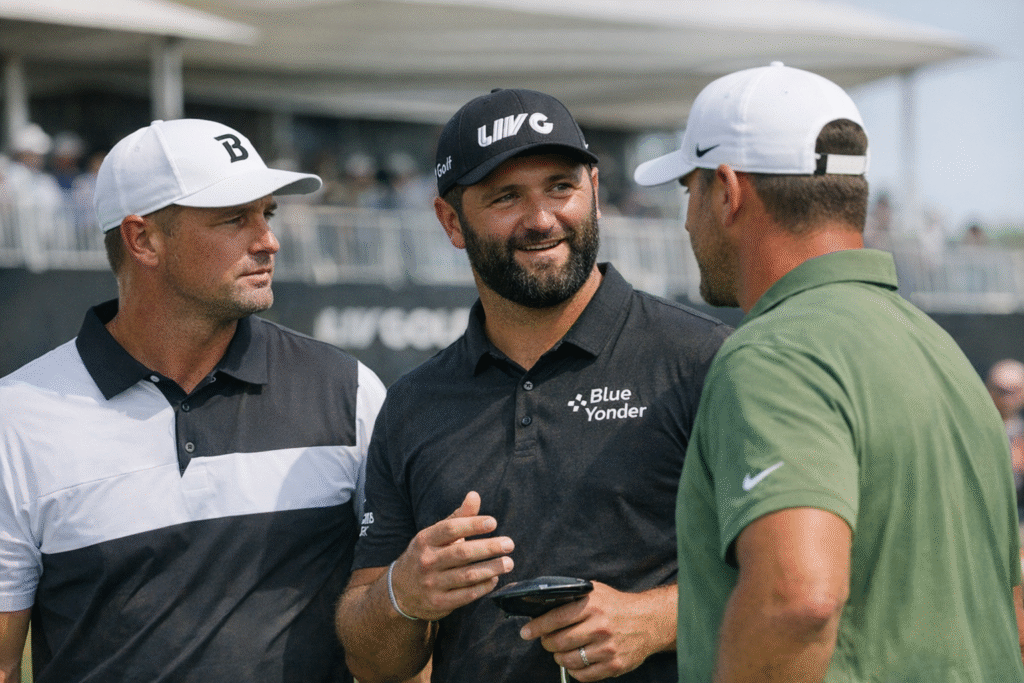
A recent Wall Street Journal report, “LIV Golf’s DeChambeau and Rahm,” highlights the shifting dynamics within professional golf as high-profile players continue to navigate the evolving landscape shaped by Saudi-backed LIV Golf and its rivalry with the PGA Tour. The developments underscore both the competitive tensions and commercial realities redefining the sport.
Bryson DeChambeau and Jon Rahm, two of the most prominent figures associated with LIV Golf, represent different trajectories within the league’s broader strategy to challenge golf’s traditional power structure. DeChambeau, an early and outspoken defector from the PGA Tour, has embraced LIV’s team-based format and global ambitions, positioning himself as both a competitor and a public advocate for the league’s disruptive model. Rahm, by contrast, arrived later, bringing with him a recent major championship pedigree and a reputation as one of the sport’s most consistent performers.
According to the Wall Street Journal, their presence reflects LIV Golf’s continued effort to legitimize itself through star power while reshaping how elite golf is consumed and marketed. The league’s emphasis on shorter formats, guaranteed contracts, and team branding has attracted significant attention but remains a point of contention among traditionalists and governing bodies.
The article notes that while LIV Golf has succeeded in recruiting marquee names, questions persist about long-term sustainability, competitive depth, and fan engagement. DeChambeau’s role has been particularly visible, not only through his performances but also through his willingness to defend the league’s structure against criticism. Rahm’s involvement, meanwhile, has intensified scrutiny, given his prior alignment with the PGA Tour and his status as one of the game’s top-ranked players at the time of his move.
Their participation also highlights ongoing tensions between golf’s established institutions and emerging alternatives. The PGA Tour has responded with structural changes of its own, including revised scheduling and increased prize money, in an effort to retain talent and maintain its dominance. At the same time, negotiations and legal disputes involving players, tours, and governing organizations have added layers of complexity to the sport’s future.
The Wall Street Journal’s coverage suggests that the presence of figures like DeChambeau and Rahm is central to LIV Golf’s strategy of forcing a broader recalibration within professional golf. Whether that recalibration leads to coexistence, consolidation, or continued fragmentation remains uncertain.
What is clear, however, is that the decisions made by players of this stature continue to reverberate beyond individual careers, influencing the direction of the sport at its highest level.