Pentagon Chief Targets Iran, Pirates, Media
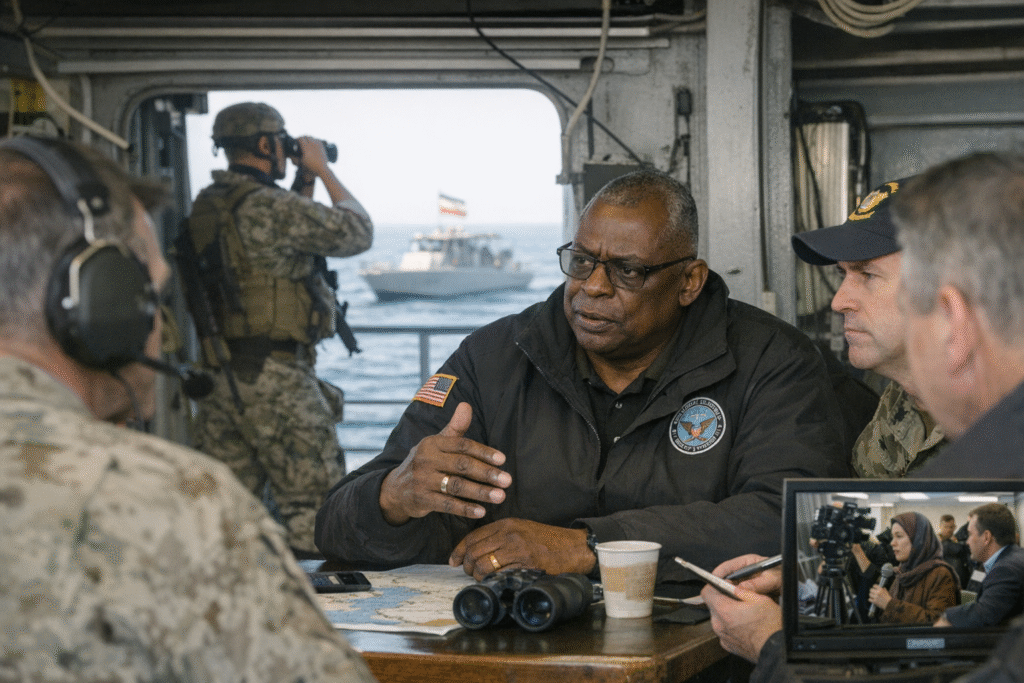
Defense Secretary Pete Hegseth delivered a forceful critique of Iran, maritime security threats, and segments of the U.S. media during a recent press conference, outlining what he described as a more assertive national security posture under his leadership.
According to the Washington Free Beacon article titled “Hegseth Takes Aim at Iranian Regime, Pirates, and Terrorists—and ‘Legacy Trump-Hating Press’ in News Conference,” Hegseth framed Iran as a central destabilizing force in the Middle East, accusing the regime of enabling terrorism and threatening global shipping lanes. He pointed to recent incidents involving maritime attacks and piracy as evidence of growing risks to international commerce, emphasizing the need for a stronger military deterrent and expanded coordination with allies.
Hegseth also addressed ongoing concerns about attacks on commercial vessels, characterizing them as part of a broader pattern involving both state-backed and non-state actors. He argued that such activities demand a decisive response from the United States, including enhanced naval presence and more robust rules of engagement to safeguard critical trade routes.
In addition to external threats, Hegseth’s remarks turned sharply toward domestic criticism, particularly from what he described as elements of the “legacy” media. He accused certain outlets of downplaying national security risks and politicizing defense policy, asserting that their coverage has often been shaped by opposition to former President Donald Trump rather than objective analysis.
The Pentagon has not yet released detailed policy changes corresponding to Hegseth’s remarks, but his comments signal a broader emphasis on deterrence and a willingness to confront both adversarial states and non-state actors more aggressively. Analysts note that such rhetoric may resonate with policymakers advocating a harder line on Iran, though it could also raise concerns among allies seeking diplomatic solutions to regional tensions.
Hegseth’s comments come at a time of heightened geopolitical uncertainty, with continued conflicts in multiple regions and increasing scrutiny of U.S. defense strategy. His framing of the challenges ahead underscores an approach that prioritizes military readiness and direct confrontation over restraint, while also reflecting ongoing domestic debates about media influence and national security policy.