NATO Airlift Powers Early Pandemic Response
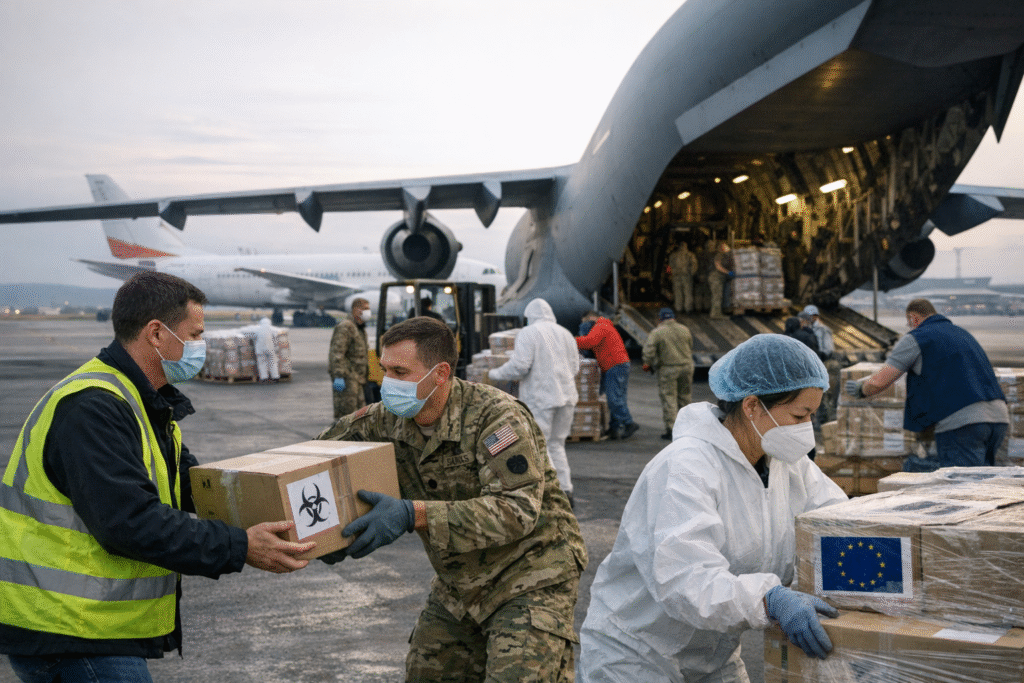
Drawing on information from the NATO website article titled “Coronavirus response: Allied airlift brings urgent medical supplies to the Czech Republic,” NATO’s early pandemic logistics response illustrates how military coordination was mobilized to address civilian health emergencies at a critical moment in 2020.
As COVID-19 cases surged across Europe in March of that year, supply chains for protective equipment and medical materials were under severe strain. In response, NATO coordinated an airlift operation to deliver urgently needed supplies to the Czech Republic, demonstrating one of the alliance’s first large-scale logistical interventions during the pandemic. The operation was conducted through NATO’s Strategic Airlift Capability, a multinational program that enables participating countries to share heavy-lift aircraft resources.
The delivery included protective masks, respirators, and other essential medical equipment sourced from China, at a time when many European countries faced acute shortages. The aircraft, operated under NATO coordination, transported the supplies directly to Prague, underscoring the alliance’s ability to rapidly translate military logistical capacity into civilian crisis response.
Czech officials described the delivery as vital to maintaining healthcare capacity during a period of heightened uncertainty. The operation also highlighted the importance of multinational cooperation, with multiple NATO member states contributing to the airlift framework that made the mission possible.
Beyond the immediate delivery, the mission reflected a broader shift in NATO’s operational posture during the pandemic. While the alliance is primarily structured around collective defense, its role expanded to include crisis management support for member states dealing with an unprecedented public health emergency. This included facilitating transport, sharing expertise, and helping coordinate requests for assistance through the Euro-Atlantic Disaster Response Coordination Centre.
The airlift to the Czech Republic became an early example of how NATO’s existing infrastructure could be adapted to non-military crises, particularly those requiring rapid, large-scale logistics. It also illustrated the interdependence of member states during emergencies that transcend national borders, reinforcing arguments for maintaining shared capabilities that can be activated under a range of scenarios.
In retrospect, the operation marked a moment when defense institutions were tested beyond traditional security challenges. The success of the mission offered a template for subsequent pandemic-related deployments, as NATO continued to support member and partner countries throughout the evolving crisis.