Why War’s End Won’t Topple Russia’s System
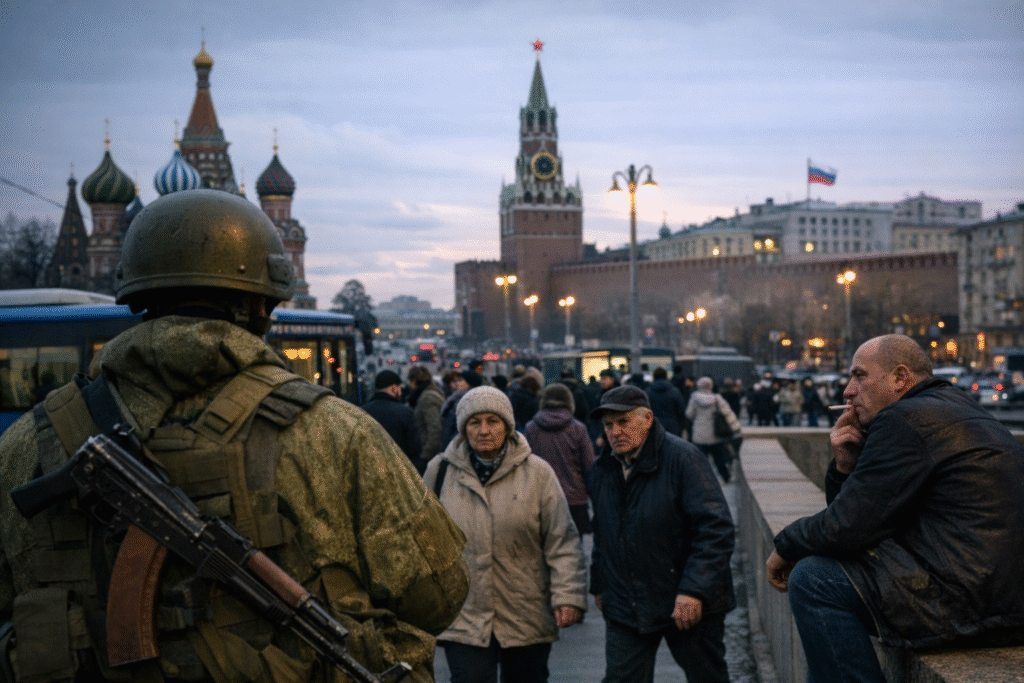
An essay published on the Substack platform under the title “The End of the War, Not the Regime” argues that even if active hostilities in the war in Ukraine were to cease, there is little reason to expect fundamental political change in Russia. The piece, written by Andrew Fox, contends that Western assumptions about the relationship between military outcomes and regime stability may be misplaced, particularly in the context of modern authoritarian systems.
Fox’s central claim is that the conclusion of large-scale fighting would not necessarily trigger the collapse or transformation of the Kremlin’s leadership. Instead, he suggests that Russia’s political structure has been engineered to absorb military setbacks without translating them into domestic upheaval. This runs counter to a long-standing expectation in Western strategic thinking that battlefield outcomes can decisively reshape internal power dynamics in adversarial states.
The article situates this argument within a broader historical pattern, noting that regimes with strong centralized control over media, security services, and political institutions have often weathered military disappointments. In Russia’s case, Fox maintains that the state retains significant capacity to shape public perception of the war’s outcome, framing any negotiated settlement or cessation of hostilities in terms that preserve legitimacy.
A key aspect of the analysis focuses on the resilience of Russia’s internal security apparatus. Fox argues that the regime’s investment in coercive institutions, combined with a fragmented opposition, reduces the likelihood that public dissatisfaction would coalesce into a meaningful challenge to power. He suggests that even if segments of the population or elite become disillusioned, the absence of organized alternatives limits the potential for systemic change.
The essay also addresses the potential for elite fragmentation, a factor often cited as a precursor to political instability. Fox is skeptical that divisions within Russia’s political or military leadership would necessarily result in a transition of power. He contends that elite actors, faced with uncertainty, may prioritize personal security and continuity over confrontation, thereby reinforcing the existing order.
Fox further argues that external expectations of regime change risk distorting policy decisions. If Western governments assume that continued pressure will lead to internal collapse, they may underestimate the durability of the current leadership and overestimate the prospects for rapid political transformation. This, he suggests, could result in strategies that fail to align with the realities of Russian governance.
At the same time, the article does not dismiss the significance of how the war ends. Fox acknowledges that the terms of any settlement, as well as the narrative constructed around it, will shape Russia’s domestic and international position. However, he insists that these outcomes are more likely to influence the regime’s posture than its survival.
The broader implication of the analysis is a call for more measured expectations. Rather than viewing the end of the war as a decisive inflection point for Russia’s political future, Fox encourages policymakers and observers to consider the possibility of continuity. In this view, the cessation of fighting would mark a shift in the conflict’s phase rather than a resolution of the underlying political dynamics.
By emphasizing structural resilience over momentary outcomes, “The End of the War, Not the Regime” contributes to an ongoing debate about the relationship between war, governance, and change. Its argument underscores the difficulty of predicting political trajectories and cautions against assumptions that may oversimplify the interplay between military events and domestic power.