US Offers Iran Ceasefire Tied to Strait Access
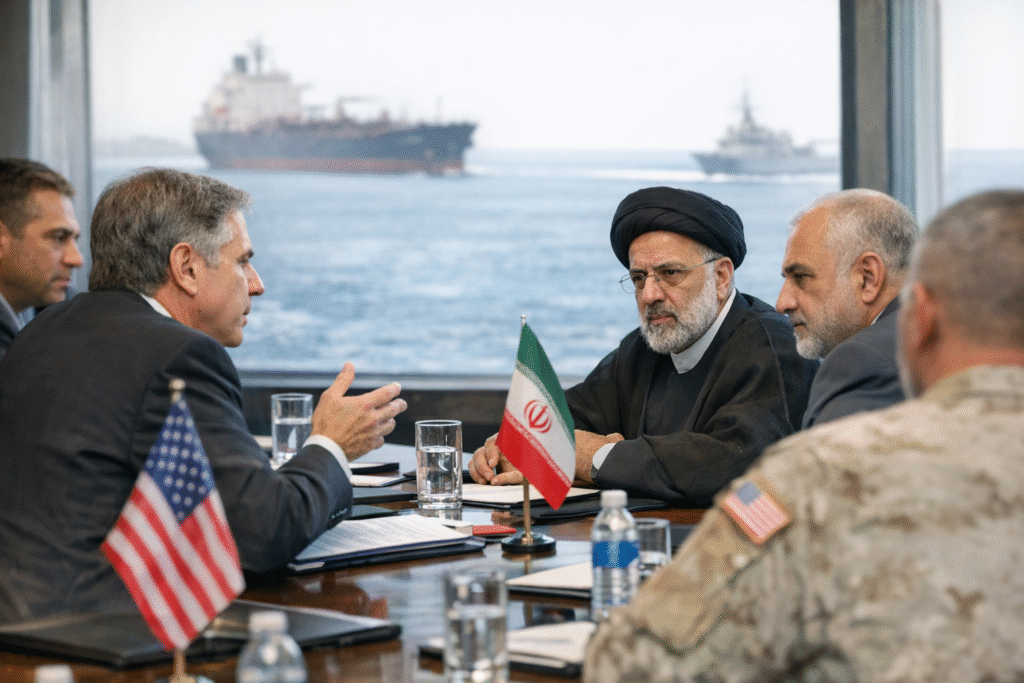
The United States has signaled a conditional willingness to de-escalate tensions with Iran, offering a temporary ceasefire tied to the reopening of a vital global shipping route, according to a report by the Washington Free Beacon titled “U.S. to Enter Two-Week Ceasefire If Islamic Republic Allows ‘Complete, Immediate, and Safe’ Opening of the Strait of Hormuz, Trump Announces.”
The proposal, attributed to former President Donald Trump, centers on the Strait of Hormuz, a narrow but strategically critical waterway through which a significant share of the world’s oil supply passes. The reported terms call for Iran to guarantee full, immediate, and secure access to the strait in exchange for a two-week halt in hostilities by the United States.
The condition underscores longstanding U.S. concerns about maritime security in the Persian Gulf, where periodic confrontations and threats to commercial shipping have heightened global economic anxieties. Disruptions in the strait can rapidly affect oil prices and international trade flows, making its stability a priority for both regional actors and global powers.
According to the Washington Free Beacon report, the ceasefire offer appears to be framed as both a de-escalatory measure and a test of Iran’s willingness to adhere to international norms governing freedom of navigation. By tying a pause in military activity to a concrete action, the proposal seeks to shift immediate focus from broader geopolitical disputes to a specific, measurable outcome.
Analysts note that any agreement involving the Strait of Hormuz would carry implications beyond the immediate U.S.-Iran relationship. Regional allies, including Gulf states that depend heavily on the waterway for energy exports, would likely view such a move as a critical indicator of Iran’s intentions. At the same time, global markets would closely watch for signs of sustained stability or renewed volatility.
It remains unclear how Iranian leadership would respond to the reported proposal. Past tensions in the region have often involved competing narratives over maritime incidents, sanctions, and military posturing, complicating efforts to reach even limited agreements.
The reported ceasefire framework reflects a broader pattern in U.S. policy discussions of leveraging economic and strategic pressure points to secure incremental concessions. Whether this approach can produce a durable reduction in tensions, even temporarily, will depend heavily on both sides’ willingness to translate conditions into verifiable actions.