Trump Pushes Hardline Strategy on Iran Tensions
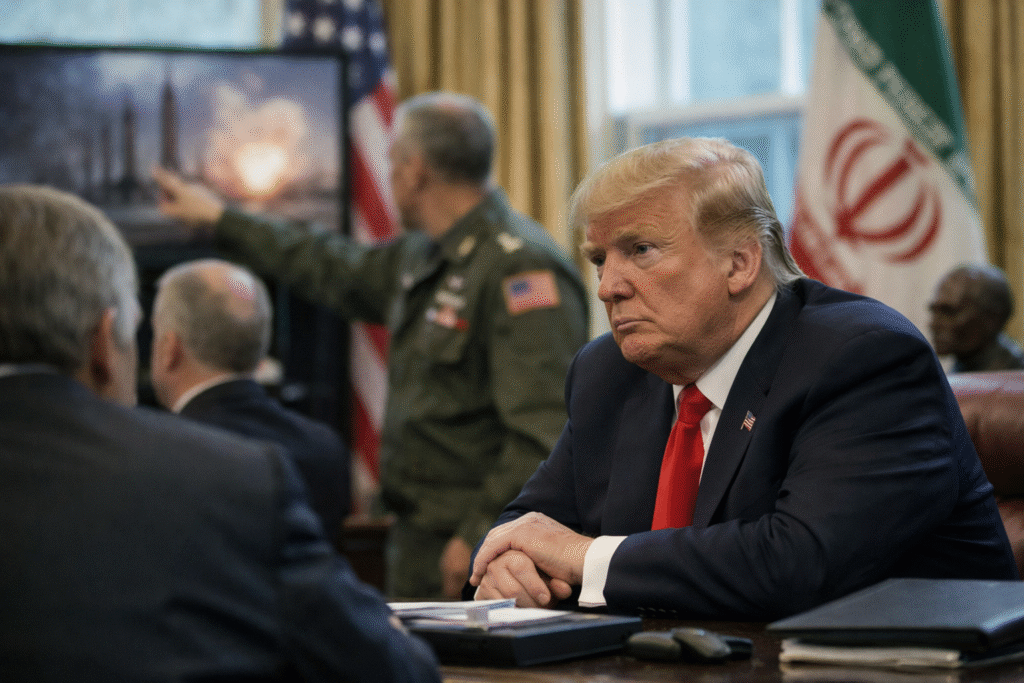
Former President Donald Trump said he would “call Iran’s bluff” in dealing with escalating tensions in the Middle East, outlining a more confrontational posture toward Tehran in a brief interview published by The Wall Street Journal.
In the article titled “Trump Says He’s Calling Iran’s Bluff in Eight-Minute Interview With WSJ,” the former president described a strategy that hinges on projecting strength and testing Iran’s willingness to follow through on its threats. Trump suggested that the current geopolitical climate demands a more assertive U.S. stance, arguing that hesitation invites further provocation.
Speaking in the interview, Trump characterized Iran’s leadership as calculating but ultimately deterrable if faced with credible pressure. He indicated that his approach would combine economic leverage with the threat of decisive military action, a framework reminiscent of policies pursued during his administration, including sanctions and the targeted killing of Iranian General Qassem Soleimani.
Trump criticized current U.S. policy as insufficiently forceful, asserting that adversaries have grown emboldened. While he did not outline specific operational steps, his comments pointed to a belief that clear red lines, backed by a willingness to act, remain central to deterring Iran’s regional activities, including its support for proxy groups and its nuclear ambitions.
The remarks come amid ongoing concerns over Iran’s nuclear program and heightened tensions across the region, where clashes involving Iranian-backed groups have raised fears of broader conflict. U.S. officials have continued to pursue a mix of diplomatic engagement and deterrence, though analysts remain divided on the effectiveness of either approach in curbing Tehran’s behavior.
Trump’s comments underscore a broader debate within U.S. foreign policy circles over how best to manage relations with Iran. Advocates of a hardline strategy argue that sustained pressure is necessary to limit Iran’s influence, while critics warn that escalation could trigger unintended consequences and deepen regional instability.
As the geopolitical environment grows increasingly volatile, Trump’s remarks signal how a potential future administration under his leadership might recalibrate U.S. strategy toward Iran, emphasizing confrontation over negotiation while seeking to reassert American leverage on the global stage.