Iran Opposition Struggles to Unite Against Regime
In a recent installment of WSJ Opinion’s “Journal Editorial Report,” titled “Where the Opposition in Iran to Oust Regime,” panelists examine a question that has long shadowed periods of unrest in the Islamic Republic: whether Iran’s scattered opposition movements possess the cohesion and leadership necessary to mount a credible challenge to the ruling system.
The discussion, published by The Wall Street Journal, comes against the backdrop of recurring protests inside Iran over economic hardship, political repression, and social restrictions. While these demonstrations have, at times, appeared widespread and sustained, the program underscores a persistent structural weakness—namely, the absence of a unified opposition capable of translating public anger into organized political change.
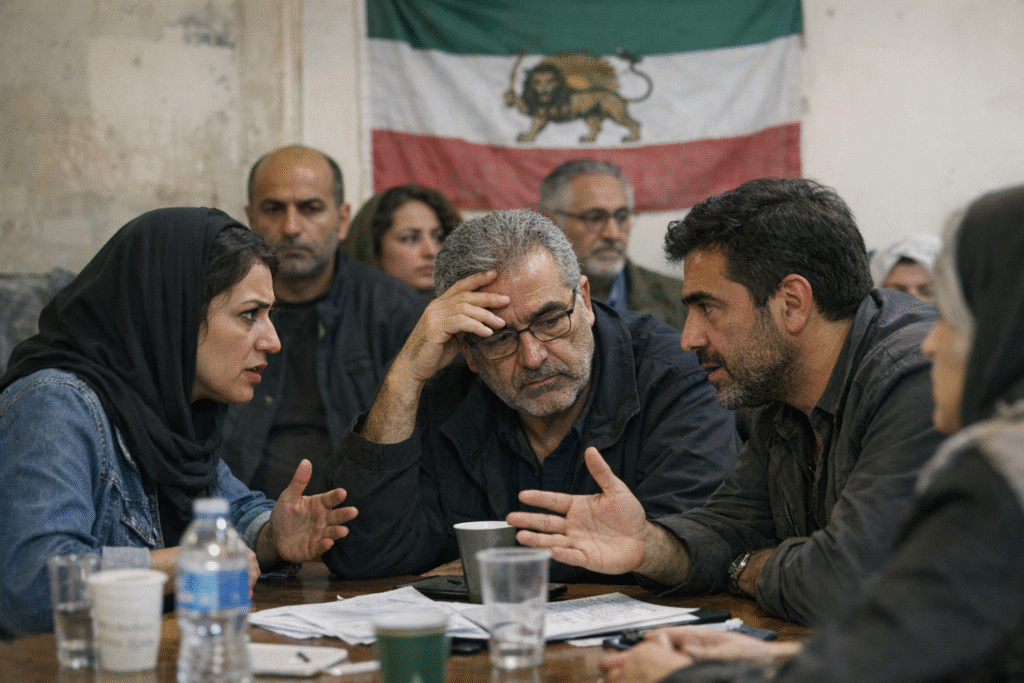
Analysts on the panel suggest that Iran’s opposition remains deeply fragmented, divided along ideological, generational, and geographic lines. Exiled groups, monarchists, reformists, and secular activists often operate independently, with competing visions for the country’s future. Inside Iran, strict state controls and the threat of arrest limit the ability of dissident figures to coordinate at scale, further complicating efforts to build a coherent movement.
The program also highlights the regime’s enduring capacity to maintain control despite periodic unrest. Iran’s security apparatus, including the Islamic Revolutionary Guard Corps, continues to play a decisive role in suppressing dissent. Beyond brute force, the state has demonstrated an ability to manage internal fractures and prevent opposition groups from coalescing into a unified front.
At the same time, panelists note that dissatisfaction with the government appears to cut across broad segments of Iranian society. Economic pressures, exacerbated by sanctions and domestic mismanagement, have intensified grievances. Social restrictions, particularly those affecting women, have fueled high-profile protests that draw international attention. Yet, as the discussion makes clear, widespread discontent does not automatically translate into political transformation.
The WSJ Opinion segment raises the possibility that leadership could emerge over time, particularly from younger generations or figures outside traditional political structures. However, it also emphasizes that such developments remain uncertain. Without a central organizing force or widely recognized figurehead, the opposition’s ability to capitalize on moments of instability remains limited.
Ultimately, the report presents a sober assessment: while the conditions for unrest in Iran are evident and persistent, the pathway to systemic change is far less clear. The lack of unity among opposition groups, combined with the regime’s entrenched security mechanisms, continues to constrain prospects for a coordinated effort to dislodge those in power.