Congress, Pentagon Clash Over Defense Spending Priorities
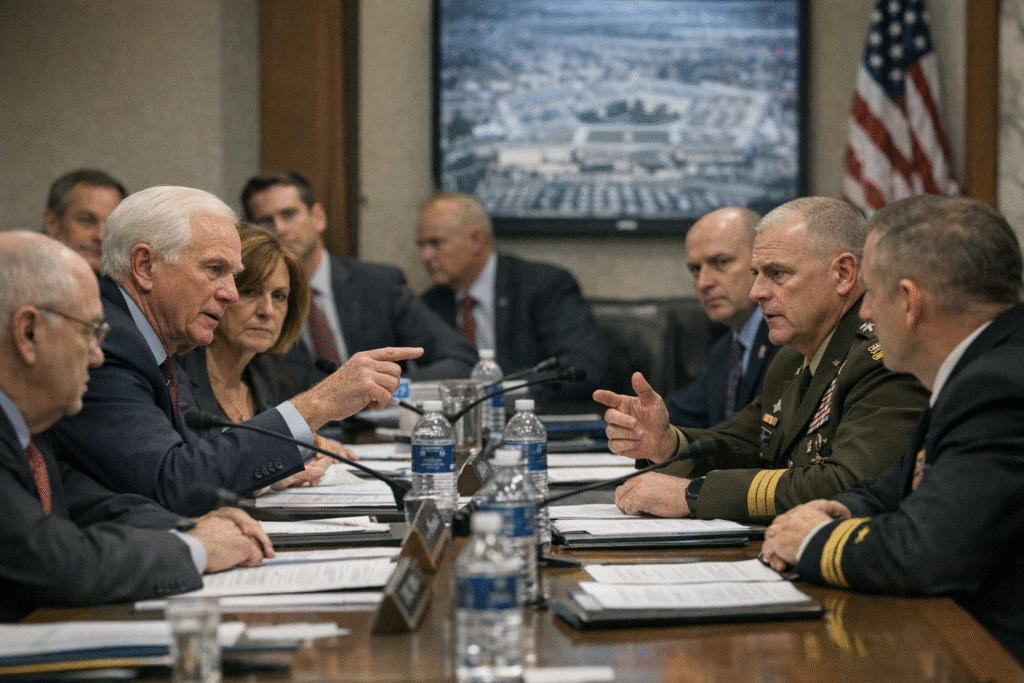
An article published in the Military Times’ Pentagon & Congress section highlights the growing friction between lawmakers and defense officials over spending priorities and oversight at a time of mounting global security challenges. The report underscores how debates on Capitol Hill are increasingly shaped by competing pressures: modernizing the force, supporting current military operations, and addressing long-term strategic threats from peer competitors.
According to the Military Times report, congressional leaders from both parties have pressed Pentagon officials for greater clarity on how defense dollars are allocated, particularly as the Department of Defense requests sustained or increased funding levels. Lawmakers raised concerns about accountability and program effectiveness, pointing to cost overruns and delays in major acquisition programs as evidence that reforms remain incomplete.
Pentagon officials, in testimony cited by the publication, defended their budget proposals by emphasizing the urgency of maintaining military readiness while investing in advanced capabilities such as artificial intelligence, cyber defense, and next-generation weapons systems. They argued that shifting resources too aggressively or imposing restrictive spending limits could undermine deterrence and operational effectiveness.
At the same time, the debate reflects broader fiscal tensions in Washington. As highlighted in the Military Times coverage, some members of Congress are advocating for tighter controls on discretionary spending, including defense, amid growing concerns about the federal deficit. Others insist that defense spending should be shielded from cuts, given the evolving threat environment.
The article also points to the political dynamics surrounding defense authorization and appropriations bills, noting delays and disagreements that risk disrupting military planning. Continuing resolutions, which temporarily fund the government at existing levels, were cited as particularly problematic, as they hinder the Pentagon’s ability to start new programs or adjust priorities.
Ultimately, the Military Times report portrays a defense policy landscape marked by uncertainty, where strategic ambitions collide with fiscal realities and political divisions. The ongoing negotiations between Congress and the Pentagon are likely to shape not only the size of the defense budget but also the direction of U.S. military policy in the years ahead.