“Shifting Powers: Rethinking Western Influence Today”
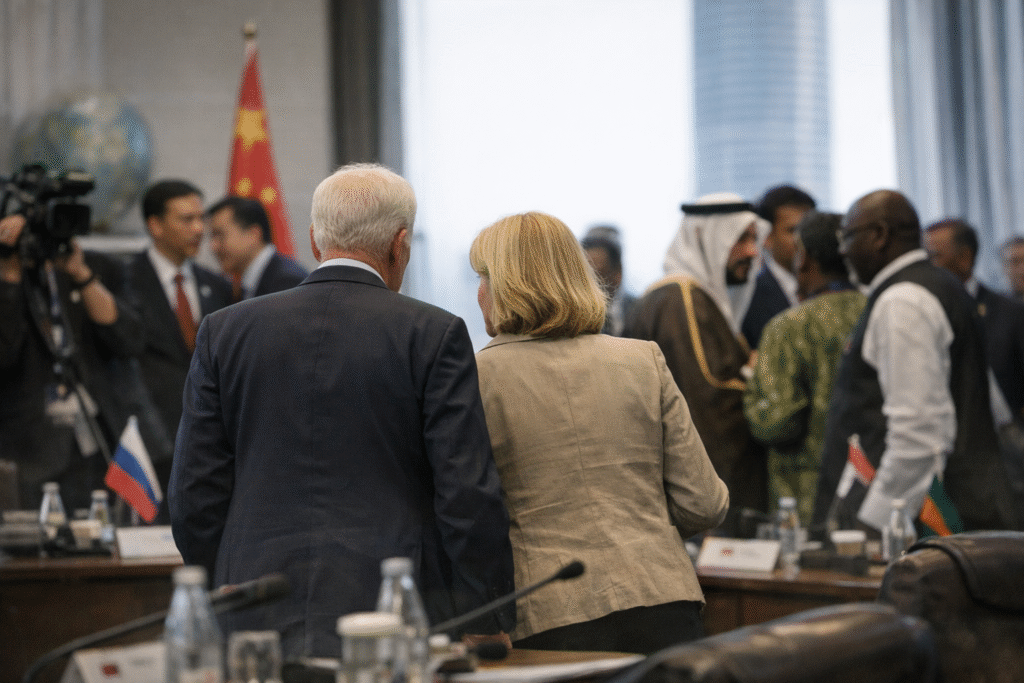
In a recent article published on Mr. Andrew Fox’s Substack, titled “The West is Over. The War is Not,” the author presents a provocative examination of the geopolitical shake-up facing Western nations amidst ongoing global conflicts. The article delves into the changing dynamics of international power, focusing on the decline of Western influence and the resurgence of more traditional forms of geopolitical conflict.
Andrew Fox contends that the paradigm upon which the West has relied—a combination of military superiority, economic hegemony, and cultural influence—is being challenged by shifting global realities. The conflicts that once seemed peripheral are now central, as emergent powers seek to redefine the balance of power in their favor. The author argues that Western nations, long accustomed to dominating global affairs, must now navigate a world where their influence is less certain.
Integral to this analysis is the acknowledgment of the internal challenges faced by Western democracies, including political polarization, economic disparities, and eroding public trust in institutional frameworks. These issues, according to Fox, weaken the West’s ability to respond cohesively to external threats and adapt to the evolving geopolitical landscape. The article posits that without addressing these internal divisions, Western nations may struggle to project strength and unity on the world stage.
Fox’s narrative underscores the decline of what he terms “Western exceptionalism”—the prevailing notion that Western modes of governance and cultural values are universally applicable and superior. In contrast, the article foresees a more multipolar world where diverse governance models coexist, each vying for legitimacy and influence.
In the context of ongoing wars and conflicts, the piece questions how Western countries will align their foreign policies to effectively engage with new power structures. The complexity of international relations is exacerbated by the fact that traditional alliances are evolving, and new partnerships are forming based on shared strategic interests rather than ideological alignments.
The article notably discusses the role of emerging technologies in these shifting dynamics. Advances in digital warfare, surveillance, and cyber capabilities are altering the playing field, granting non-Western actors new avenues to challenge established powers. Thus, technological innovation is highlighted as a critical front in the broader geopolitical contest.
Ultimately, “The West is Over. The War is Not” offers a sobering reflection on the current state of global affairs. It calls for a reassessment of Western strategies and a renewed focus on fostering resilience, both domestically and internationally. The author suggests that in an increasingly interconnected world, the success of Western nations will depend on their ability to adapt to change, embrace new forms of cooperation, and strategically leverage their assets in a manner that acknowledges the complexities of the new world order.
While Fox’s perspective is undeniably challenging, it provides a vital contribution to the discourse surrounding the future of international relations. His analysis serves as a reminder that the global stage is in constant flux, requiring both vigilance and adaptability from those who seek to navigate it effectively.