Hung Cao Pushes Navy Expansion and Culture Shift
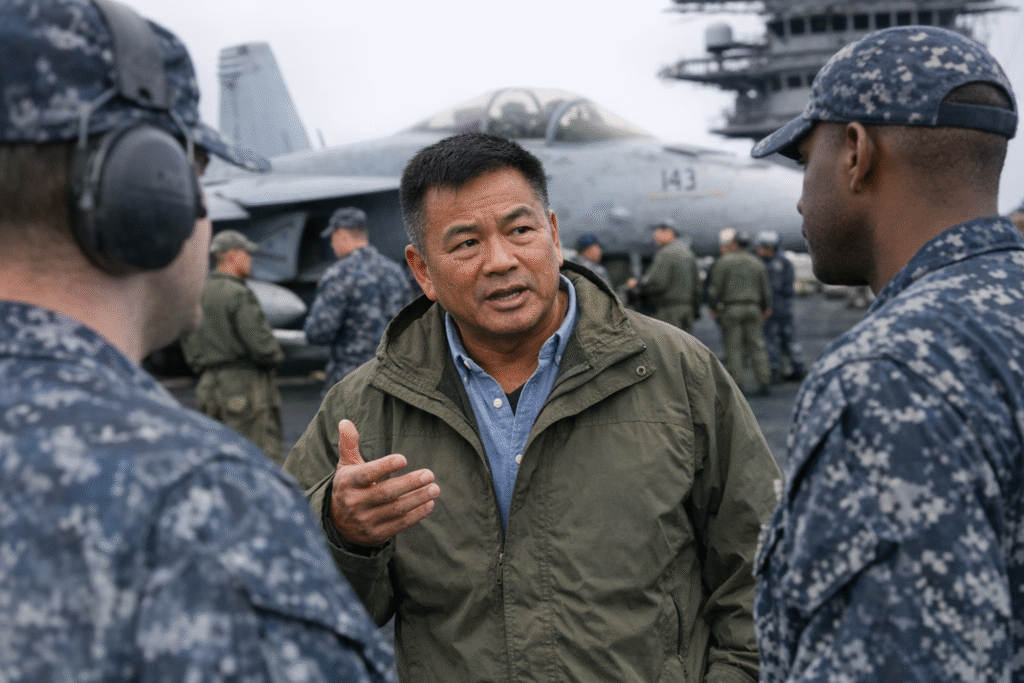
Acting Navy Secretary Hung Cao is advancing an ambitious vision for the service centered on force expansion, personnel reform, and a renewed emphasis on operational readiness, according to a recent report by Defense News titled “Alpha troops and more ships: Acting Navy Secretary Hung Cao outlines vision for service.”
Cao’s remarks come at a moment of sustained strategic pressure on the U.S. Navy, with growing demands in the Indo-Pacific and persistent concerns about fleet size, maintenance backlogs, and recruitment shortfalls. His plan, as described in the Defense News report, places particular focus on building what he characterized as “alpha troops,” a term he uses to describe highly capable, resilient sailors prepared for high-end conflict.
The concept reflects a broader shift toward emphasizing individual performance and warfighting ethos alongside technological modernization. Cao has indicated that strengthening the quality and readiness of personnel is as critical as expanding the number of ships in the fleet, suggesting that cultural and training reforms will accompany any material investments.
Shipbuilding remains a central pillar of his approach. Cao has underscored the need to increase the size of the Navy, aligning with long-standing congressional and Pentagon discussions about achieving a larger and more distributed fleet. However, his vision appears to go beyond numerical targets, emphasizing a balance between quantity, capability, and sustainability. The Defense News report notes that this includes addressing long-standing inefficiencies in maintenance and acquisition processes that have hampered readiness.
Cao’s proposals also touch on recruitment and retention challenges, which have strained the Navy in recent years. His focus on cultivating more capable and motivated personnel suggests potential changes in how sailors are trained, evaluated, and promoted. While details remain limited, the emphasis on “alpha troops” signals a desire to reshape the service’s culture in ways that prioritize adaptability and combat effectiveness.
At the same time, questions remain about how these ambitions will be funded and implemented. Expanding the fleet while reforming personnel systems and improving readiness would require sustained political and budgetary support, particularly in an environment of competing defense priorities.
The Defense News article portrays Cao’s vision as both expansive and aspirational, reflecting broader debates about the Navy’s future role in an era of intensifying great power competition. Whether his proposals translate into lasting policy changes will depend on institutional backing within the Pentagon and Congress, as well as the service’s ability to execute reforms that have eluded previous leadership efforts.