US Naval Escort Highlights Hormuz Tensions
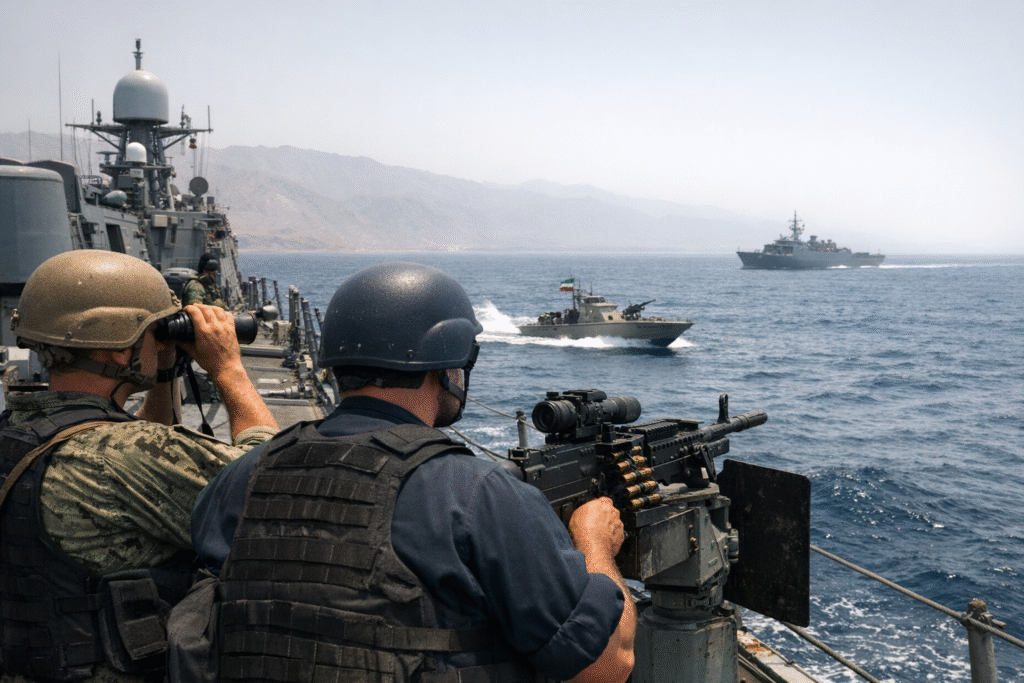
A U.S. military escort operation for a commercial vessel transiting the Strait of Hormuz is drawing renewed attention to rising tensions and persistent security risks in one of the world’s most strategically vital waterways.
According to a report published by Military Times titled “US military accompanies commercial carrier through Strait of Hormuz,” U.S. naval forces recently accompanied a commercial carrier through the narrow passage connecting the Persian Gulf to the Arabian Sea. The move underscores ongoing concerns about maritime threats in the region, where a significant portion of the world’s oil supply passes daily.
U.S. officials indicated that the escort was intended to deter potential harassment or interference by hostile actors, including Iran’s Islamic Revolutionary Guard Corps Navy, which has been linked to a series of confrontations with commercial shipping in recent years. While no direct incident occurred during this particular transit, the decision to provide a military presence reflects a broader strategy aimed at ensuring freedom of navigation and protecting global التجارة routes.
The Strait of Hormuz has long been a flashpoint, with geopolitical tensions periodically spilling into maritime operations. In recent years, the U.S. and its allies have responded to incidents involving vessel seizures, drone surveillance, and close encounters at sea by increasing patrols and, in some cases, offering armed escorts to vulnerable commercial ships.
Defense officials have emphasized that such missions are calibrated responses rather than escalations. By maintaining a visible but measured presence, the U.S. military aims to reassure commercial shipping operators while avoiding unnecessary provocation. Nonetheless, the presence of warships alongside civilian vessels highlights the fragile security environment in the region.
Analysts note that the decision to accompany a commercial carrier may also reflect shifting risk assessments amid evolving regional dynamics, including ongoing disputes over sanctions enforcement and maritime sovereignty. The move signals to both allies and adversaries that the United States remains committed to safeguarding key maritime corridors, even as it balances broader strategic priorities elsewhere.
The Military Times report suggests that such operations could become more common if tensions persist or escalate. For now, the escort serves as a reminder that the Strait of Hormuz remains a critical, and contested, artery of global commerce where military readiness and economic stability remain closely intertwined.