Turkey Hosts Libya Rivals in New Joint Drill
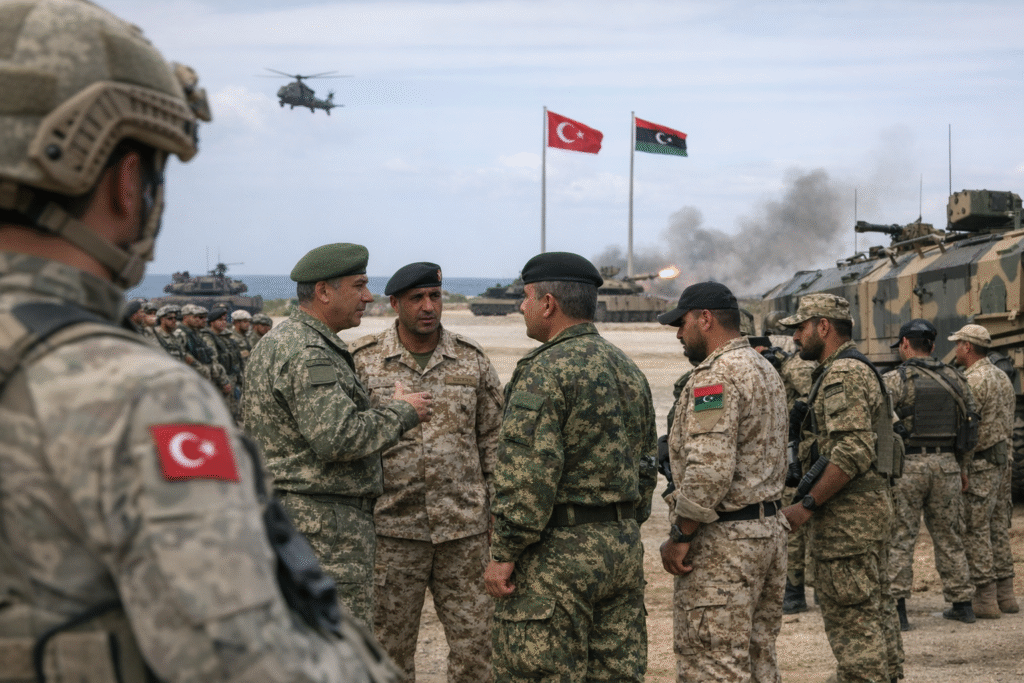
Libya’s rival military factions have again taken part in a joint training exercise organized by Turkey, a development that underscores both tentative steps toward military coordination and the enduring fragility of the country’s political landscape.
According to a report published by Defense News, titled “Turkish exercise sees Libya’s rival forces train together for second time within weeks,” the drills brought together personnel aligned with Libya’s divided eastern and western authorities. The exercise marks the second such engagement in a short period, signaling a cautious but notable effort to foster cooperation between forces that have long been in opposition.
The training took place under Turkish supervision, reflecting Ankara’s continued influence in Libya following its decisive military support for the Tripoli-based Government of National Unity during the country’s civil conflict. Turkish officials have framed the exercises as part of a broader initiative to professionalize Libyan security forces and promote stability, though the political implications are complex.
Libya has remained fragmented since the 2011 uprising that toppled Moammar Gadhafi, with rival administrations and armed groups vying for control. Despite a series of ceasefires and internationally backed political processes, efforts to unify the country’s military institutions have repeatedly stalled. The presence of competing chains of command and external backers has further complicated reconciliation.
The joint exercises therefore represent a rare, if limited, instance of cooperation between factions that have historically distrusted one another. Analysts caution, however, that such initiatives do not necessarily translate into lasting integration or political agreement. Rather, they may reflect pragmatic, localized arrangements driven by immediate security concerns and external pressure.
Turkey’s role remains a point of contention. While Ankara maintains that its involvement is intended to stabilize Libya and support legitimate authorities, critics argue that foreign military engagement risks entrenching divisions and prolonging dependency. At the same time, Turkey’s ability to convene opposing forces suggests it retains significant leverage over key actors on the ground.
Participants in the exercise reportedly engaged in coordinated maneuvers and training aimed at improving interoperability. Yet questions remain about whether such cooperation can be sustained outside controlled environments, particularly given the unresolved disputes over leadership, resource distribution, and political legitimacy.
The repetition of joint drills within weeks may indicate a deliberate attempt to build confidence incrementally. Even so, Libya’s broader trajectory will depend on parallel political progress, including efforts to unify governance structures and hold long-delayed national elections.
For now, the exercises offer a modest sign of engagement between rival factions, but they stop short of signaling a fundamental shift in Libya’s fractured security landscape.