U.S. Navy Expands Indo-Pacific Footprint with New Western Australia Support Hub
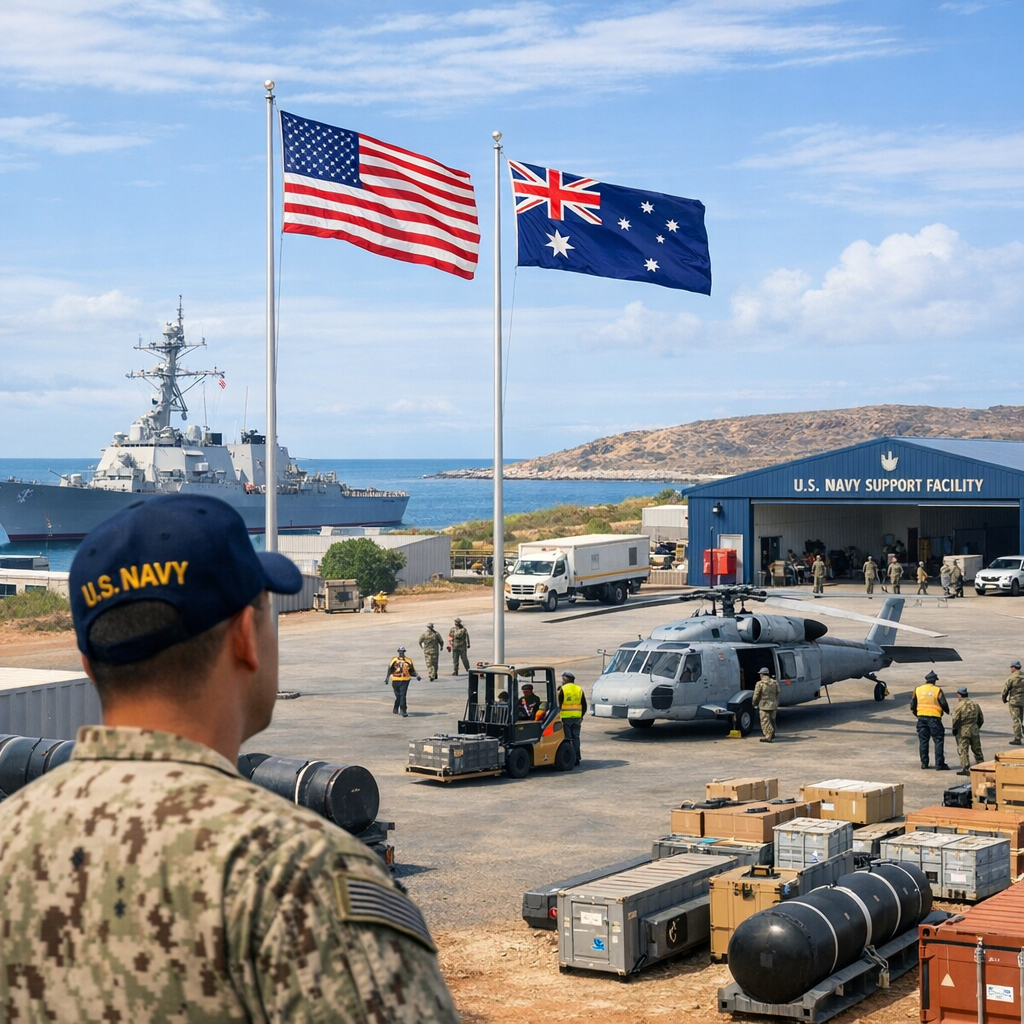
The U.S. Navy has formally established a new shore command in Western Australia, a move aimed at strengthening its operational posture in the Indo-Pacific and deepening defense ties with Canberra, according to reporting by Defense News in its article “US Navy stands up naval support activity in Western Australia.”
The newly created Naval Support Activity (NSA) will serve as a critical logistics and maintenance hub, supporting more frequent and sustained rotations of U.S. Navy vessels through Western Australia. The initiative reflects Washington’s broader strategic emphasis on the Indo-Pacific region, where military planners are seeking to expand access, increase readiness, and distribute forces more flexibly across allied territories.
Officials describe the Western Australia site as a key node in enabling U.S. naval operations, particularly for submarines and surface ships operating far from traditional basing infrastructure in Hawaii, Guam, or Japan. By establishing a persistent support presence, the Navy aims to reduce transit times, improve maintenance turnaround, and enhance operational endurance in a region increasingly defined by strategic competition.
The development also underscores the growing defense cooperation between the United States and Australia under frameworks such as AUKUS, the trilateral security partnership that includes the United Kingdom. While AUKUS has drawn significant attention for its plans to help Australia acquire nuclear-powered submarines, the creation of the NSA highlights the parallel effort to build the logistical and institutional scaffolding needed to support those ambitions.
Australian officials have emphasized that the expanded U.S. presence will be rotational and conducted in close coordination with local authorities, reflecting longstanding sensitivities about sovereignty and foreign basing. Nonetheless, the move signals a clear alignment between Washington and Canberra on the need to bolster deterrence and maintain a stable balance of power in the Indo-Pacific.
The Navy’s decision comes amid continued concern among U.S. defense planners about the pace of China’s military modernization and its growing ability to project power across the region. By investing in distributed support networks like the Western Australia NSA, the service is seeking to complicate potential adversaries’ planning and ensure that U.S. forces can operate effectively even in contested environments.
As Defense News reported, the establishment of the support activity marks not just a logistical enhancement but a strategic statement: that the United States intends to remain a persistent and adaptable maritime power in the Indo-Pacific, working closely with allies to sustain a forward presence in an increasingly competitive theater.