Trump Orders 5000 Troop Withdrawal From Germany
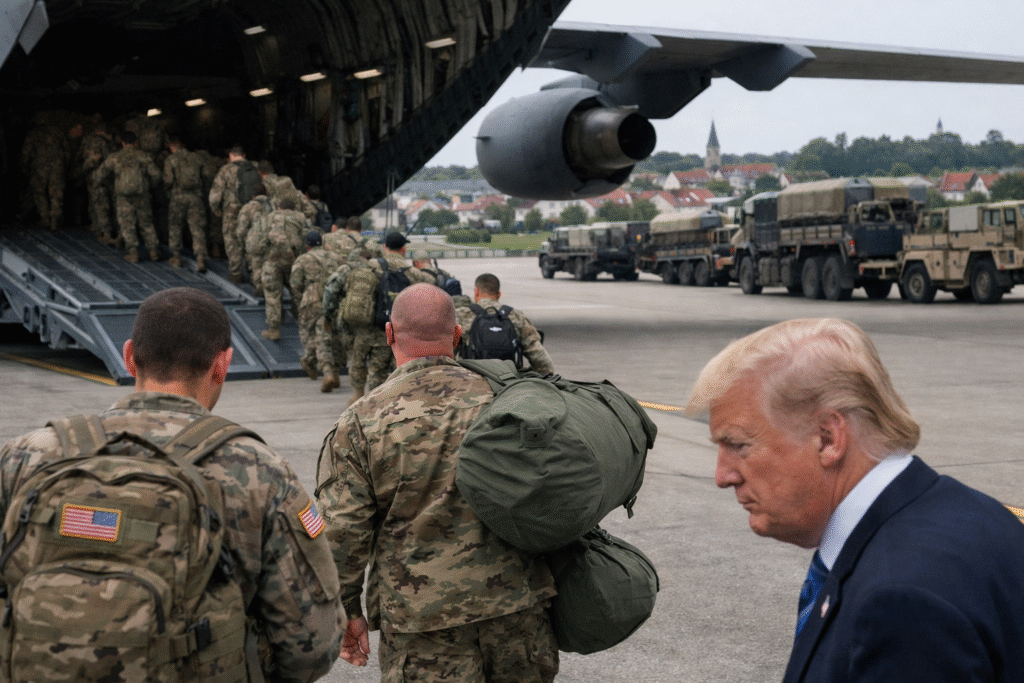
The Trump administration has ordered the withdrawal of approximately 5,000 U.S. troops from Germany, a move that signals a renewed recalibration of Washington’s military posture in Europe and raises fresh questions about the future of NATO burden-sharing. The decision, first reported in the Wall Street Journal article “Trump Orders the Withdrawal of 5,000 U.S. Troops From Germany,” reflects a broader effort to shift resources and reexamine longstanding alliance commitments.
According to officials familiar with the matter, the reduction represents a significant portion of the roughly 35,000 American troops currently stationed in Germany, where U.S. forces have maintained a continuous presence since the end of World War II. The withdrawal is expected to be carried out in phases, though details on the timeline and the redeployment of forces remain unclear.
Supporters of the move argue that it aligns with the administration’s longstanding criticism that European allies, including Germany, have not contributed sufficiently to collective defense. President Trump has repeatedly pressed NATO members to increase defense spending and assume a greater share of security responsibilities. The partial withdrawal is seen by some analysts as an attempt to apply pressure on Berlin while redirecting U.S. military assets toward emerging priorities, including the Indo-Pacific.
Critics, however, warn that the decision risks undermining deterrence at a time of heightened tensions with Russia. Germany serves as a central logistical hub for U.S. operations across Europe, the Middle East, and parts of Africa. Reductions in troop levels could complicate rapid deployment capabilities and weaken the cohesion of NATO’s integrated military planning.
German officials have responded cautiously, emphasizing the importance of transatlantic cooperation while seeking clarification on the operational implications. The presence of U.S. forces has long been both a strategic asset and a political symbol of American commitment to European security. Any drawdown is likely to carry consequences beyond immediate military calculations, affecting the broader diplomatic relationship between Washington and Berlin.
Within the United States, reaction has been mixed along partisan lines. Some lawmakers have expressed concern that the move was made without sufficient consultation with allies or Congress, while others have welcomed it as a necessary step toward recalibrating U.S. global commitments.
Analysts note that the decision fits into a pattern of reevaluating overseas troop deployments, as successive administrations grapple with shifting geopolitical priorities and domestic political pressures. Whether the withdrawal ultimately leads to a more sustainable strategic posture or introduces new vulnerabilities will depend on how the United States balances its commitments in Europe with other global demands.
For now, the order marks a notable shift in one of America’s most enduring military relationships, with implications that are likely to reverberate across NATO and beyond.