Marine Corps Expands Recon Training Pipeline
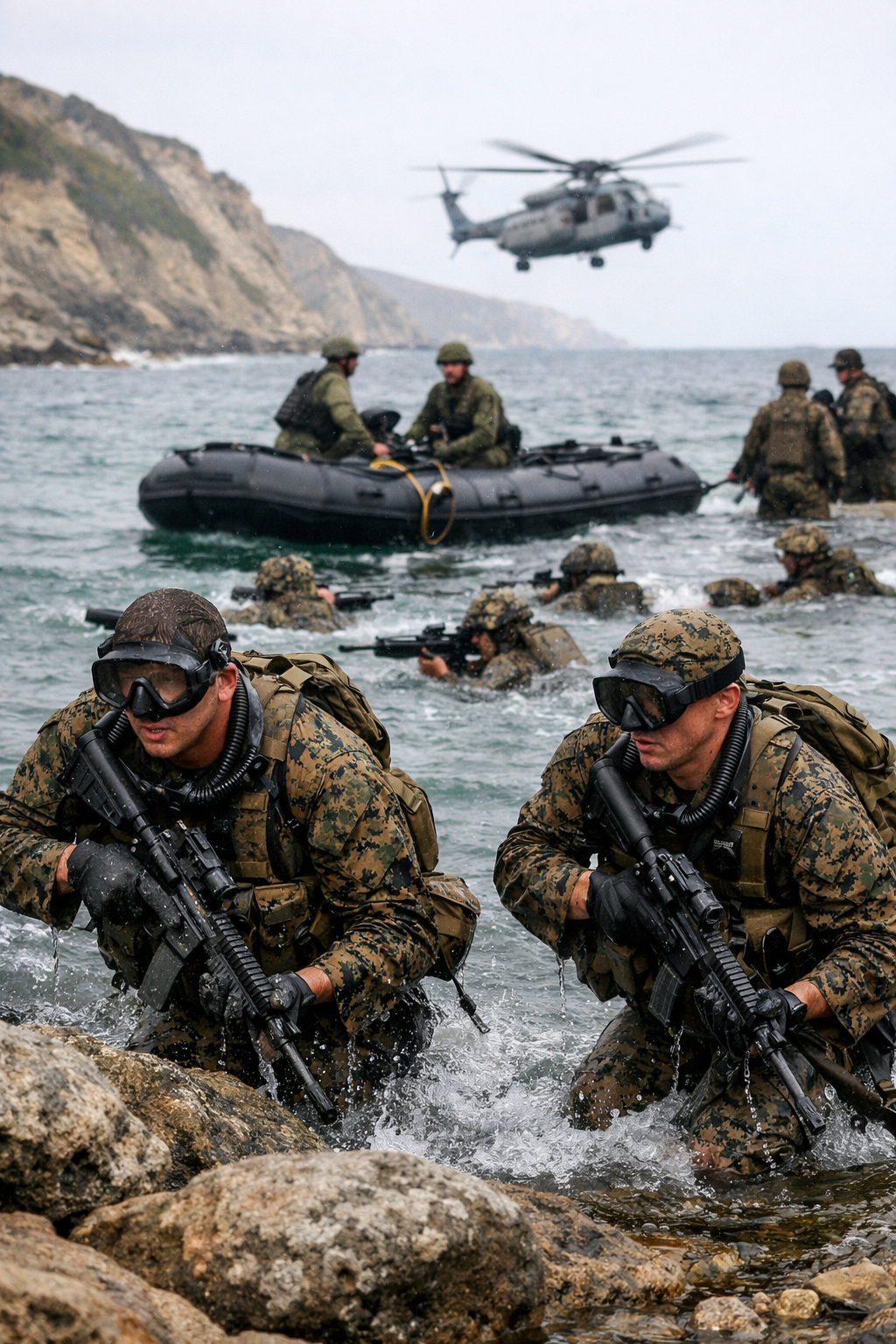
The U.S. Marine Corps is overhauling how it prepares its reconnaissance forces, replacing its long-standing Basic Reconnaissance Course with a broader and more demanding training pipeline aimed at aligning with evolving operational demands. The change, detailed in the Military Times article “US Marine Corps replaces Basic Reconnaissance Course with expanded training,” reflects a wider shift as the service adapts to distributed operations and contested maritime environments.
According to Military Times, the new program expands beyond the traditional focus of the Basic Reconnaissance Course, which for decades served as the gateway for Marines entering reconnaissance units. The revised training framework is designed to produce more versatile operators, with increased emphasis on advanced reconnaissance skills, modern surveillance methods, and integration with emerging technologies.
Marine officials have indicated that the updated curriculum will include additional instruction in areas such as small-unit decision-making, operating in denied environments, and coordinating with other elements of the Marine Air-Ground Task Force. The expansion is expected to lengthen the training timeline and introduce more rigorous assessment phases, with the goal of ensuring that graduates are better prepared for complex, high-end conflict scenarios.
The shift comes as the Marine Corps continues to implement its Force Design modernization effort, which prioritizes mobility, littoral operations, and stand-in forces capable of persisting inside contested areas. Reconnaissance units are seen as critical to that concept, tasked with providing timely intelligence and enabling precision strike capabilities.
Officials cited in the Military Times report suggest the move is also intended to address gaps identified in recent training and operational feedback, particularly the need for Marines who can operate independently with limited support while maintaining a low signature. The updated program aims to cultivate those skills earlier and more comprehensively in a Marine’s career.
While the retirement of the Basic Reconnaissance Course marks the end of a legacy program, Marine leaders describe the transition as necessary to maintain relevance against pacing threats. The expanded training model is expected to evolve further as lessons are drawn from exercises and real-world deployments, underscoring a broader institutional push to adapt training to the realities of modern warfare.