Swamp Camp Killing Leaves Questions Unanswered
The killing of Scott Spivey in a remote swamp camp has drawn renewed scrutiny to the circumstances surrounding his death, with questions lingering about motive, accountability, and the broader context in which the violence occurred. According to “Scott Spivey Killing at Camp Swamp,” published by The Wall Street Journal, the case has unfolded slowly, shaped by a combination of conflicting accounts, limited physical evidence, and the challenges inherent in investigating crimes in isolated rural settings.
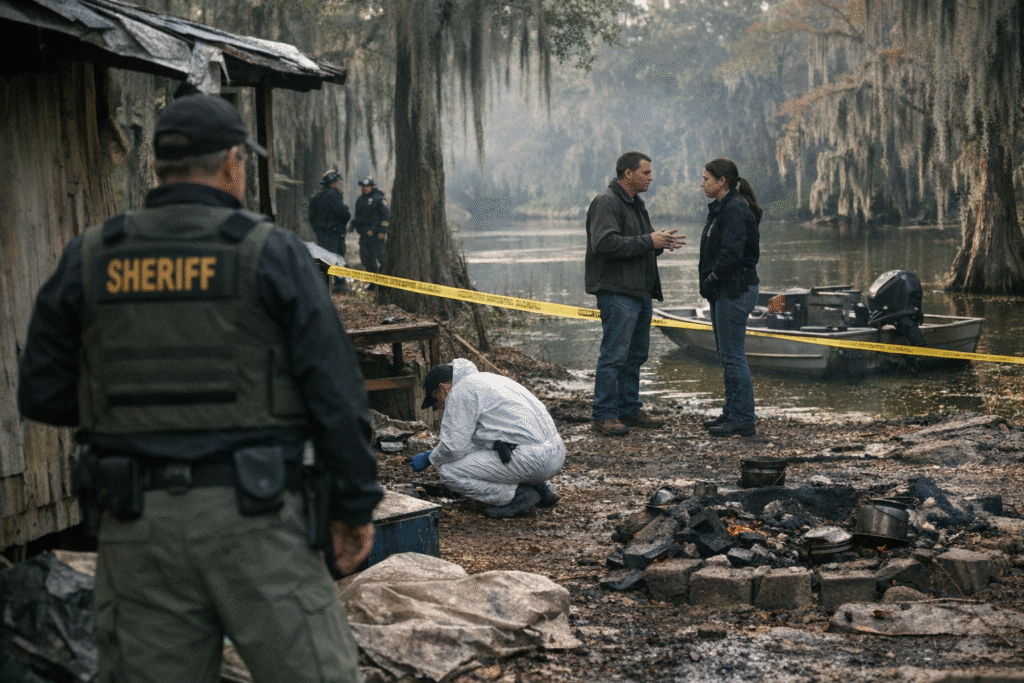
Authorities have described the scene as both difficult to access and complex to process, factors that delayed early investigative steps and contributed to uncertainty about what transpired in the moments leading up to Spivey’s death. The Journal reports that law enforcement officials have worked to reconstruct the timeline through witness testimony and forensic analysis, though inconsistencies in statements have complicated efforts to establish a clear narrative.
At the center of the case are questions about who was present at the camp, what interactions occurred, and whether the killing was the result of a dispute, self-defense, or a premeditated act. The Journal’s reporting highlights how differing interpretations of events have fueled debate both within the investigation and among those familiar with the individuals involved. Prosecutors have signaled that they are weighing these conflicting elements carefully as they consider potential charges.
The case also underscores broader issues tied to violence in secluded environments, where social dynamics, limited oversight, and access to firearms can intersect in volatile ways. Experts cited by The Wall Street Journal note that investigations in such areas often face evidentiary gaps, placing greater weight on testimonial credibility and circumstantial reconstruction.
For Spivey’s family, the drawn-out process has added to the strain of an unresolved loss. As reported, they have continued to seek clarity and accountability, pressing authorities for answers and progress. Meanwhile, the legal path forward remains uncertain, with investigators and prosecutors navigating a case that resists easy conclusions.
The Journal’s account reflects the complexities that can define rural homicide investigations, where isolation not only shapes the events themselves but also the capacity to fully understand them after the fact.