Sun Tzu in the Age of Hybrid Warfare
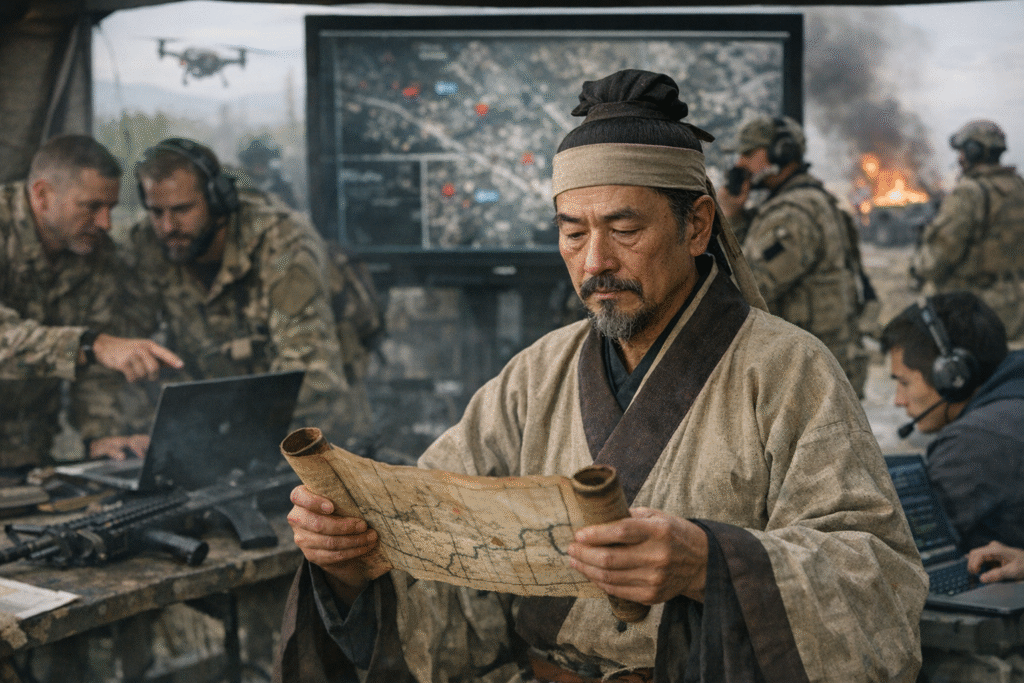
An essay published on Spencer Guard’s Substack, titled “What Would Sun Tzu Say About War,” revisits the ancient Chinese strategist’s teachings to examine how they resonate in the context of modern conflict. The piece reflects a growing trend among analysts and commentators who are turning to classical military philosophy to interpret contemporary geopolitical tensions, arguing that many of Sun Tzu’s core principles remain strikingly relevant despite vast changes in technology and warfare.
The article centers on the enduring influence of The Art of War, a text composed more than two millennia ago, which continues to be studied in military academies and corporate boardrooms alike. It emphasizes Sun Tzu’s assertion that the supreme art of war is to subdue the enemy without fighting, a concept that the author suggests has become increasingly pertinent in an era defined by cyber operations, economic coercion, and information warfare. Modern conflicts, the essay argues, often unfold in ways that align closely with Sun Tzu’s preference for deception, indirect engagement, and strategic patience.
Drawing parallels to current global rivalries, the Substack piece highlights how states are prioritizing tactics that achieve objectives without conventional battlefield confrontation. Economic sanctions, disinformation campaigns, and technological competition are presented as contemporary expressions of Sun Tzu’s guidance to weaken an adversary’s position before direct engagement becomes necessary. The author contends that these methods reflect a shift away from large-scale conventional warfare toward more ambiguous and multifaceted forms of conflict.
At the same time, the article acknowledges the tension between ancient theory and modern realities. While Sun Tzu stressed flexibility and adaptability, today’s military environment is shaped by rapid technological innovation, including artificial intelligence, autonomous weapons, and space-based capabilities. The essay suggests that while the tools have evolved, the underlying logic of strategy—understanding both oneself and the opponent—remains unchanged. In this sense, Sun Tzu’s teachings are portrayed less as rigid doctrine and more as a framework for strategic thinking.
The piece also considers the risks of misapplying historical wisdom. It notes that policymakers may be tempted to invoke classical texts selectively, using them to justify preconceived strategies rather than to inform nuanced decision-making. In an increasingly complex international system, the article argues, reliance on simplified interpretations of ancient philosophy could obscure more than it clarifies.
Ultimately, “What Would Sun Tzu Say About War” presents a reflective examination of how timeless strategic principles intersect with contemporary challenges. By revisiting one of history’s most influential military thinkers, the article underscores the enduring appeal of seeking guidance from the past while recognizing the necessity of adapting those insights to a rapidly changing world.