Senate Democrats Break With Tradition, Challenge Passage of Key Defense Bill Amid Partisan Dispute
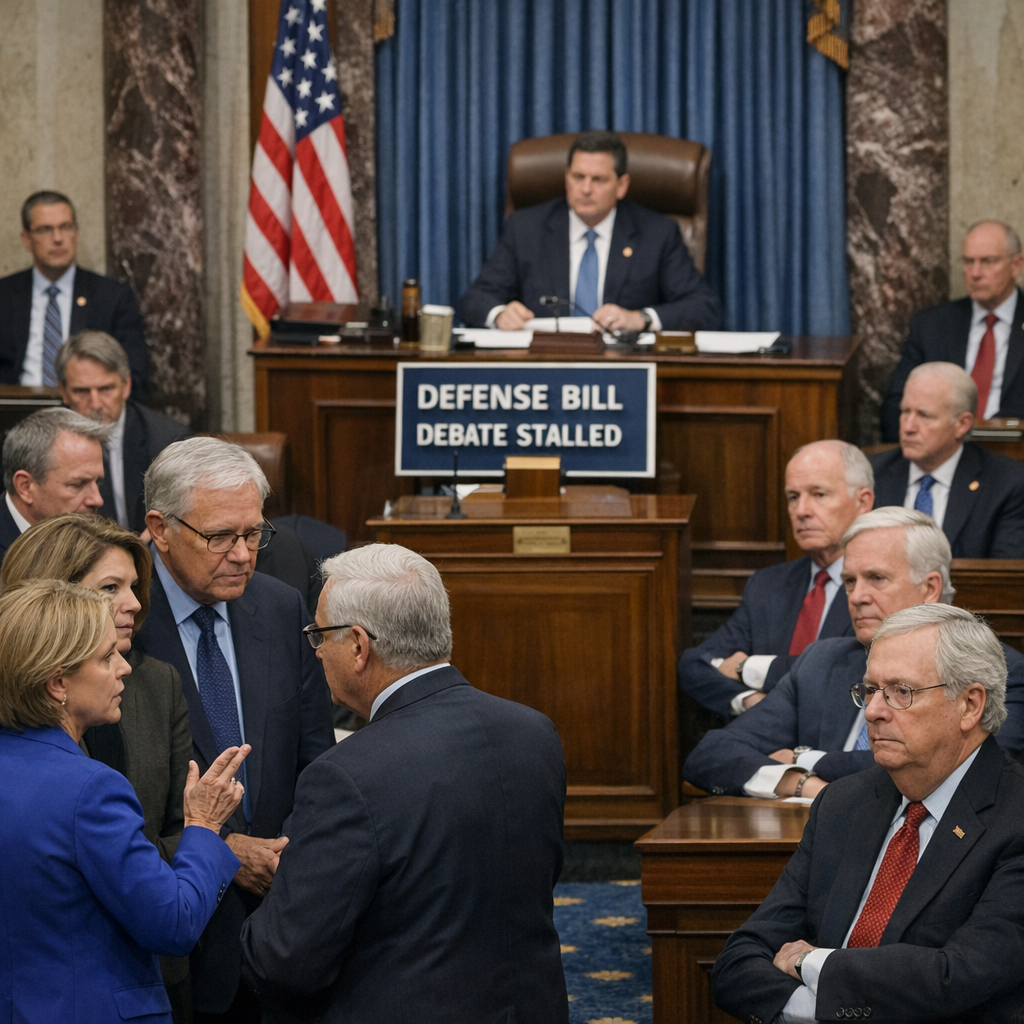
Senate Democrats are drawing an unusually firm line against a must-pass Pentagon policy bill, signaling a broader impasse over defense legislation that is typically one of the most reliably bipartisan measures in Congress.
According to the Fox News article “Senate Dems draw rare line against must-pass Pentagon bill”, the dispute centers on provisions in the National Defense Authorization Act (NDAA) that Democrats argue inject divisive political issues into what has historically been a consensus-driven process. The NDAA, which sets policy and authorizes funding levels for the Department of Defense, has been enacted annually for more than six decades, often with overwhelming bipartisan support.
This year, however, Senate Democrats have voiced strong objections to certain policy riders included in the legislation, indicating they are prepared to oppose or block the bill unless those provisions are removed. The contested measures reportedly include restrictions and policy directives that Democrats view as unrelated to core defense priorities and incompatible with existing administration policies.
The standoff reflects deeper partisan tensions over the scope and purpose of defense legislation. While Republicans argue that the provisions in question address matters of military readiness, accountability, or cultural concerns within the armed forces, Democrats contend that such additions risk politicizing the military and undermining the bipartisan framework that has long sustained defense policy.
Democratic lawmakers have emphasized that their concerns are not with funding the military itself, but with what they describe as extraneous or ideological amendments. Their stance represents a notable escalation, as members of the party have historically supported the NDAA even when disagreements arose, preferring to resolve disputes through negotiation rather than outright opposition.
Republicans, for their part, have defended the inclusion of the contested measures, arguing that Congress has both the authority and responsibility to shape military policy in response to evolving challenges. Some GOP lawmakers have accused Democrats of obstructing the legislative process, warning that failure to pass the NDAA could have consequences for military planning, procurement, and service members’ benefits.
The emerging conflict raises the prospect of a prolonged legislative battle, with potential ripple effects for broader budget negotiations and national security policymaking. If the two parties cannot reconcile their differences, Congress may face delays in passing the defense authorization bill, an outcome that would underscore the growing difficulty of maintaining bipartisan cooperation even on traditionally unifying issues.
Despite the sharp rhetoric, there remains pressure on both sides to reach a compromise. The NDAA’s status as essential legislation—governing everything from troop pay to weapons systems—typically compels lawmakers to find common ground, even in a polarized environment. Whether that pattern holds this year will depend on the willingness of both parties to scale back contested provisions and return to the bill’s core purpose.
As described in the Fox News report, the current impasse marks a rare moment in which Senate Democrats are openly challenging the passage of a defense bill, highlighting how broader political divisions are increasingly shaping even the most routine functions of governance.