Rising GOP Women Recast Party Strategy
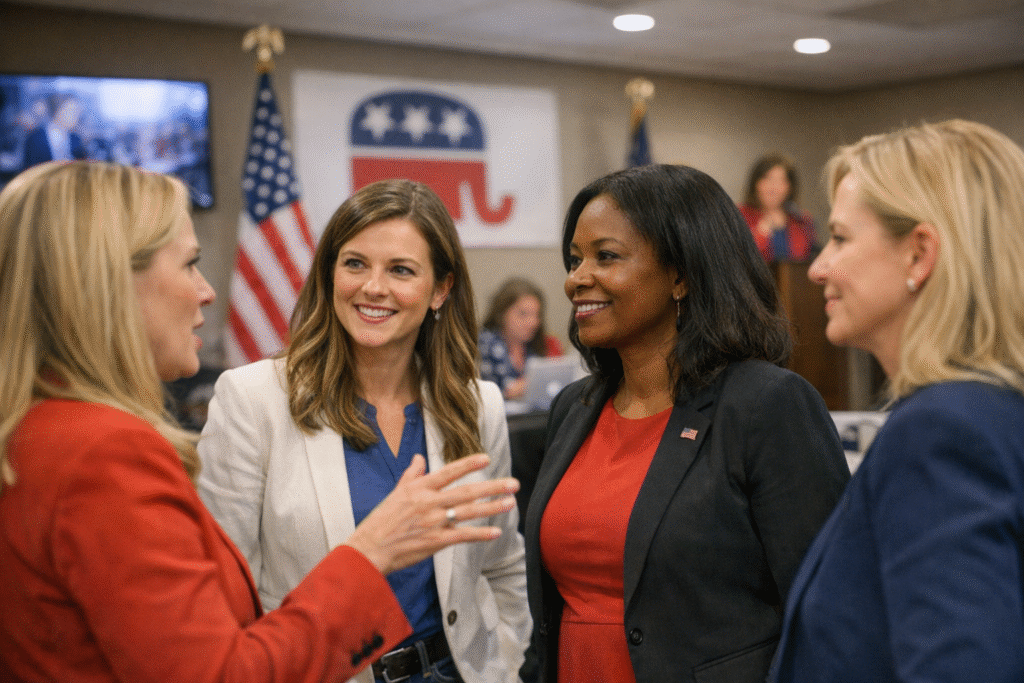
A new cohort of politically active women is emerging within Republican circles, reshaping both the party’s internal dynamics and its public-facing agenda, according to the Wall Street Journal feature “The New Group of Women Helping Reshape Republican Politics.” The report highlights how these figures—ranging from candidates and strategists to grassroots organizers—are exerting growing influence at a moment when the party is grappling with demographic shifts and evolving voter priorities.
Rather than adhering strictly to traditional party orthodoxies, many of these women are advancing a pragmatic approach that blends core conservative positions with a heightened focus on issues such as education, public safety, and economic stability. In doing so, they are attempting to broaden the party’s appeal, particularly among suburban voters and younger demographics who have, in recent election cycles, shown signs of drifting away from the Republican coalition.
The Wall Street Journal’s reporting underscores that this shift is not merely stylistic but strategic. Female Republican leaders are increasingly positioning themselves as communicators capable of reframing policy debates in ways that resonate beyond the party’s base. This includes emphasizing everyday concerns—cost of living, schooling, and community security—over ideological messaging alone. Their approach reflects an understanding that electoral competitiveness may hinge on persuasion rather than mobilization alone.
At the same time, the rise of these figures reveals tensions within the party. While some Republicans welcome the broadened messaging and new voices, others remain wary of diluting established positions or recalibrating priorities to appeal to a wider electorate. The resulting dynamic illustrates a party in the midst of adaptation, balancing continuity with change as it navigates shifting political terrain.
Importantly, the Journal’s feature suggests that the influence of these women extends beyond campaign cycles. By building networks, shaping policy discussions, and engaging directly with voters, they are contributing to a longer-term redefinition of what leadership within the Republican Party looks like. Their presence challenges older assumptions about both gender roles in conservative politics and the strategies most likely to secure electoral success.
As the Republican Party looks ahead to future elections, the contributions of this emerging group may prove consequential. Whether their efforts translate into measurable gains at the ballot box remains uncertain, but their impact on the party’s identity and direction is already becoming visible.