Navy Taps Submariner for Acting Civilian Role
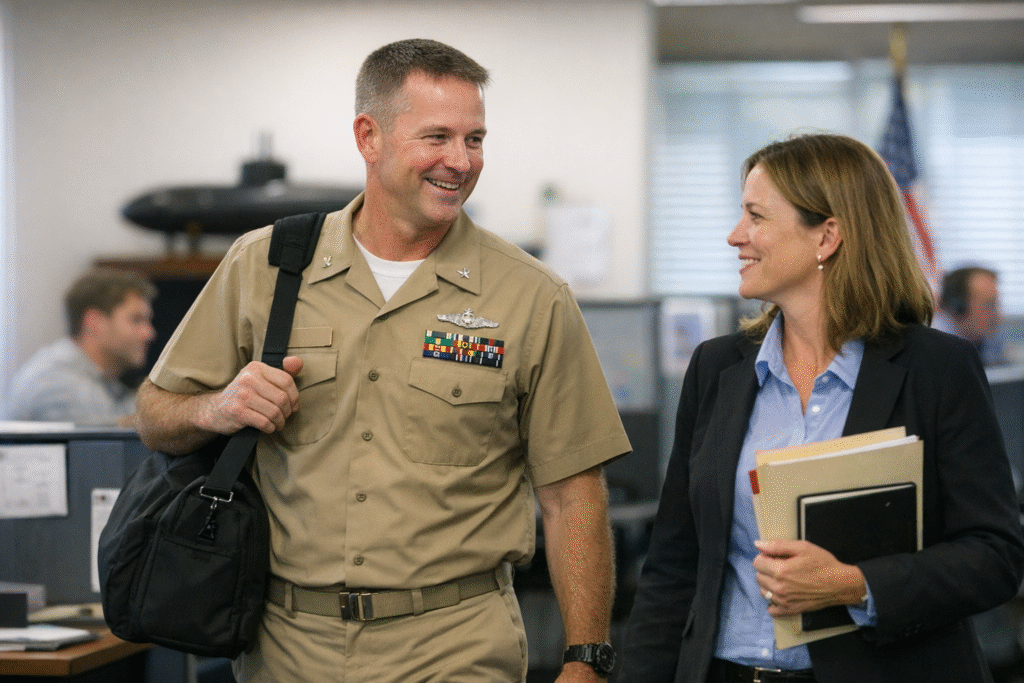
The U.S. Navy has turned to a seasoned submariner to temporarily fill one of its most senior civilian leadership roles, underscoring both the service’s reliance on internal expertise and the ongoing gaps in confirmed Pentagon appointments.
As reported in the Defense News article “Career submariner selected to perform duties of under secretary of the Navy,” a veteran naval officer with deep experience in undersea warfare has been chosen to carry out the responsibilities of the under secretary of the Navy on an acting basis. The move places an operationally focused leader in a position that plays a critical role in shaping policy, budgeting and long-term modernization priorities for both the Navy and Marine Corps.
The under secretary role is the second-highest civilian position in the Department of the Navy, responsible for overseeing day-to-day business operations and helping translate strategic guidance into executable programs. Leaving the post unfilled for extended periods has, in the past, complicated efforts to maintain continuity across acquisition programs and personnel initiatives. By designating an experienced submariner to perform these duties, Pentagon leadership appears to be prioritizing continuity and institutional knowledge while the formal nomination and confirmation process remains unresolved.
The officer selected brings a career rooted in the submarine force, a community that has taken on heightened importance as the United States sharpens its focus on strategic competition, particularly in the Indo-Pacific. Submarines are widely viewed as a critical asymmetric advantage for the U.S. military, providing stealth, deterrence and intelligence-gathering capabilities that are difficult for adversaries to counter. Leadership with firsthand experience in this domain may influence how resources are allocated among competing naval priorities, including shipbuilding plans, nuclear modernization and emerging technologies.
The decision comes at a time when the Navy faces mounting pressure to balance readiness with modernization. Persistent maintenance backlogs, workforce challenges in public shipyards and rising costs in major acquisition programs have drawn increased scrutiny from Congress. At the same time, the service is pursuing ambitious initiatives such as next-generation ballistic missile submarines and expanded unmanned systems, all while navigating budget constraints.
Installing a career officer in a civilian-equivalent leadership role, even temporarily, is not without precedent, but it highlights the increasingly blurred lines between uniformed and civilian responsibilities during periods of transition. While such arrangements can provide stability, they also raise questions about the pace of political appointments and the broader implications for civilian oversight within the Department of Defense.
According to Defense News, the appointment is framed as a provisional measure, suggesting that a permanent civilian under secretary may still be forthcoming pending the administration’s nomination and Senate confirmation process. Until then, the acting official will likely play a pivotal role in guiding near-term decisions, from budget submissions to program evaluations, at a critical juncture for naval strategy.
The choice of a submariner, in particular, signals the Navy’s continued emphasis on undersea dominance as a cornerstone of its strategic posture. Whether that focus will translate into shifts in funding or operational priorities remains to be seen, but the appointment reflects the service’s effort to anchor leadership in areas it views as most consequential for future conflict.