U.S. Navy Clears Path for Next-Generation Radar and Mission-System Overhaul Across E-2D Hawkeye Fleet
The Navy has approved Block II upgrades for the E-2D Advanced Hawkeye, modernizing radar and mission systems across the carrier-based AEW fleet.

The U.S. Navy has formally approved a Block II upgrade program for its E-2D Advanced Hawkeye airborne early warning aircraft, advancing a modernization effort aimed at keeping the carrier-based platform competitive against increasingly sophisticated air and missile threats. The decision, Defense Scoop reported, marks a significant milestone for the program and sets the stage for fleet-wide integration of improved sensor and mission-management capabilities.
The E-2D is the Navy’s primary fixed-wing airborne early warning and battle management aircraft, operating from carrier flight decks and serving as the fleet’s long-range radar and command-and-control node. As great-power competition reshapes naval planning — a pressure point explored in GDD’s recent coverage of the U.S. carrier fleet — maintaining the survivability and situational-awareness edge of platforms like the Hawkeye has taken on renewed urgency.
What Block II Adds to an Already Advanced Platform
The Block II designation refers to a structured package of hardware and software enhancements layered onto the existing E-2D airframe and mission systems. According to Defense Scoop’s reporting on the approval, the upgrades are focused on expanding the aircraft’s ability to detect, track, and manage threats in contested electromagnetic environments — addressing operational gaps that have become more acute as adversary integrated air defense systems have grown in sophistication.
The E-2D already incorporates the AN/APY-9 radar, a mechanically and electronically scanned array that gave the platform a substantial capability leap over its E-2C predecessor. Block II is designed to build on that foundation rather than replace it, threading new capabilities into an architecture that carrier air wings have spent years integrating into strike and defensive operations. Officials have not publicly confirmed specific performance figures or unit counts associated with the upgrade package as of the time of reporting.
Industrial and Operational Stakes for the Fleet
Northrop Grumman, which manufactures the E-2D, stands to benefit directly from the Block II approval, as the upgrade work will flow through the existing production and sustainment pipeline the company maintains for the platform. The scale of the effort — touching an aircraft type that is central to every carrier strike group’s integrated air picture — makes it one of the more consequential naval aviation modernization decisions of the current budget cycle, even if individual contract values have not yet been publicly detailed.
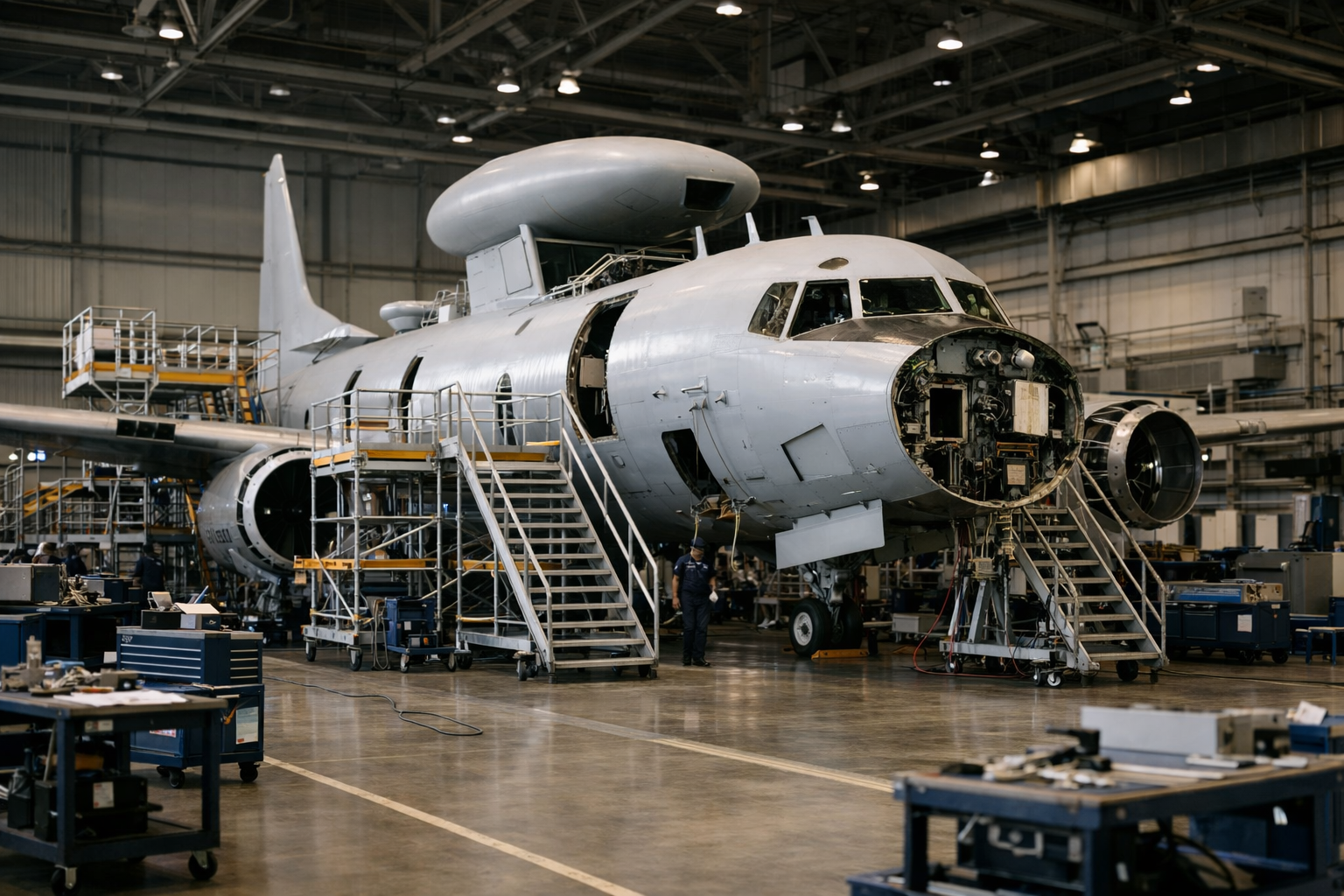
From an operational standpoint, the timing of the Block II approval aligns with broader Navy efforts to harden carrier strike group defenses against the kind of long-range, saturation strike scenarios that both Chinese and Russian forces have been developing. The Hawkeye functions as the strike group’s eyes at altitude, cueing surface and airborne interceptors; upgrades to its processing and communication links directly affect how quickly and accurately the fleet can respond to an incoming threat. The Pentagon has been pressing across multiple programs to close those response-time gaps, as seen in its recent push on long-range strike capacity. With the approval now in hand, the Navy and Northrop Grumman are expected to move toward contract action and a formal development schedule, though the service has not announced a timeline for initial aircraft modifications or fleet-wide fielding.