Luxury NYC Restaurant Drawn Into Housing Fight
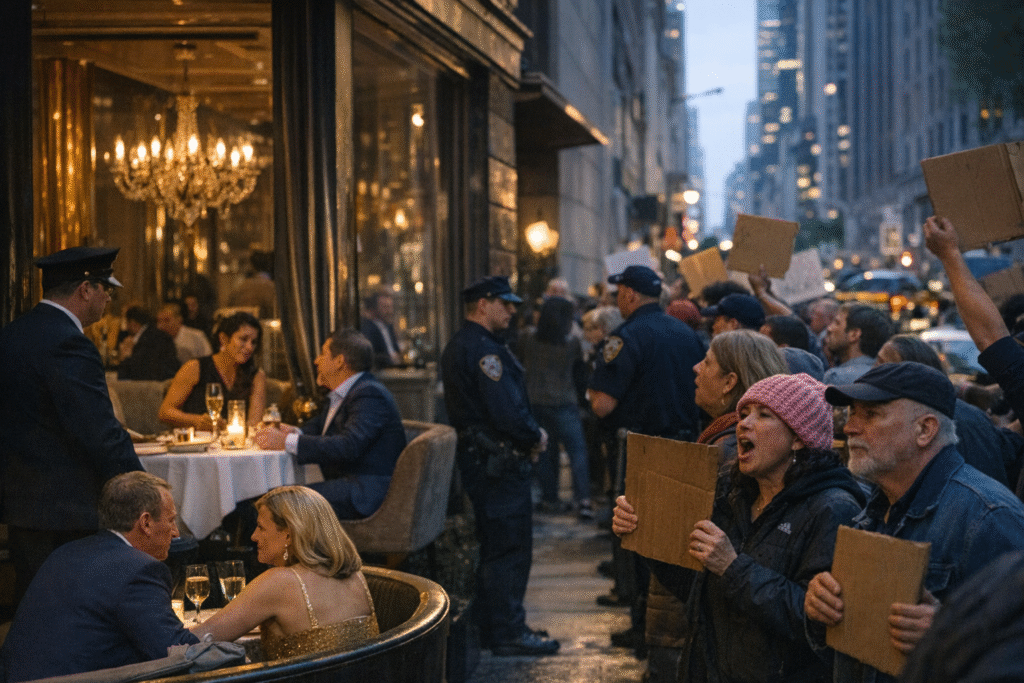
A high-end New York restaurant known as much for its exclusivity as its culinary reputation has stepped into one of the country’s most contentious policy debates: affordable housing. The development, first detailed in the Wall Street Journal article titled “America’s Fanciest Restaurant Enters the Fight Over Affordable Housing,” highlights a growing intersection between luxury real estate, hospitality, and urban housing pressures.
According to the Wall Street Journal’s reporting, the restaurant—long associated with wealth and prestige—has become entangled in a dispute over how housing resources should be allocated in one of the nation’s most expensive cities. At the center of the issue is a broader question facing urban policymakers: how to balance economic development and elite consumption with the urgent need for accessible housing.
The establishment’s involvement stems from its location within a high-profile development project that includes residential units subject to affordability requirements. Like many major urban developments, the project must navigate local mandates that require a portion of housing to be set aside below market rates. These regulations, designed to preserve socioeconomic diversity, have increasingly drawn scrutiny from developers and business stakeholders who argue that such requirements can complicate or constrain large-scale investment.
Critics of the current system argue that the inclusion of luxury commercial tenants—such as a restaurant of this stature—within developments benefiting from public incentives or zoning allowances raises questions about fairness and priorities. Housing advocates cited in the Wall Street Journal report suggest that projects incorporating ultra-luxury amenities risk undermining the spirit, if not the letter, of affordability programs. They contend that public policy should focus more directly on expanding housing access rather than indirectly subsidizing developments that cater to affluent clientele.
Developers and business operators, however, emphasize the economic ecosystem created by such projects. High-end establishments can drive foot traffic, tourism, and tax revenue, potentially supporting broader community investment. From this perspective, the presence of a celebrated restaurant is not a contradiction but part of a mixed-use strategy intended to make large developments financially viable.
The dispute reflects a wider national tension. Cities from New York to San Francisco are grappling with how to incentivize construction while ensuring that new housing benefits a range of income levels. As construction costs rise and urban land remains scarce, the balance between profitability and public responsibility has become increasingly difficult to strike.
What distinguishes this case is the symbolic weight of the restaurant itself. Its reputation for exclusivity makes it a potent emblem in debates over inequality, urban space, and the visibility of wealth. By becoming part of the affordable housing conversation, it has transformed from a purely cultural institution into a political flashpoint.
As the Wall Street Journal article makes clear, the outcome of this dispute is unlikely to settle the broader question of how cities should manage growth and affordability. Yet it underscores how even the most rarefied corners of the hospitality industry are no longer insulated from the pressures shaping urban life.