Iran’s Dual Navy Strategy Keeps Hormuz in Play
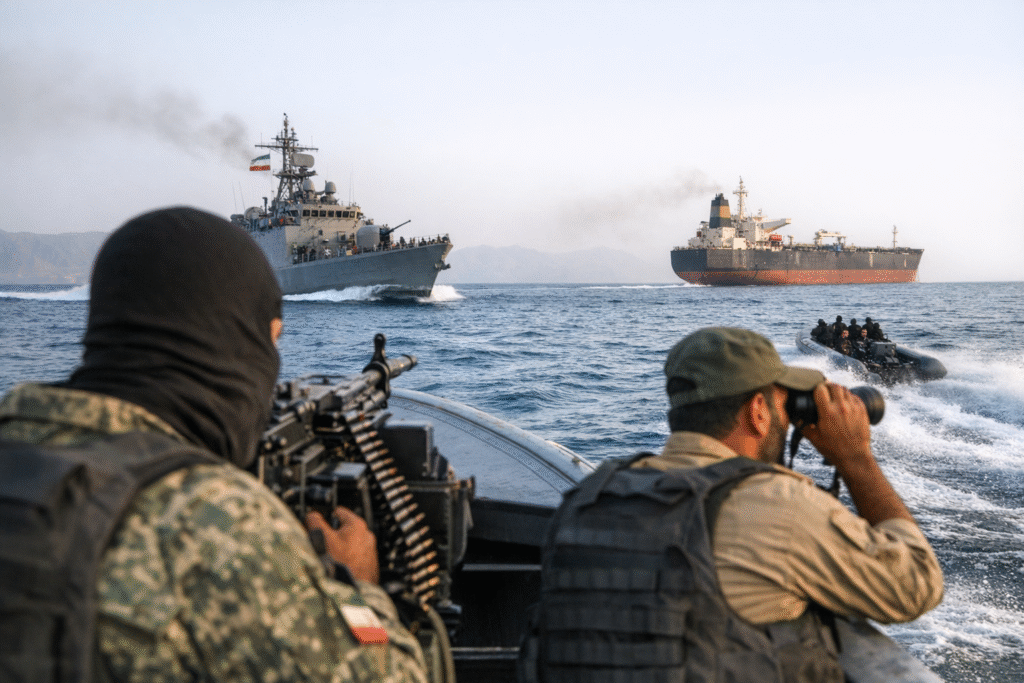
A recent Wall Street Journal report, titled “The U.S. Sank One of Iran’s Navies. The Other Still Controls Hormuz,” highlights a strategic paradox in the Persian Gulf: despite past U.S. success in crippling a segment of Iran’s naval forces, Tehran retains a formidable and adaptive maritime presence in one of the world’s most vital waterways.
The article, published by The Wall Street Journal, underscores how Iran effectively operates two distinct naval forces with separate doctrines and capabilities. The conventional navy, formally known as the Islamic Republic of Iran Navy, suffered heavily during past confrontations with the United States, most notably during Operation Praying Mantis in 1988. In that engagement, U.S. forces destroyed or damaged a significant portion of Iran’s traditional naval assets in response to mining incidents in the Gulf.
Yet, as the report makes clear, Iran’s naval strategy evolved in response to that setback. Over time, the Islamic Revolutionary Guard Corps Navy emerged as a parallel force focused less on conventional warfare and more on asymmetric tactics. This second navy emphasizes speed, dispersion, and unconventional methods, deploying small fast-attack craft, anti-ship missiles, naval mines, and drones to offset the technological superiority of adversaries.
Today, it is this latter force that plays a dominant role in the Strait of Hormuz, a narrow maritime chokepoint through which a substantial share of the world’s oil supply transits. The Guard Corps Navy’s operational style is designed to exploit the geography of the strait, where confined waters favor smaller, more agile vessels capable of launching quick, coordinated attacks or harassment operations.
The Wall Street Journal report suggests that this dual-structure approach has allowed Iran to preserve a credible deterrent in the Gulf despite past losses. While the conventional navy continues to operate in deeper waters and represents a more traditional maritime force, it is the Revolutionary Guard’s fleet that poses the more immediate and unpredictable challenge to shipping and regional stability.
U.S. and allied naval planners have long acknowledged the risks posed by Iran’s asymmetric capabilities. Swarming tactics, where numerous small boats converge on a larger vessel, combined with shore-based missile systems, complicate defensive strategies and raise the cost of maintaining secure passage through Hormuz. The potential for rapid escalation remains a key concern, particularly given the high volume of commercial traffic and the global economic stakes tied to uninterrupted energy flows.
The continued relevance of Iran’s unconventional naval arm highlights a broader shift in modern maritime conflict, where smaller powers increasingly rely on agility, local geography, and hybrid tactics to counterbalance larger, technologically advanced forces. As tensions in the region fluctuate, the balance between deterrence and provocation in the Strait of Hormuz remains precarious, with both sides acutely aware that even minor incidents could have outsized consequences.