IDF Chief Warns Draft Exemption Push Could Fracture Military Unity and Deepen Social Divisions
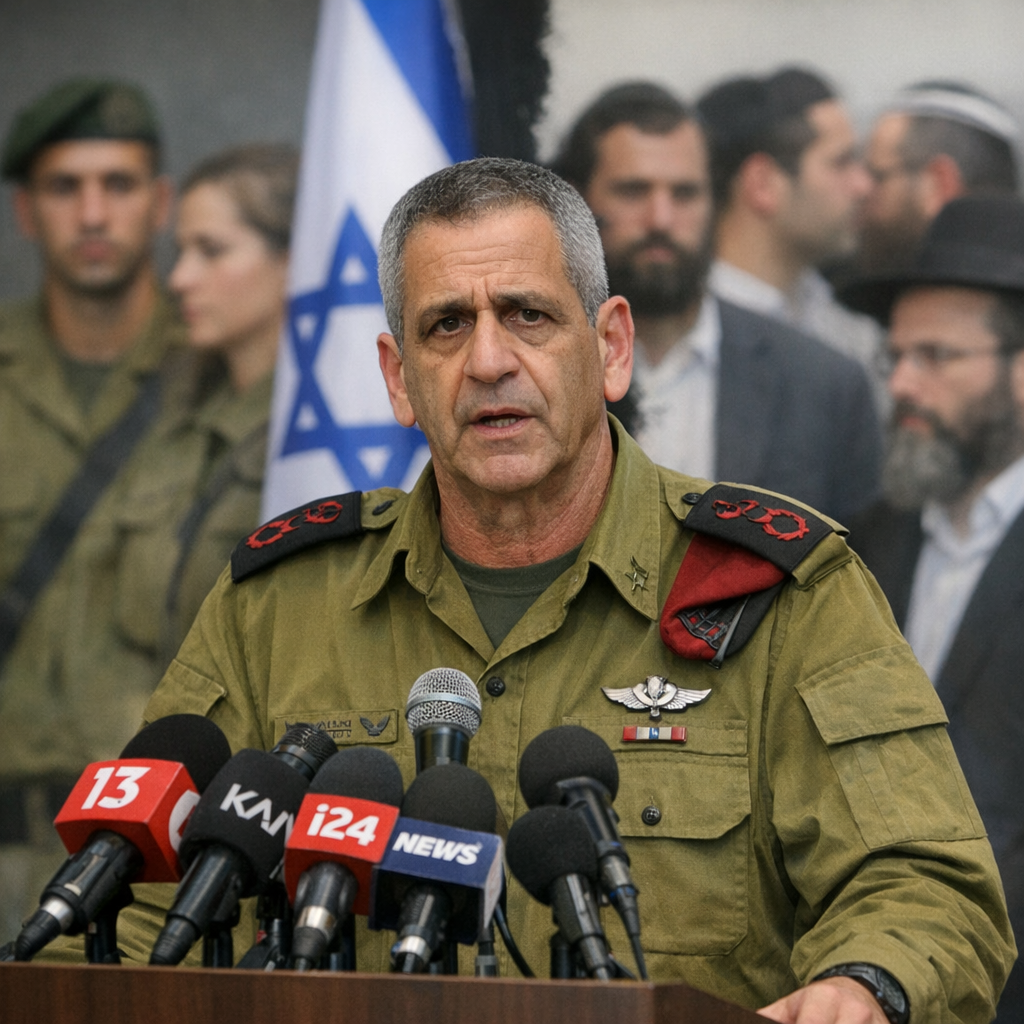
Israel’s military chief has issued a stark warning that proposed legislation to formalize exemptions from military service risks undermining cohesion within the armed forces, intensifying an already fraught political and social debate over conscription.
According to the report “IDF chief warns draft exemption bill will shatter trust among Israeli soldiers”, published by i24NEWS, Chief of Staff Lt. Gen. Eyal Zamir cautioned political leaders that advancing a bill to expand or entrench draft exemptions—primarily affecting ultra-Orthodox men—could fracture the sense of shared duty that underpins Israel’s military system. His remarks come amid renewed legislative efforts to resolve long-standing tensions over compulsory service.
The Israeli Defense Forces have long relied on a broad-based conscription model that is closely tied to national identity and collective responsibility. Any perceived imbalance in that system, particularly one seen as codifying unequal obligations, has historically triggered backlash among reservists and active-duty personnel alike. Zamir’s warning reflects concern that institutionalizing exemptions could deepen resentment among soldiers who bear the burden of service.
The issue has been politically volatile for decades, often surfacing during coalition negotiations and moments of social strain. Ultra-Orthodox parties have pushed to preserve exemptions for religious study, arguing that Torah scholarship constitutes a form of national service. Critics, however, contend that the current framework—and any expansion of it—places a disproportionate burden on other segments of society, particularly secular and national-religious communities, as explored in coverage of Israel’s ultra-Orthodox military exemption debate.
Zamir’s intervention is notable not only for its substance but also for its timing. The military leadership in Israel rarely enters the political arena so directly, particularly on legislation still under debate. His comments suggest a level of concern within the defense establishment that the proposed changes could have tangible effects on morale, recruitment, and long-term operational readiness, a concern echoed in analyses of Israel’s conscription system.
Reservists, who play a critical role in Israel’s military capacity, have been especially vocal in recent months about issues of fairness and shared sacrifice. Some have warned that perceived inequities could affect their willingness to serve, a development that would have significant implications for national security. Zamir’s warning appears to echo those concerns, emphasizing the importance of maintaining trust within the ranks, similar to trends noted by Reuters reporting on reservist concerns.
The broader political context adds another layer of complexity. Efforts to pass draft exemption legislation are unfolding against a backdrop of ongoing domestic divisions and security challenges. Policymakers are attempting to balance coalition stability with public sentiment, a task made more difficult by competing visions of equality, religious freedom, and civic duty, themes frequently discussed in international coverage of Israel’s draft disputes.
While the government has yet to finalize the proposed bill, the chief of staff’s remarks may influence the direction of the debate. Military leaders have historically sought to remain above partisan disputes, but questions that directly affect force cohesion and readiness often prompt more direct engagement.
As reported by i24NEWS, Zamir’s warning underscores a central dilemma for Israeli society: how to reconcile deeply held religious commitments with the demands of a universal conscription system in a state facing persistent security threats. The outcome of this debate will likely shape not only the composition of the armed forces but also the broader social contract between the state and its citizens.