From Mongolian Student to U.S. Soldier: A Journey of Service, Identity, and Return
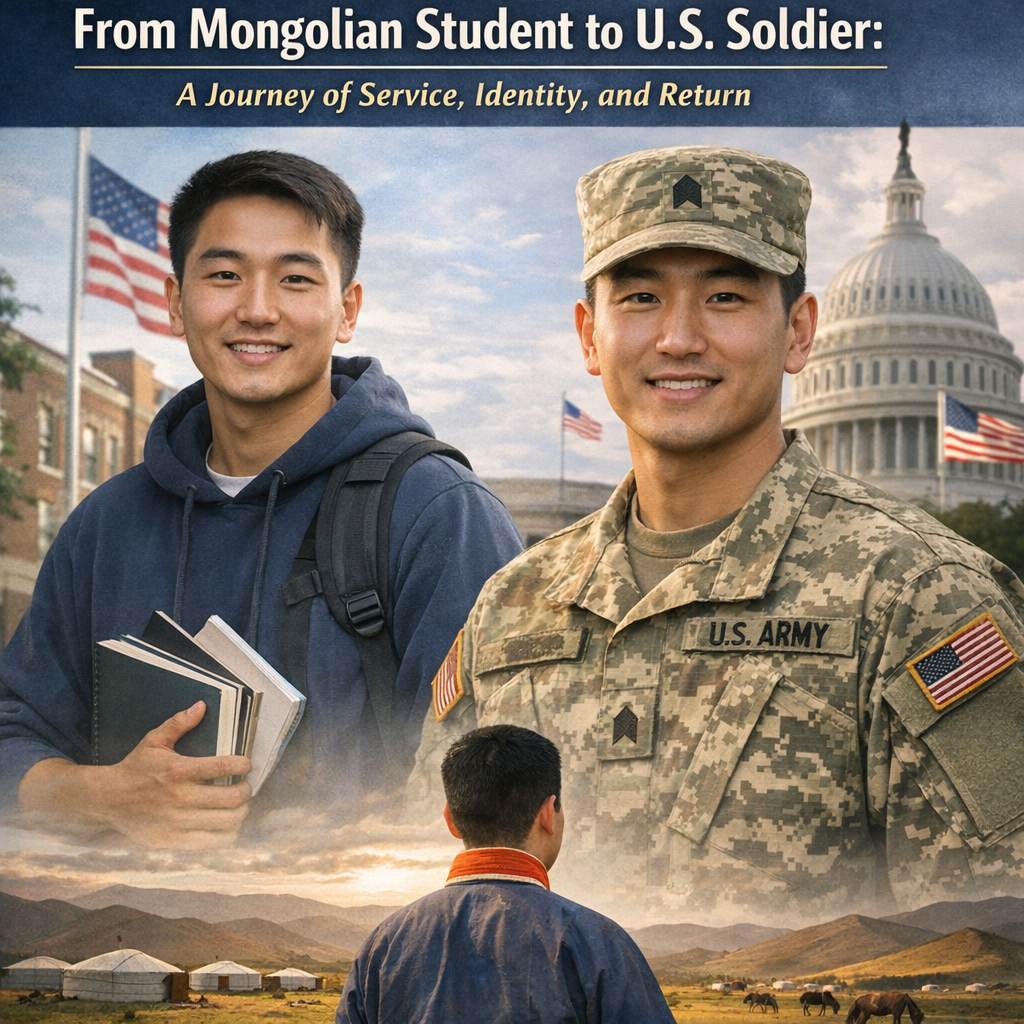
An account of migration, education, and military service has drawn attention after Military Times published a feature titled “He left Mongolia to pursue higher education. He returned as a US soldier,” highlighting the uncommon path of a Mongolian-born service member in the United States Army.
The report traces the individual’s journey from Mongolia to the United States, initially motivated by academic opportunity. Like many international students, he arrived with the intention of building a future through education, navigating the cultural, financial, and bureaucratic challenges that often accompany such a move. His trajectory, however, took a decisive turn as he chose to enlist in the U.S. military, a decision shaped by both personal conviction and pragmatic considerations, including the pathways to citizenship offered through service.
According to Military Times, his enlistment reflects a broader but lesser-known pattern of foreign-born recruits who view military service as both a means of integration and a form of public service. The U.S. Department of Defense has long included non-citizens in their ranks, though their numbers fluctuate with policy changes and recruitment needs. For many, the military offers not only stable employment but also a structured route toward legal permanence and civic belonging, including opportunities outlined by USCIS military naturalization programs.
The transition from student to soldier required significant adaptation. Military training imposed new physical and psychological demands, while also immersing him in a distinct institutional culture. For immigrants, such experiences can be particularly layered, combining the pressures of basic training with the complexities of adjusting to a new national identity.
Military Times reports that, after completing his training and serving in the U.S. Army, he ultimately returned to Mongolia, now carrying the experience and identity shaped by his time in uniform. His return underscores a dual sense of affiliation: a connection to his country of origin alongside the imprint of his service in the United States.
Stories like his highlight the transnational dimensions of modern military service. They also raise questions about identity, loyalty, and the evolving role of immigrant soldiers in national defense. While his individual journey is distinctive, it points to a broader phenomenon in which global mobility intersects with military institutions.
The feature published by Military Times situates this narrative within ongoing discussions about recruitment, citizenship policy, and the lived experiences of foreign-born service members. As the U.S. military continues to rely in part on immigrant personnel, such accounts offer insight into the motivations and outcomes that shape their service, both within and beyond American borders.