Green Party Debate on Race Strategy and Climate
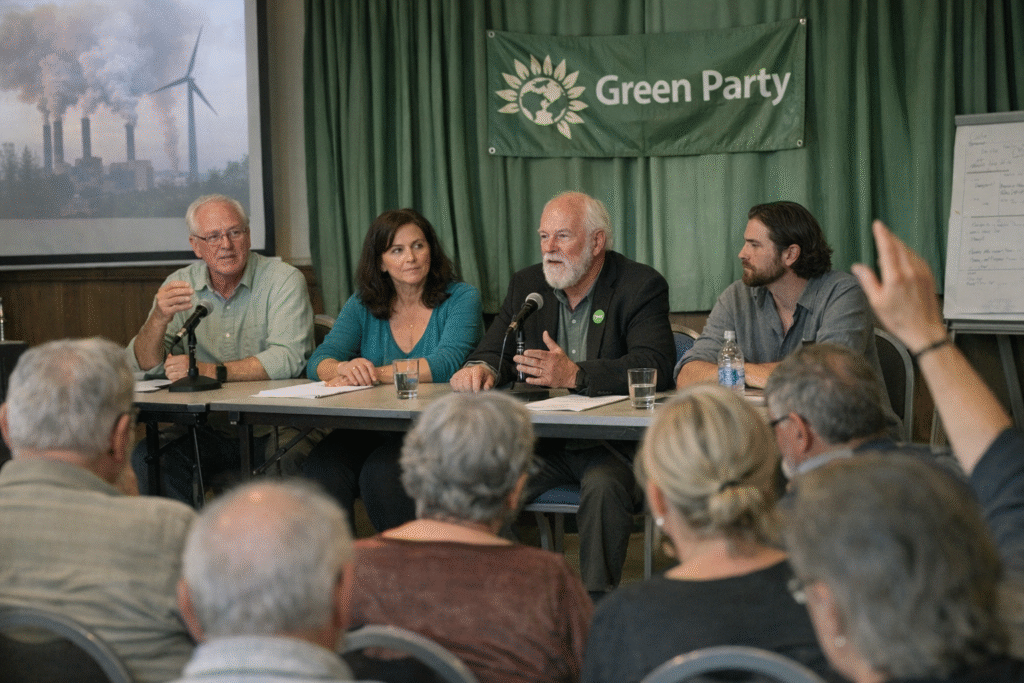
An opinion essay published on the Substack platform under the headline “The Green Party: Racist and Wrong” is drawing renewed attention to internal debates about race, political strategy and environmental messaging within Green politics.
The article, written by commentator Andrew Fox, argues that elements of the Green Party’s rhetoric and policy framing risk promoting exclusionary or counterproductive narratives, particularly in how environmental priorities intersect with questions of immigration, development, and global inequality. Fox contends that certain strands of Green political thought, especially when focused narrowly on population or consumption in wealthier countries, can drift into territory that overlooks structural inequalities and disproportionately places blame on marginalized communities.
Central to the critique is the claim that environmental debates are sometimes framed in ways that obscure the role of industrialized economies and historical emissions. Fox suggests that this framing can lead to policy prescriptions that emphasize restriction—such as limits on migration or economic growth—without adequately accounting for disparities in responsibility between developed and developing nations. In his assessment, this risks reinforcing narratives that stigmatize poorer populations rather than addressing systemic drivers of environmental harm.
The essay also raises concerns about political messaging, arguing that electorally, such approaches may alienate urban and minority voters who are increasingly central to progressive coalitions. Fox points to the broader challenge facing Green movements: reconciling urgent climate goals with a platform that remains inclusive and attentive to social justice.
The arguments come at a time when Green parties in several countries are seeking to expand their appeal beyond traditional environmentally focused constituencies. As they do so, internal tensions have surfaced over how to balance ecological limits with commitments to equity, migration, and international development.
Supporters of the Green movement have often countered such critiques by emphasizing that environmental degradation disproportionately affects vulnerable communities and that climate action is inherently linked to social justice. Many Green platforms explicitly advocate for global cooperation, climate reparations, and sustainable development models intended to lift living standards while reducing emissions.
Fox’s article nevertheless underscores an ongoing debate within environmental politics: whether certain policy emphases, particularly around consumption and population, can inadvertently echo arguments historically associated with exclusionary or nativist ideologies. It also highlights a broader question for Green parties as they mature politically—how to articulate climate urgency without undermining commitments to inclusivity and global fairness.
As climate policy continues to move toward the center of political discourse, these tensions are unlikely to subside. Instead, they are expected to shape how Green parties refine their platforms and communicate their priorities to an increasingly diverse electorate.