EV Transition Brings Layoffs and Slower Growth
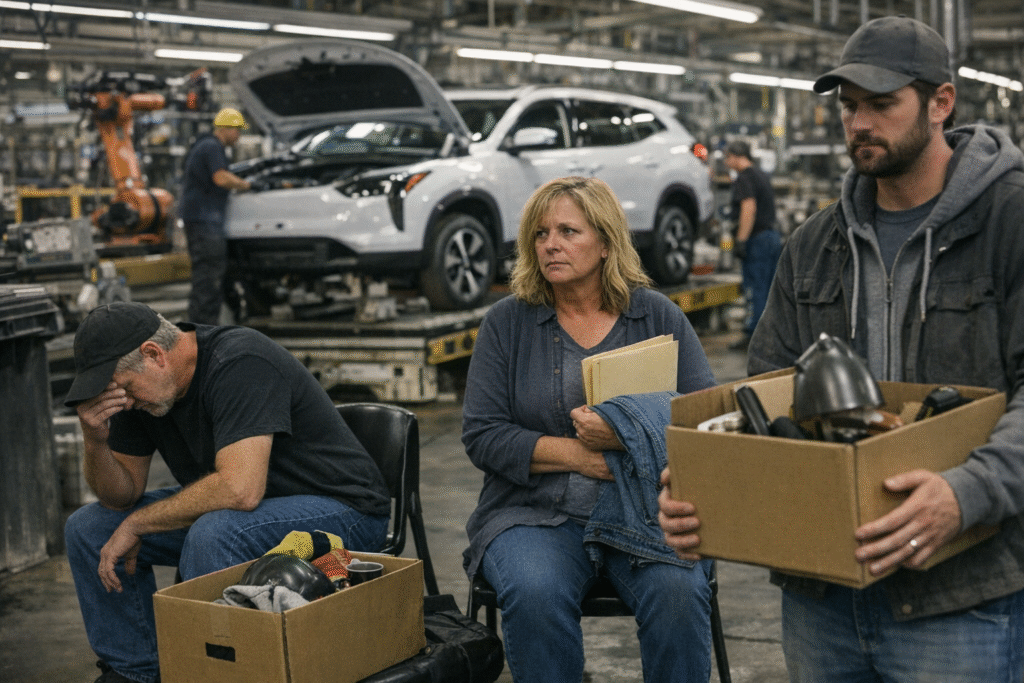
A shift in the auto industry’s transition to electric vehicles is beginning to ripple through factory floors, with layoffs and production slowdowns challenging earlier expectations of rapid job growth. In its article “EV Factories Lay Off Autoworkers,” The Wall Street Journal reports that several manufacturers and suppliers are scaling back staffing as demand for electric vehicles proves uneven and cost pressures mount.
Automakers that once raced to expand EV production are now reassessing timelines. While long-term commitments to electrification remain largely intact, near-term adjustments reflect softer-than-anticipated consumer demand in some segments, particularly for higher-priced models. As a result, companies have idled production lines, delayed plant openings, and reduced shifts, affecting both permanent and temporary workers.
The layoffs underscore a broader tension within the industry: electric vehicles require fewer parts and less labor to assemble than traditional internal combustion engine cars, raising concerns about structural job losses even as new roles are created in battery production and software development. Workers trained in conventional manufacturing processes are finding that the transition does not always translate into equivalent employment opportunities.
At the same time, automakers face high capital costs tied to building battery plants and retooling factories. Some companies have responded by trimming expenses, which has included workforce reductions at facilities tied to EV output. Suppliers, too, are feeling the strain, particularly those heavily invested in components that have limited use in electric drivetrains.
Labor unions have warned that without careful planning, the shift to electrification could erode job quality and security in the sector. Negotiations in recent years have sought to secure commitments from automakers to maintain domestic production and provide pathways for workers to transition into EV-related roles. However, the uneven pace of adoption complicates these efforts.
Despite the current pullback, industry leaders continue to argue that electrification remains inevitable, driven by regulatory pressure and long-term market trends. Yet the developments highlighted in The Wall Street Journal’s reporting suggest that the path forward may be less linear than once envisioned, with workforce impacts emerging as a central challenge in the transition to a lower-emissions future.