Army Recruiter Admits to Identity Theft and Bank Fraud Targeting Prospective Enlistees
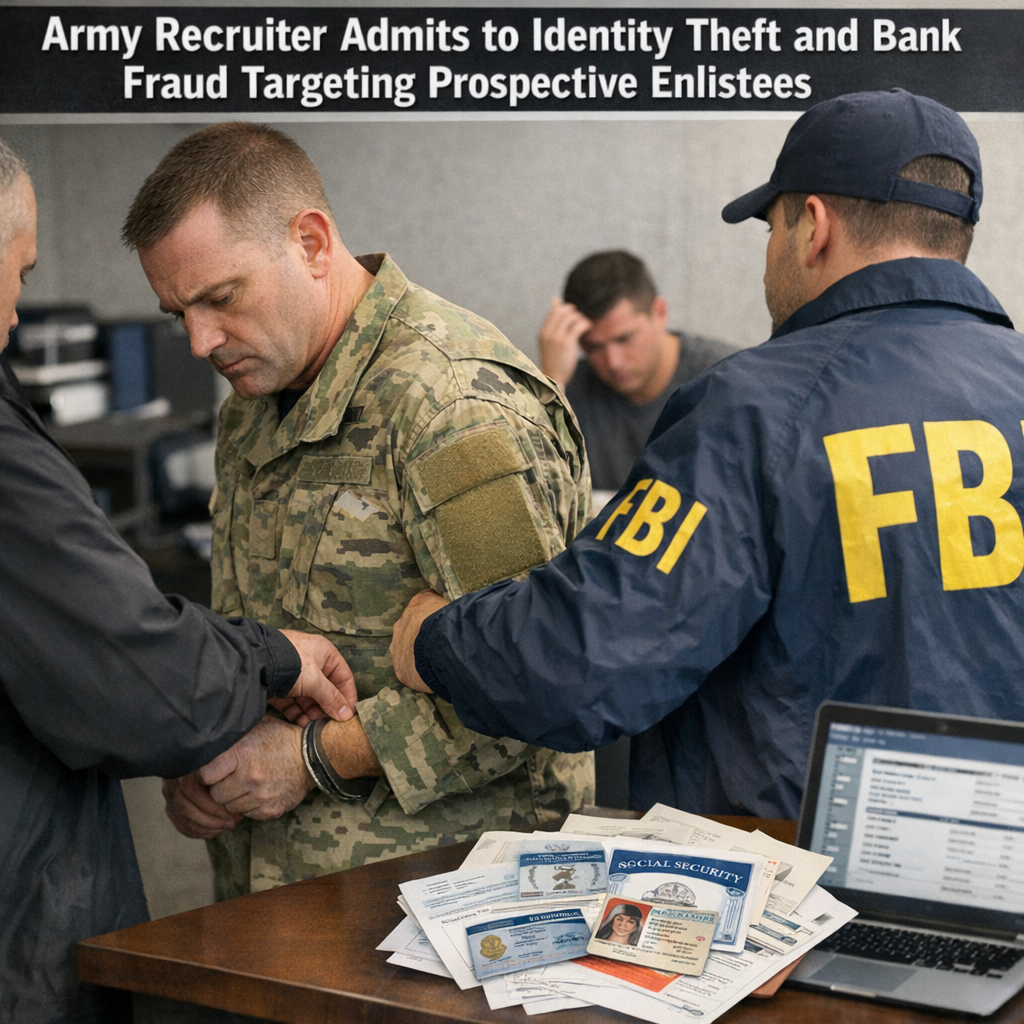
An active-duty Army recruiter has admitted to stealing the identities of prospective enlistees and using them to commit bank fraud, a case that underscores persistent concerns about misconduct within military recruiting ranks and the vulnerability of personal data collected during the enlistment process.
According to reporting by Military Times in its article “Army recruiter pleads guilty to stealing the identities of potential recruits for bank fraud”, the recruiter exploited sensitive personal information obtained from individuals considering military service, using it to open fraudulent financial accounts and carry out unauthorized transactions. Federal prosecutors said the scheme involved accessing Social Security numbers and other identifying details entrusted to the recruiter during routine recruitment procedures, in violation of federal statutes such as bank fraud laws.
Court documents indicate that the misconduct spanned multiple victims, many of whom were young applicants with limited financial histories—making them particularly susceptible to undetected identity theft. Authorities said the recruiter’s position allowed him to collect and retain documentation under the guise of processing enlistment paperwork, which he then misused for personal financial gain.
The guilty plea marks a significant development in a case that has drawn attention to oversight mechanisms within the Army’s recruiting enterprise, including the role of organizations such as the U.S. Army Recruiting Command. While the military relies heavily on recruiters to meet enlistment targets and serve as the public face of the service, the case highlights the degree of trust placed in individual recruiters and the potential consequences when that trust is abused.
Prosecutors have not publicly detailed the total financial losses incurred, but they described the fraud as deliberate and sustained. The recruiter now faces sentencing in federal court, where penalties could include prison time, restitution, and additional fines.
Army officials have emphasized that such conduct is not representative of the broader recruiting force and have pointed to existing safeguards, including policies under the Department of Defense Privacy Program, designed to protect applicant information. However, the case is likely to renew scrutiny of how personal data is handled at the local recruiting level, particularly as the military increasingly relies on digital systems and expanded outreach efforts to attract new enlistees.
For victims, the repercussions extend beyond financial loss, often involving lengthy efforts to repair credit and restore personal records. Identity theft cases tied to trusted institutions can be especially damaging, as victims are more likely to have shared sensitive information willingly and with little suspicion.
The incident adds to a broader pattern of isolated but consequential misconduct cases within military recruiting in recent years, prompting periodic calls for stricter oversight, enhanced auditing of recruiter activity, and clearer accountability measures. As the Army continues to navigate recruiting challenges, the balance between operational demands and ethical safeguards remains a focal point for policymakers and military leadership alike.