Air Force F-16 Pilot Earns Distinguished Flying Cross for Combat Mission in Saudi Arabia
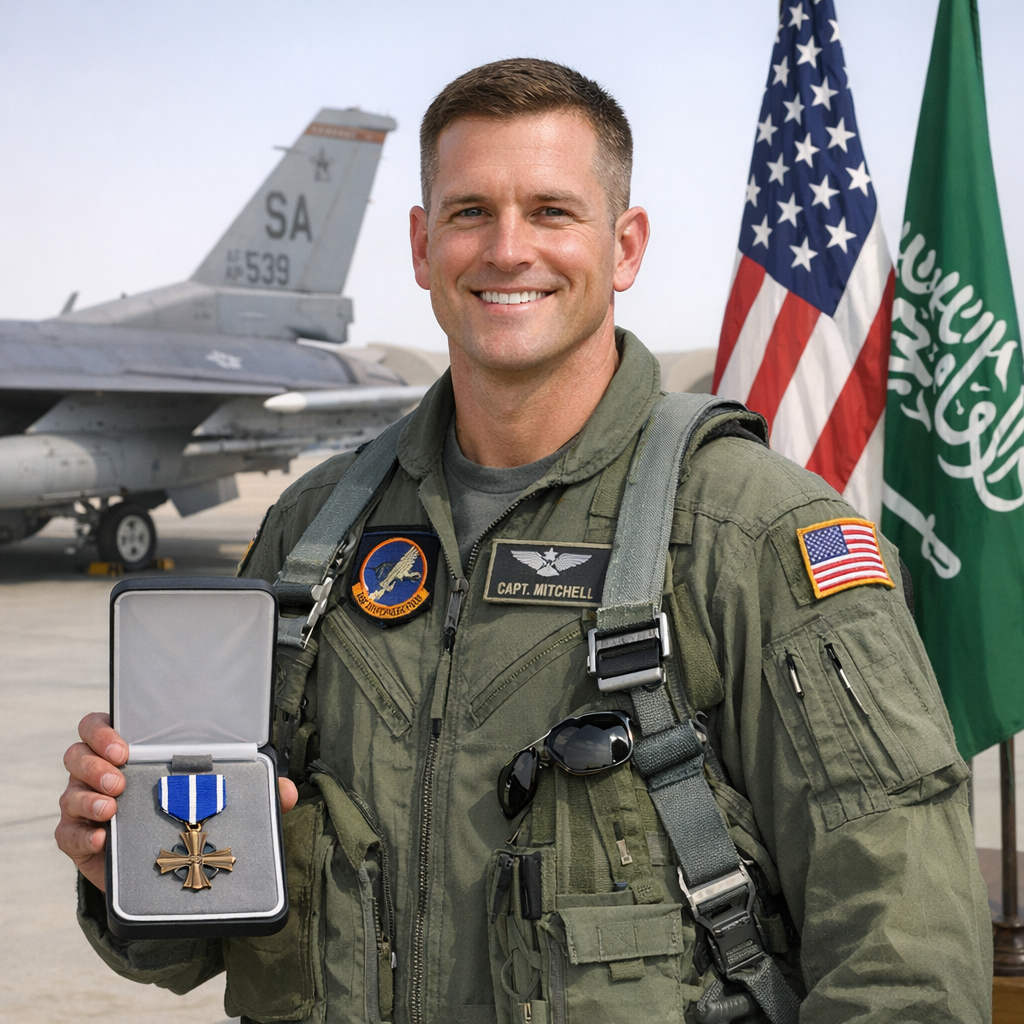
A U.S. Air Force F-16 pilot has been awarded the Distinguished Flying Cross for actions taken during a deployment to Saudi Arabia, according to a report published by Military Times titled F-16 pilot awarded Distinguished Flying Cross for bravery in Saudi Arabia deployment.
The decoration, one of the nation’s highest awards for heroism or extraordinary achievement in aerial flight, was granted in recognition of what military officials described as exceptional courage and airmanship under demanding operational conditions. The pilot’s actions occurred during a mission supporting U.S. military objectives in the region, where American forces continue to operate amid persistent tensions and evolving security challenges.
Details of the mission, while limited due to operational sensitivity, indicate that the pilot was confronted with a rapidly deteriorating situation that required quick judgment and precise execution. According to the Military Times report, the pilot sustained focus and control despite heightened risk, ensuring both mission success and the safety of fellow personnel. The account underscores the complex environment in which F-16 Fighting Falcon aircrews operate in the Middle East, where threats can emerge with little warning.
The Distinguished Flying Cross, established during World War I, is awarded to service members who distinguish themselves through heroism or extraordinary achievement during aerial operations. It is less frequently awarded than many other service decorations, reflecting the high threshold required for recognition. Officials noted that the pilot’s actions not only met but exceeded those standards.
The deployment to Saudi Arabia forms part of ongoing U.S. efforts to support regional stability and deter hostile activity, particularly in areas where U.S. Central Command oversees operations and aerial patrols and rapid-response capabilities are critical. Pilots assigned to such missions often face a combination of environmental hazards, evolving threat landscapes, and the need for split-second decision-making.
Military Times reported that leaders within the pilot’s unit emphasized the broader significance of the award, describing it as a reflection of both individual excellence and the high level of training and readiness maintained across the U.S. Air Force. They also pointed to the role of coordinated teamwork, noting that such missions typically rely on seamless collaboration between aircrews, ground controllers, and support personnel.
While the identity of the pilot and certain operational specifics remain limited, the recognition highlights the continued demands placed on U.S. service members deployed abroad in regions such as Saudi Arabia. It also serves as a reminder of the risks inherent in routine missions that can quickly escalate into life-threatening situations requiring exceptional skill and composure.
The award ceremony, as described in the Military Times coverage, underscored the Air Force’s ongoing commitment to honoring those who demonstrate extraordinary valor in the execution of their duties, particularly in regions where strategic interests and security concerns remain tightly intertwined.