Israeli High Court Freezes Law Shielding Haredi Draft Evaders, Igniting Renewed Judicial Clash with Government
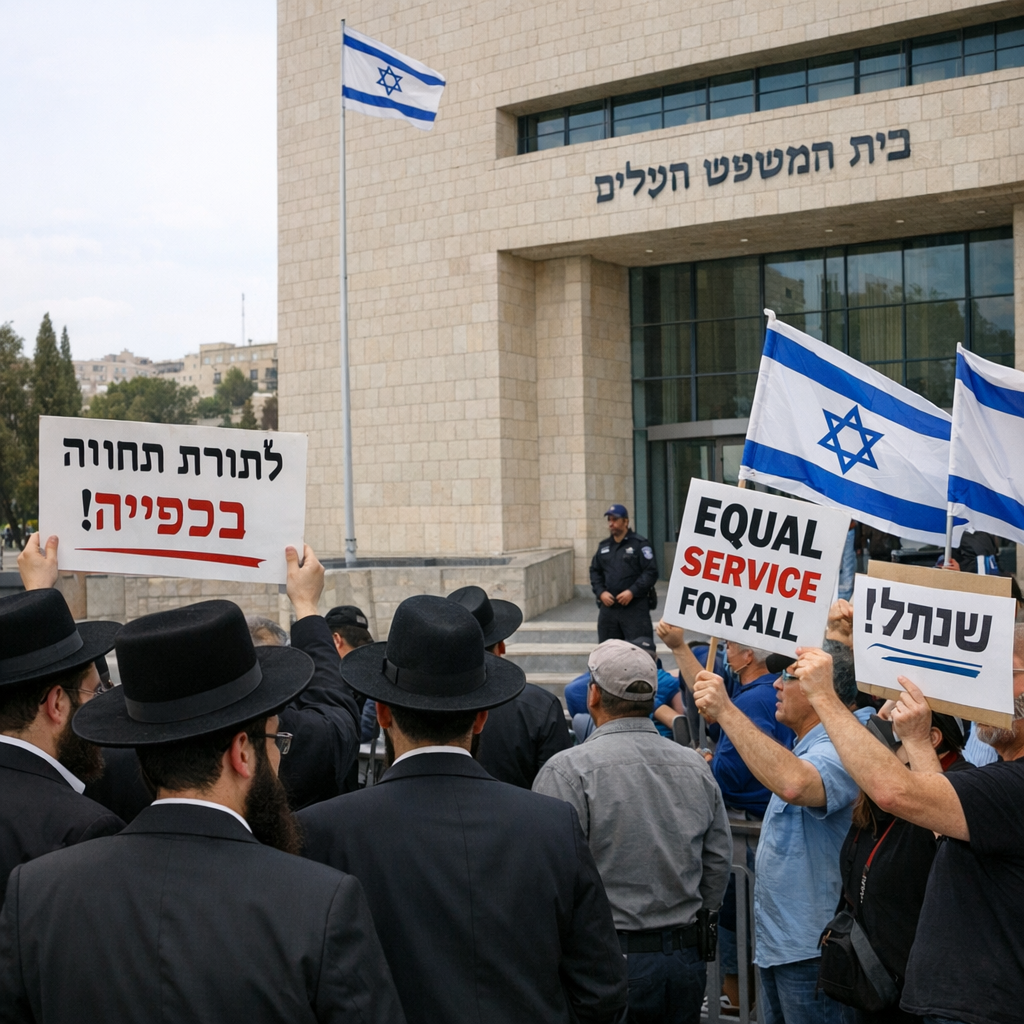
Israel’s High Court of Justice has intervened to temporarily halt a newly approved law that would have prevented the arrest of ultra-Orthodox Jewish draft evaders, setting up a fresh confrontation between the judiciary and the government over military conscription policy.
According to the article “High Court freezes new law halting arrests of Haredi draft evaders hours after Knesset approval,” published by the i24NEWS website, the court issued an injunction just hours after the Knesset passed the controversial measure. The legislation had sought to bar authorities from detaining members of the Haredi community who fail to comply with mandatory military service requirements.
The court’s swift action underscores the sensitivity of the long-running dispute over Haredi conscription, a divisive issue in Israeli society that has intensified amid ongoing security challenges. By freezing the law, the justices signaled a willingness to scrutinize the government’s attempt to reshape enforcement mechanisms surrounding draft obligations.
Supporters of the legislation argue that it reflects longstanding political commitments to ultra-Orthodox communities, many of whose leaders oppose compulsory military service on religious grounds. They contend that punitive measures against draft evaders exacerbate social tensions and fail to account for the unique cultural and theological considerations of the Haredi population.
Critics, however, see the law as undermining the principle of equal burden sharing, a cornerstone of Israel’s conscription system. Opponents argue that exempting or effectively shielding one group from enforcement risks eroding public trust and placing a disproportionate burden on other segments of society, particularly at a time when the Israel Defense Forces face heightened operational demands.
The High Court’s decision to freeze the law does not constitute a final ruling on its legality but rather preserves the status quo while the justices consider petitions challenging the measure. Legal analysts say the move reflects concerns about whether the legislation conflicts with constitutional norms and prior court rulings that have repeatedly struck down broad exemptions for ultra-Orthodox men.
The government, led by a coalition that includes parties representing Haredi interests, is expected to defend the law vigorously. The case could become another flashpoint in the broader struggle between Israel’s executive and judicial branches, which has already been marked by disputes over judicial oversight and legislative authority.
For now, enforcement against draft evasion among Haredi men remains unchanged, pending further judicial review. The outcome of the case is likely to carry significant implications not only for military policy but also for the balance of power within Israel’s political system.