Air Force Sets 18-Day Deadline for Airmen to Report Updated Body Composition Metrics
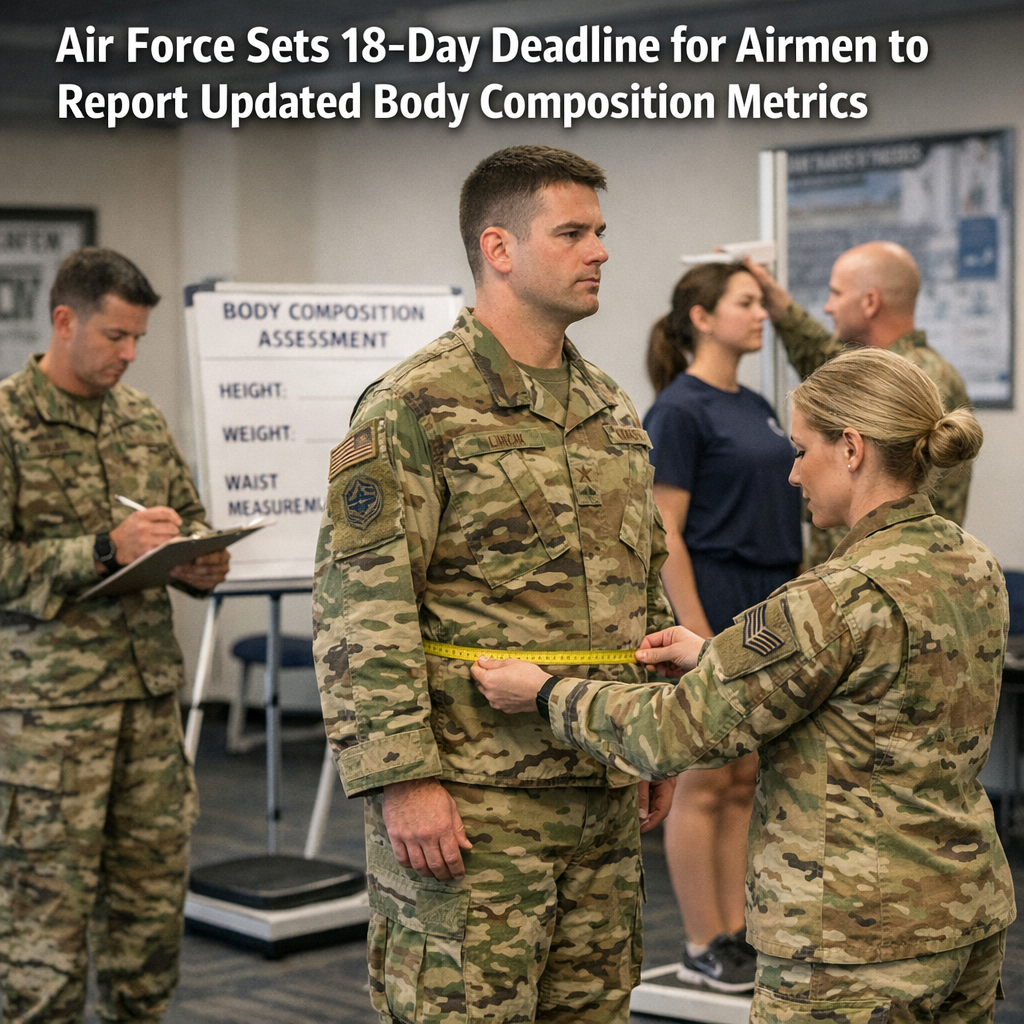
Active-duty airmen have been given a limited window to comply with updated body composition requirements, as senior Air Force leadership moves to tighten enforcement of a relatively new fitness metric.
According to a report by Military Times titled “Active-duty airmen have 18 days to submit current waist-to-height ratio, Wilsbach says,” Air Combat Command chief Gen. Ken Wilsbach informed personnel that they have just over two weeks to provide current measurements reflecting their waist-to-height ratio. The directive underscores growing emphasis on the metric as part of the service’s evolving approach to physical readiness and health assessment.
The waist-to-height ratio, introduced as an alternative to the long-standing abdominal circumference measurement, is intended to provide a more individualized and scientifically grounded indicator of health risk. Rather than relying on a fixed waist measurement threshold, the ratio compares waist size to an individual’s height, aiming to account for body type differences and reduce criticism that previous standards were overly rigid or inaccurate. The metric itself is supported by medical research, including findings highlighted by the Centers for Disease Control and Prevention and studies discussed in journals such as PubMed Central, which identify waist-to-height ratio as a predictor of cardiometabolic risk.
Wilsbach’s message, as reported by Military Times, signals that while the Air Force has sought to modernize its fitness framework, enforcement is entering a more consequential phase. Airmen who fail to submit their measurements within the specified 18-day period may face administrative repercussions, though specifics on penalties were not fully detailed.
The push reflects broader efforts within the Department of the Air Force to balance readiness with a more holistic understanding of health. In recent years, service leaders have revised fitness testing protocols, introduced alternatives such as shuttle runs and hand-release push-ups, and paused or adjusted standards during the COVID-19 pandemic. These changes align with broader Department of Defense fitness policy updates aimed at modernizing service-wide standards. The waist-to-height ratio emerged from these reforms as part of a wider initiative to improve fairness and accuracy, similar to evolving guidance outlined by the U.S. Air Force’s physical fitness assessment updates.
However, the transition has not been without friction. Some airmen have raised concerns about inconsistent implementation, lack of clarity in guidance, and limited time to comply with new requirements. The deadline referenced in Wilsbach’s directive appears to have intensified those concerns, particularly among personnel deployed, in training, or otherwise operating under constraints that could complicate access to proper measurement procedures.
Military Times reported that leadership views the requirement as a necessary step to ensure data accuracy and accountability across the force. By collecting updated measurements within a defined timeframe, commanders aim to establish a reliable baseline for evaluating compliance and identifying potential health risks, consistent with broader military health priorities outlined by the Defense Health Agency’s Total Force Fitness program.
The directive also highlights a cultural shift within the Air Force, where fitness is increasingly framed not only as a readiness issue but as a long-term health priority. The waist-to-height ratio is widely recognized in medical research as a predictor of cardiovascular risk and metabolic conditions, lending scientific support to its adoption.
Still, the success of the policy will likely depend on how consistently it is applied and whether airmen perceive it as a fair improvement over previous standards. As enforcement tightens, the service will face continued scrutiny over whether its evolving fitness model effectively balances operational demands with the well-being of its personnel.