Iran Drone Launch Near Strait of Hormuz Sparks Fresh Fears Despite Ongoing Diplomatic Efforts
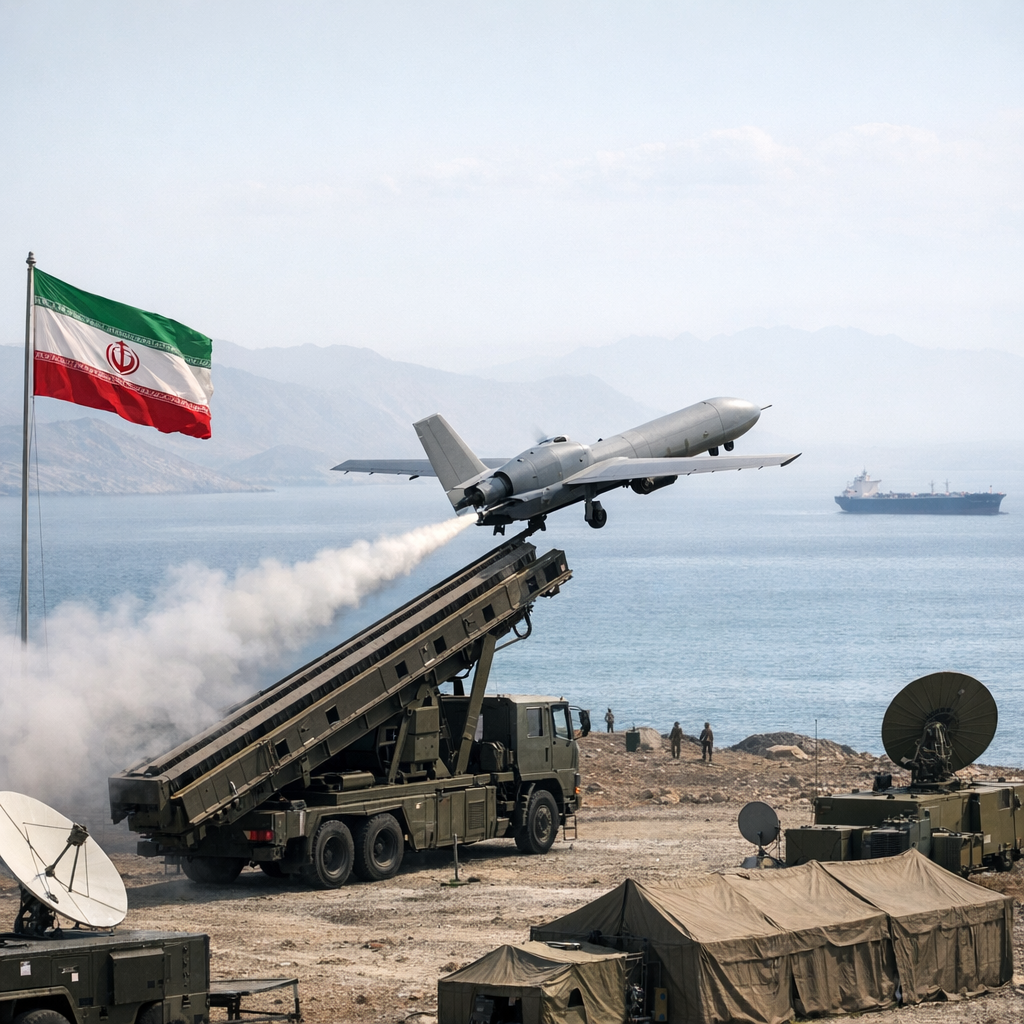
Iran launched a series of drones toward the Strait of Hormuz overnight, raising fresh concerns about regional escalation despite an apparent diplomatic understanding intended to ease tensions, according to a report published by i24NEWS under the headline “Iran launches drones toward Strait of Hormuz overnight despite deal – live blog.”
The reported deployment underscores the fragility of recent efforts to stabilize the Gulf, a waterway that carries a significant share of the world’s oil supply. According to the U.S. Energy Information Administration, roughly a fifth of global petroleum liquids consumption passes through the strait. While details about the scale, exact origin, and ultimate targets of the drones remain limited, the move has been widely interpreted by regional observers as a signal of continued military assertiveness by Tehran.
According to i24NEWS, the launches took place against the backdrop of a tentative agreement that was expected to reduce hostilities. The apparent contradiction between diplomatic messaging and military activity has fueled uncertainty among Gulf states and international stakeholders, particularly given the strategic importance of the Strait of Hormuz.
Security analysts have long warned that even limited drone activity in the area can trigger broader instability. As noted in analysis by the Center for Strategic and International Studies, Iran’s expanding drone capabilities have become a key tool for projection of power across the region. The narrow maritime corridor has been the site of repeated confrontations in recent years, including seizures of commercial vessels, naval standoffs, and suspected sabotage operations. Any renewed activity raises the risk of miscalculation among regional and global powers maintaining a presence in the area.
The report indicates that monitoring and interception efforts were activated in response to the drone launches, though no immediate damage or casualties were confirmed. Military officials across the region have not publicly detailed the operational outcome, leaving open questions about whether the drones were reconnaissance missions, a show of force, or part of a more complex strategy. Previous incidents in the region, documented by Reuters coverage of Gulf security, highlight how quickly such situations can escalate.
Diplomatic reactions have been measured but wary. Governments with direct stakes in Gulf security have emphasized the need to preserve freedom of navigation while urging restraint. At the same time, the incident is likely to complicate ongoing negotiations involving Iran and international partners, particularly efforts aimed at reducing military friction and preventing further escalation.
The i24NEWS coverage frames the incident as part of a broader pattern in which periods of negotiation are punctuated by displays of military capability. This dynamic has historically challenged attempts to build sustained trust between Iran and its counterparts, especially in a region where strategic signaling often carries immediate security implications.
As of the latest reporting, no official Iranian statement had clarified the intent behind the drone activity. In the absence of clear communication, the episode is expected to intensify scrutiny of Tehran’s actions and deepen concerns about the stability of a region already marked by persistent geopolitical tension.