Paxton Unites Rivals in High-Stakes Texas Race
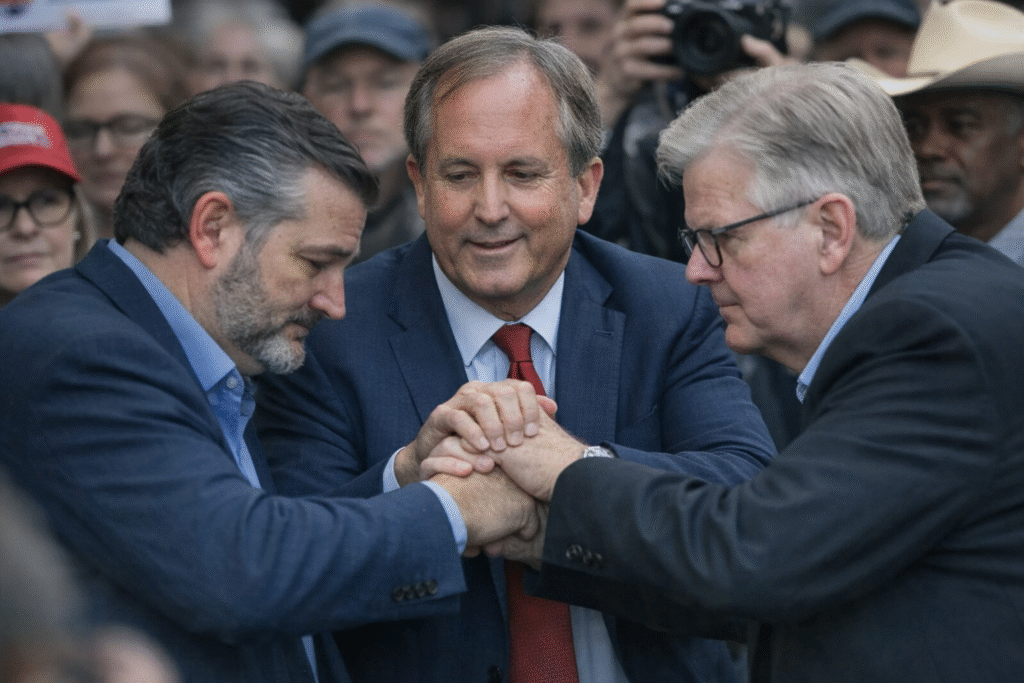
A recent report by The Wall Street Journal, titled “Trump and Democrats Get Paxton in Texas: The Senate Nominee They All Wanted,” highlights the unusual political convergence surrounding Texas Attorney General Ken Paxton’s emergence as a Senate candidate, a development that has reshaped expectations in one of the country’s most closely watched upcoming races.
Paxton’s candidacy has drawn strong backing from former President Donald Trump and his allies, who view him as a loyalist aligned with the party’s populist direction. At the same time, Democratic strategists have signaled confidence that Paxton, a polarizing figure burdened by years of legal controversy, could present an unusually favorable matchup in a state that has long resisted competitive statewide Democratic bids.
The Journal’s reporting underscores how Paxton’s political profile—marked by high name recognition, staunch conservatism, and a history of legal and ethical challenges—has created a rare moment of bipartisan strategic alignment. For Republicans aligned with Trump, Paxton represents ideological clarity and a willingness to wage aggressive political and legal battles. For Democrats, he represents vulnerability, particularly among suburban voters and moderates who have shown signs of drifting away from hardline candidates in recent election cycles.
Paxton’s tenure as attorney general has been defined by high-profile lawsuits, especially those targeting federal policies under Democratic administrations, as well as a persistent cloud of legal scrutiny. He was impeached by the Texas House before being acquitted in the state Senate, and he has faced ongoing investigations related to securities fraud allegations. While these issues have not significantly eroded his support within the Republican base, they have become central to Democratic messaging framing him as ethically compromised.
The dynamic described by The Wall Street Journal reflects broader tensions within both parties. Republicans must weigh the benefits of nominating a candidate with strong grassroots appeal against the risks of alienating swing voters in a state that, while still reliably Republican, has shown incremental demographic and political shifts. Democrats, for their part, see an opportunity to test whether a deeply polarizing Republican nominee could narrow what has historically been a sizable electoral gap.
Strategists on both sides are already shaping their approaches around Paxton’s candidacy. Republican operatives emphasize turnout among conservative voters and the continued influence of Trump within the party’s primary electorate. Democratic planners are focusing on coalition-building in urban and suburban areas, particularly among college-educated voters who have played a decisive role in tighter statewide races in recent years.
The convergence of interests described in The Wall Street Journal’s article illustrates a broader reality of modern American politics, where candidate selection can hinge as much on perceived electability as on ideology. In this case, Paxton’s rise reflects both his enduring strength within Republican ranks and the calculated optimism of Democrats who believe his liabilities could outweigh those advantages in a general election.
As the race develops, the central question will be whether Paxton’s combative style and legal baggage energize his supporters more than they alienate persuadable voters. The answer could have implications not only for Texas but for national political strategies in an era increasingly shaped by highly personalized and polarizing candidates.