Pentagon Leaders Outline Strategy Amid Rising Risks
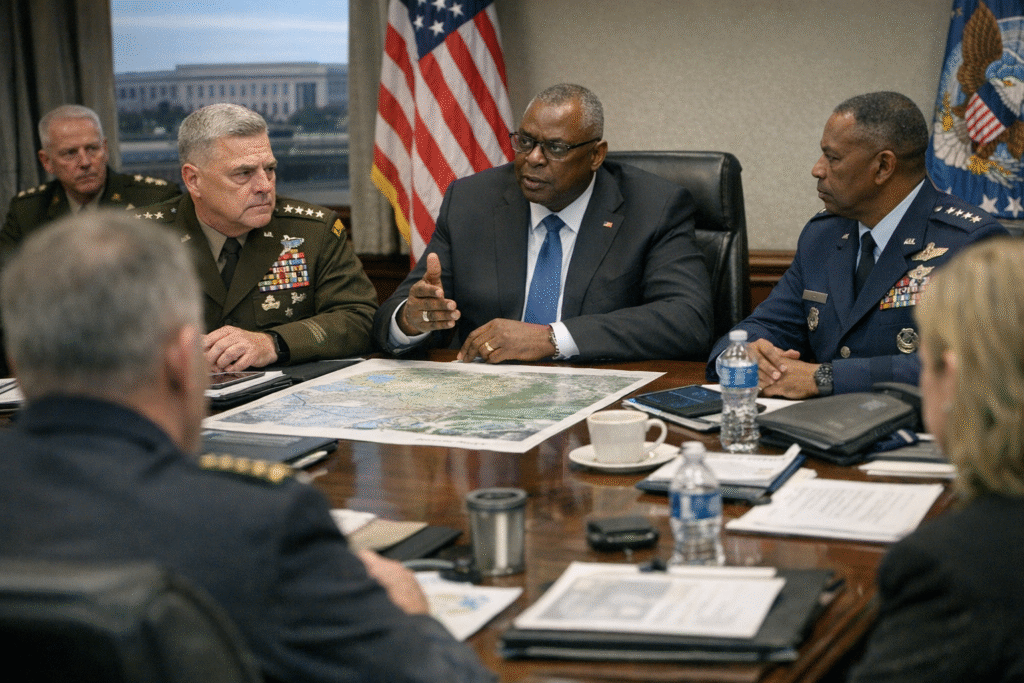
A recently published Defense Department transcript offers a window into the Pentagon’s latest messaging on military readiness, global security challenges, and strategic priorities. The document, titled “Secretary of War Pete Hegseth and Chairman of the Joint Chiefs of Staff Gen. Dan …,” and released on the official War.gov website, captures a high-level briefing that underscores both continuity and concern within U.S. defense leadership.
In the exchange, Secretary of War Pete Hegseth and Chairman of the Joint Chiefs of Staff Gen. Dan Caine (as identified in the transcript) address a range of issues confronting the U.S. military, including evolving geopolitical tensions, force posture adjustments, and ongoing operational commitments. Their remarks reflect an effort to balance reassurance with realism at a time of heightened uncertainty across multiple regions.
Hegseth emphasizes the importance of maintaining deterrence while adapting to emerging threats, framing current U.S. strategy as one rooted in flexibility and technological modernization. He points to investments in advanced capabilities and force readiness as central to sustaining the military’s competitive edge. At the same time, he acknowledges the strain placed on personnel and resources by persistent global demands.
Gen. Caine’s comments reinforce the operational perspective, highlighting the complexity of coordinating across theaters while maintaining preparedness for both conventional and asymmetric conflict. He discusses the need for interoperability with allies and the continued importance of joint force integration, suggesting that future conflicts are likely to test not just military strength but also coordination among partners.
Both leaders touch on the significance of alliances, describing them as a force multiplier in an increasingly contested international environment. The transcript indicates a clear emphasis on burden-sharing and collective security, even as questions remain about the durability of certain partnerships and the pace at which allies can adapt to new strategic realities.
The briefing also addresses domestic considerations, including recruitment, retention, and the overall health of the force. Hegseth notes ongoing efforts to strengthen military culture and support systems, while Caine underscores the importance of training and readiness in maintaining operational effectiveness.
While the tone of the discussion is measured, the underlying message is one of vigilance. The transcript from War.gov suggests that U.S. defense officials are keenly aware of the accelerating pace of change in global security dynamics. Their remarks reflect both confidence in the military’s capabilities and concern about the breadth of challenges on the horizon.
As the United States navigates a shifting strategic landscape, the exchange captured in “Secretary of War Pete Hegseth and Chairman of the Joint Chiefs of Staff Gen. Dan …” offers insight into how senior military and civilian leaders are framing priorities, communicating risks, and preparing for an uncertain future.