Israel Boosts Air Power with F-35 and F-15 Deal
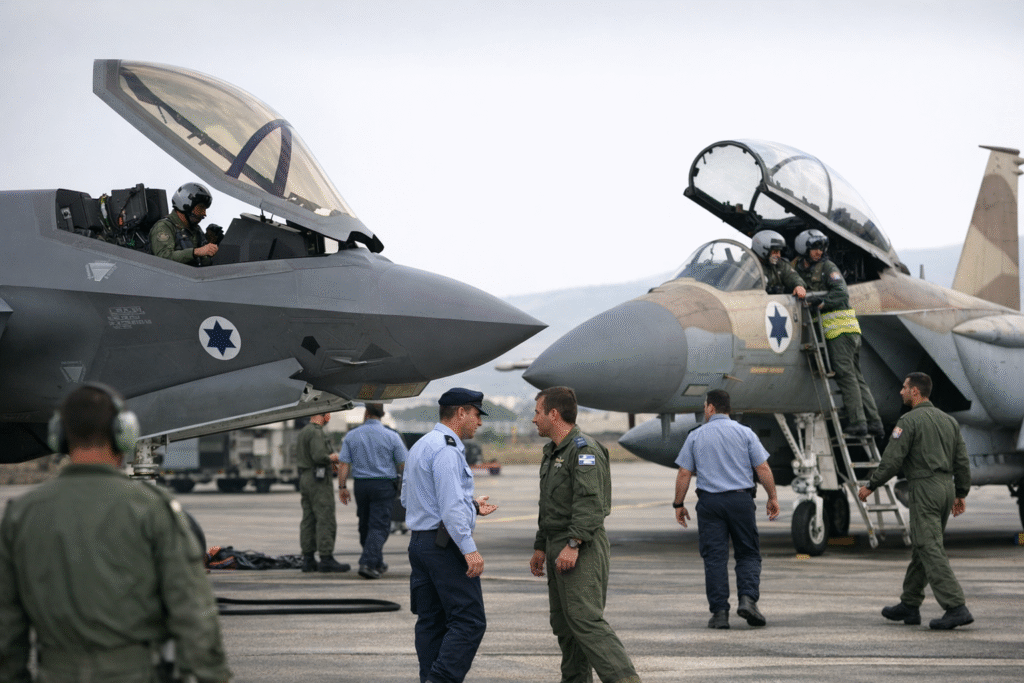
Israel is moving forward with a major expansion of its air power, confirming plans to acquire additional US-made fighter aircraft in a deal that underscores the country’s long-term defense priorities and deepening military ties with Washington.
According to a report titled “Israel Buying F-35, F-15 Fighter Jets, Netanyahu Announces,” published by Breaking Defense, Prime Minister Benjamin Netanyahu announced that Israel will procure both F-35 stealth fighters and F-15 aircraft as part of a broader modernization effort. The decision reflects a dual-track strategy: enhancing fifth-generation capabilities while maintaining and upgrading proven fourth-generation platforms suited for heavy payloads and extended-range missions.
The F-35, manufactured by Lockheed Martin, is already a cornerstone of the Israeli Air Force’s future force structure. Israel has operated a customized version of the aircraft for several years, integrating domestic systems and using it in operational settings. Additional orders are expected to further expand Israel’s stealth fleet, strengthening its ability to penetrate advanced air defenses and conduct precision strikes.
At the same time, the inclusion of new F-15 aircraft—widely understood to be an advanced variant produced by Boeing—highlights the continued relevance of non-stealth fighters in Israel’s doctrine. The F-15 platform offers advantages in payload capacity, range, and endurance, making it particularly suited for carrying large munitions and executing long-distance missions, capabilities that remain critical in Israel’s regional security environment.
Breaking Defense reported that Netanyahu framed the acquisition as essential to maintaining Israel’s qualitative military edge. The combination of F-35s and F-15s is intended to provide operational flexibility: stealth aircraft for contested environments and high-value targets, complemented by heavily armed jets capable of sustained strike operations.
The announcement comes amid heightened regional tensions and ongoing concerns over adversaries’ missile programs and air defense systems. By investing in both cutting-edge stealth technology and upgraded legacy platforms, Israel appears to be hedging against a wide spectrum of threats, from advanced state militaries to asymmetric actors.
The deal also reinforces the strategic relationship between Israel and the United States, where defense cooperation has long extended beyond procurement to include joint development, funding arrangements, and technology sharing. While specific financial details and delivery timelines were not fully outlined in the Breaking Defense report, such deals typically involve US foreign military financing and congressional oversight.
Analysts view the move as part of a broader trend among US allies seeking a balanced air fleet rather than relying solely on next-generation aircraft. For Israel, the approach reflects both operational experience and geographic realities, where rapid response, versatility, and sustained strike capability are critical.
As the procurement process advances, attention will likely turn to how Israel integrates these aircraft into its evolving doctrine, particularly in relation to emerging threats and the growing complexity of the regional battlespace.