US Troop Cuts Deepen Rift With Europe
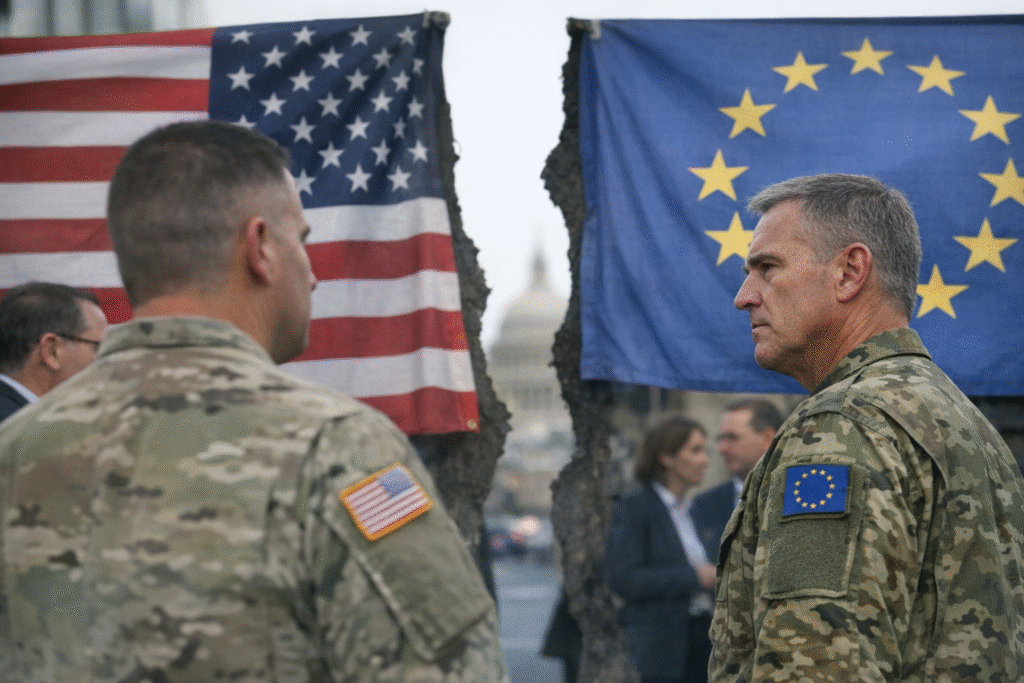
A planned U.S. troop reduction in Europe is intensifying disagreements between Washington and its European allies, highlighting deeper strategic tensions over defense priorities, burden-sharing, and the future of transatlantic security.
According to the Wall Street Journal article titled “U.S. Troop Withdrawal Expands Yawning Rift Between U.S. and Europe,” the proposed drawdown—while framed by U.S. officials as a recalibration of military resources—has raised alarm among European governments already grappling with a more uncertain security environment. The debate reflects diverging views on how to respond to evolving threats, including Russia’s posture in Eastern Europe and broader geopolitical competition.
European officials fear that even limited reductions in U.S. forces could weaken deterrence at a time when unity within NATO is seen as critical. Several governments in Central and Eastern Europe, in particular, view the American military presence as a cornerstone of their security, both symbolically and operationally. Any perceived scaling back risks emboldening adversaries and undermining confidence in the alliance’s collective defense commitments.
U.S. policymakers, however, argue that the shift is part of a broader strategic adjustment aimed at addressing global challenges more efficiently. With increasing emphasis on the Indo-Pacific and competition with China, defense planners have suggested that resources must be reallocated to reflect changing priorities. This recalibration has revived long-standing tensions over whether European allies are contributing sufficiently to their own defense, an issue that has repeatedly surfaced in NATO discussions.
The disagreement also reflects differing threat perceptions. While Washington seeks flexibility to address multiple theaters, many European leaders remain primarily focused on regional stability and the immediate risks posed by Russia. This divergence has complicated efforts to present a unified strategic front, even as leaders publicly reaffirm their commitment to the alliance.
Diplomatic efforts are underway to contain the fallout, with U.S. officials emphasizing continued cooperation and support for NATO. Nonetheless, the episode underscores how even incremental policy changes can expose deeper fractures in transatlantic relations. As Europe reassesses its own defense capabilities and ambitions, including calls for greater strategic autonomy, the future balance between U.S. leadership and European self-reliance remains uncertain.
The controversy suggests that the alliance is entering a period of adjustment, where alignment on shared goals may be tested by shifting national priorities. Whether the current dispute leads to lasting changes in NATO’s structure or merely reflects temporary friction will depend on how both sides navigate the evolving security landscape.