Padres Turn to Mason Miller as New-Age Closer
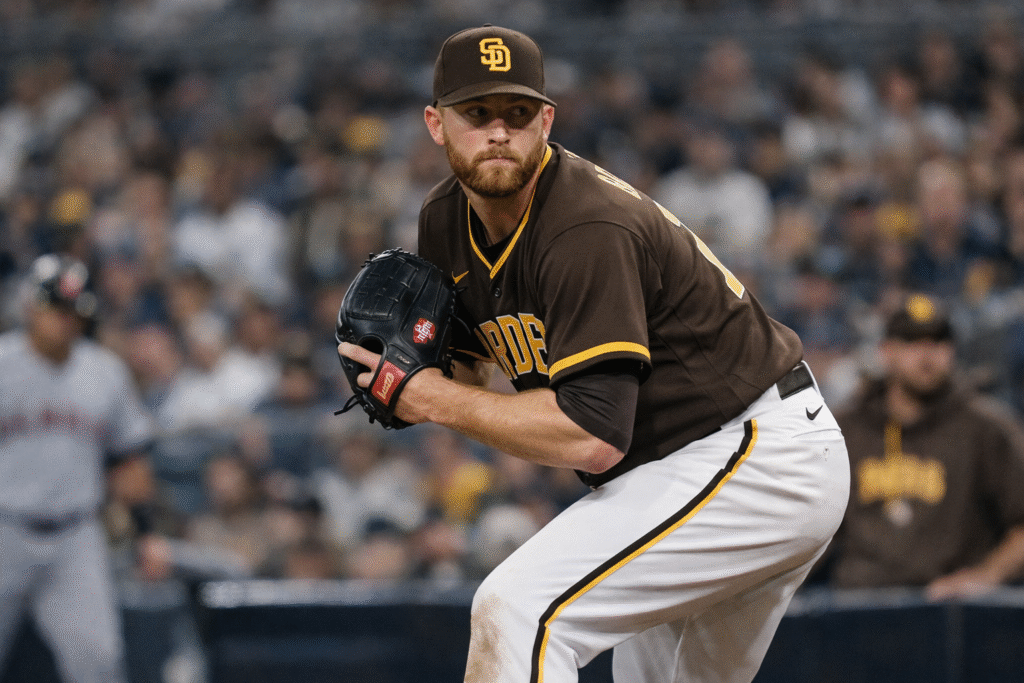
The bullpen has become one of baseball’s most strategic proving grounds, and the San Diego Padres are leaning into that reality with the emergence of Mason Miller, a hard-throwing reliever whose profile underscores the game’s shifting priorities. As detailed in the Wall Street Journal article “Mason Miller Is the Padres’ New Kind of Closer,” the right-hander represents a broader evolution in how teams deploy their most dominant arms at the end of games.
Miller’s appeal is rooted in overwhelming velocity and efficiency. Armed with a fastball that routinely reaches triple digits, he has quickly established himself as a high-leverage option capable of neutralizing both power hitters and contact-oriented lineups. The Padres’ decision to entrust him with closing duties reflects a growing willingness among contenders to prioritize pure stuff and strikeout potential over traditional experience in the role.
The Journal notes that Miller’s ascent comes amid a wider rethinking of bullpen hierarchies across Major League Baseball. Teams are increasingly less concerned with rigid inning assignments and more focused on leveraging their best relievers in the most critical moments. In this context, the closer title has become more fluid, even as it remains symbolically important within clubhouse dynamics and contract structures.
For San Diego, the move is also pragmatic. The Padres have invested heavily in their roster and are under pressure to convert talent into postseason success. Stabilizing the back end of the bullpen has been a persistent challenge, and Miller’s presence offers a potential solution built on dominance rather than matchup maneuvering. His ability to end innings without reliance on defensive support aligns with a front office philosophy that values certainty in high-stakes situations.
Yet Miller’s rise is not without risk. Power pitchers with extreme velocity often face durability concerns, and sustaining effectiveness over a full season can be difficult. The Journal highlights how teams must balance immediate impact with long-term health, particularly when relying on relatively young arms in critical roles. For the Padres, managing Miller’s workload will be as important as deploying him in the right moments.
His development also reflects broader changes in player usage and training. Modern pitchers are increasingly encouraged to maximize velocity and refine one or two elite pitches rather than cultivate a wide repertoire. Miller embodies this trend, relying heavily on a fastball-slider combination that prioritizes swing-and-miss outcomes. While effective, this approach places a premium on command and physical resilience.
The Padres’ embrace of Miller signals a willingness to adapt to the sport’s evolving landscape. As the Journal article suggests, the archetype of the closer is no longer defined by longevity or gradual progression into the role. Instead, it is shaped by immediacy—the ability to dominate in short bursts and secure victories in a game increasingly governed by marginal advantages.
Whether Miller can sustain his performance over time remains an open question, but his emergence has already reshaped expectations. For San Diego, he represents both a tactical asset and a symbol of modern bullpen philosophy, where power, precision, and flexibility converge at the most consequential moments of the game.