Hormuz Reopens as Narratives Clash Over Crisis
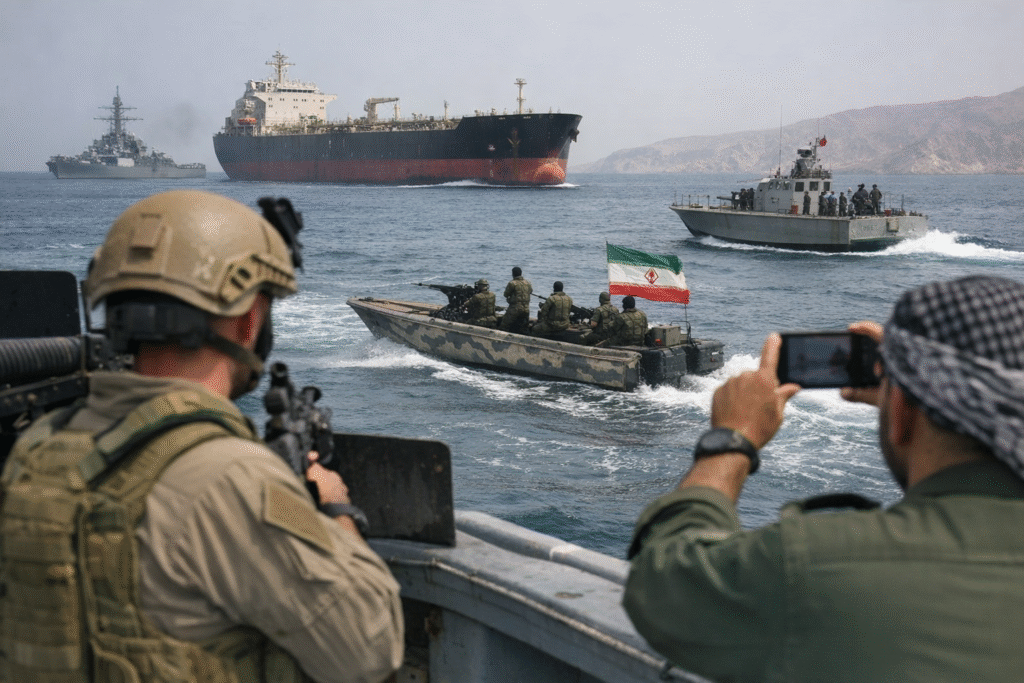
The Strait of Hormuz, one of the world’s most critical maritime chokepoints, has reopened following a period of heightened tension that briefly threatened global energy flows and underscored the fragility of geopolitical stability in the Gulf. While shipping traffic is resuming, the narrative surrounding the episode has become a contest of competing interpretations, as governments and commentators seek to shape public understanding of what transpired and why.
In an article titled “Hormuz Reopens and the Spin Machine,” published on the Substack platform by analyst Andrew Fox, the recent crisis is portrayed not only as a military and strategic episode but as an information battle in its own right. Fox argues that the aftermath has been marked by selective framing and political messaging designed to reinforce preexisting positions rather than provide a clear-eyed account of events.
The temporary disruption in the strait, through which roughly one-fifth of the world’s oil supply passes, triggered immediate concern in global markets. Insurance premiums for shipping spiked, and energy prices saw short-term volatility as traders reacted to the perceived risk of prolonged closure. Naval forces from multiple countries increased their presence in the region, emphasizing deterrence and the protection of commercial vessels.
Fox’s analysis suggests that official narratives emerging from various stakeholders have downplayed uncertainties and overstated control. He points to confident assertions from political leaders about deterrence success and operational superiority, contrasting them with the inherent unpredictability of maritime security incidents in contested waters. According to Fox, such messaging can obscure the structural vulnerabilities that remain in place.
The article highlights how different actors have sought to claim validation. For some governments, the reopening of the strait is being framed as evidence that firm postures and military readiness prevented escalation. For others, it is presented as proof that restraint and diplomatic signaling avoided a broader conflict. Fox contends that both interpretations simplify a far more complex reality, in which chance, restraint on multiple sides, and unclear red lines all played roles.
Fox also raises concerns about the longer-term implications of how the episode is being communicated. He argues that overly confident narratives risk fostering complacency among policymakers and the public, potentially underestimating the likelihood of future disruptions. In a region where miscalculation is a persistent danger, he suggests that acknowledging uncertainty and limits is essential for effective strategy.
The reopening of the Strait of Hormuz provides immediate relief to global energy markets, but the underlying tensions remain unresolved. As Fox’s analysis emphasizes, the way this ঘটনা is interpreted may shape future decisions as much as the event itself. Whether policymakers internalize a nuanced understanding or settle for politically convenient narratives could influence how the next crisis unfolds.