US Hormuz Blockade Threat Raises War Risk
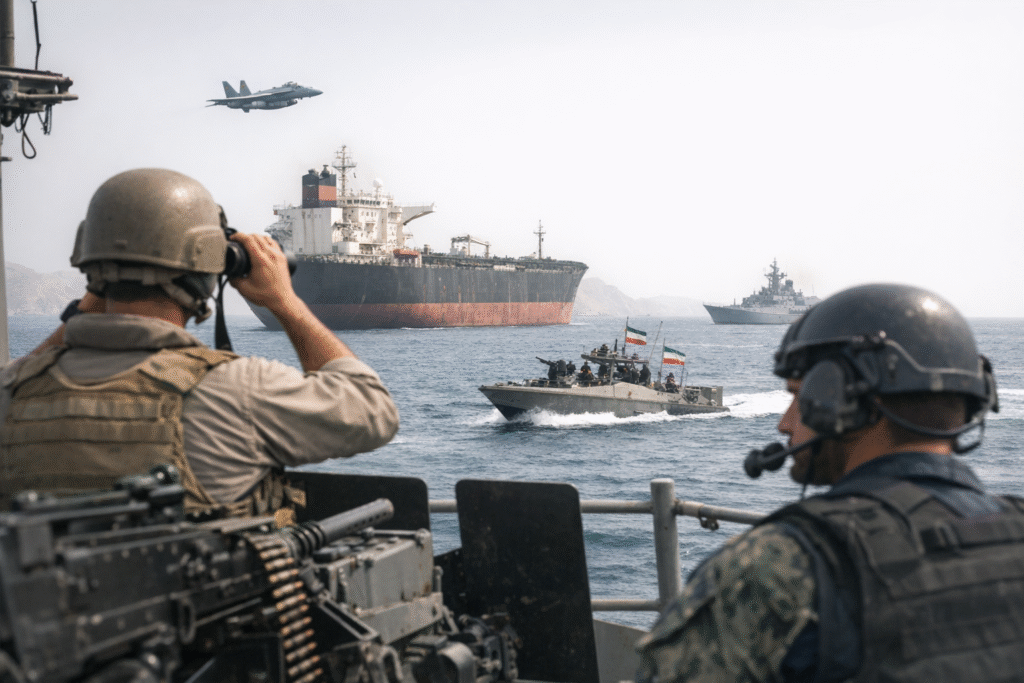
A reported U.S. threat to blockade the Strait of Hormuz has heightened tensions in an already volatile Middle East, raising concerns among military analysts and energy markets about the risk of a broader confrontation with Iran. The development, detailed in The Wall Street Journal article “U.S. Threat to Blockade Hormuz Sets Up Risky New Showdown,” underscores the strategic stakes surrounding one of the world’s most critical shipping lanes.
The Strait of Hormuz, a narrow waterway linking the Persian Gulf to global markets, carries roughly a fifth of the world’s oil supply. Any disruption to traffic through the strait has immediate implications for global energy prices and supply chains. According to the report published by The Wall Street Journal, U.S. officials have signaled that a blockade could be considered as part of a broader effort to counter Iranian actions in the region, a move that would mark a significant escalation in economic and military pressure.
Iran has historically viewed control of the strait as a key lever of influence, and its leadership has repeatedly warned that it could restrict passage in response to external threats or sanctions. A U.S. move to impose a blockade would likely be interpreted in Tehran as an act of direct confrontation, increasing the likelihood of retaliation through military or asymmetric means, including attacks on commercial vessels or regional infrastructure.
Security experts caution that such a scenario would carry substantial risks. Even a limited naval standoff could spiral into wider conflict, drawing in regional actors and potentially disrupting maritime insurance markets and commercial shipping patterns. The presence of multiple naval forces operating in close proximity has long been recognized as a flashpoint for miscalculation.
Markets have responded cautiously to the possibility of renewed instability. Oil prices, which are highly sensitive to developments in the Gulf, have shown signs of volatility as traders weigh the likelihood of supply disruptions. Analysts note that even the perception of heightened risk in the strait can drive price increases, independent of actual physical interruptions.
The report also highlights internal debate within U.S. policy circles about the feasibility and consequences of such a move. While some officials argue that a blockade could exert significant pressure on Iran’s economy, others warn that it could undermine international support and strain relationships with allies dependent on stable energy flows.
For many observers, the situation reflects a broader pattern of escalating brinkmanship between Washington and Tehran. The strategic importance of the Strait of Hormuz ensures that any confrontation there would reverberate far beyond the region, affecting global trade and security.
As tensions continue to mount, the prospect of miscalculation remains a central concern. Diplomatic channels, though strained, may prove critical in preventing a localized standoff from escalating into a wider and more disruptive conflict.