Winning War in 2026 Means Adapting Faster
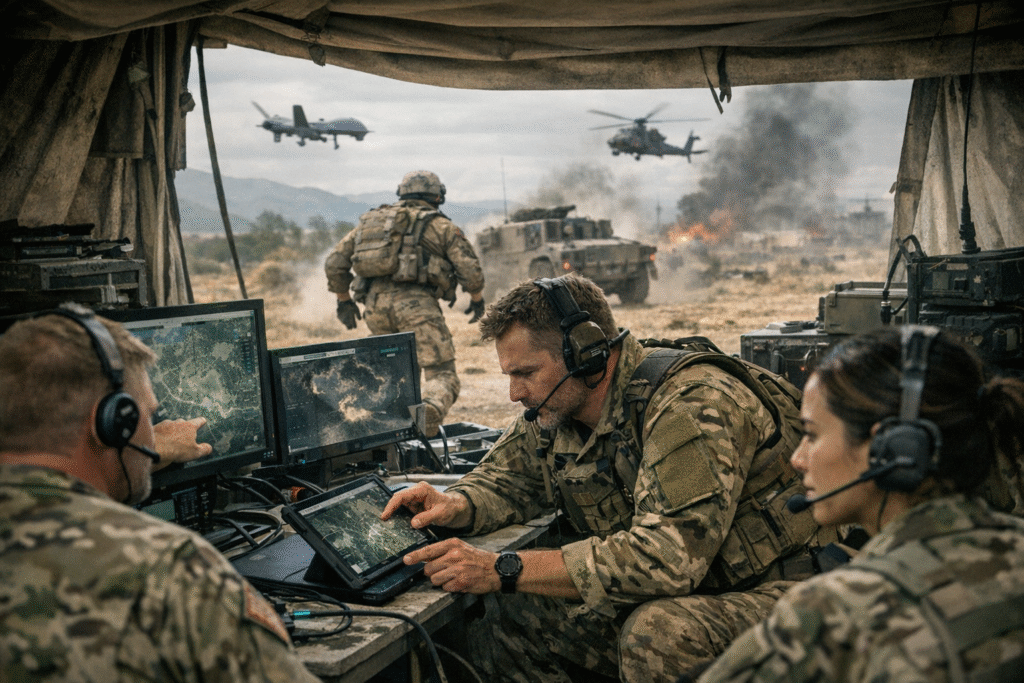
An emerging strand of military analysis is arguing that the character of warfare has shifted faster than many governments and institutions have been willing to acknowledge. In a recent essay titled “How do you win a war in 2026,” published on the Substack platform by analyst Andrew Fox, the author contends that traditional assumptions about mass, maneuver, and decisive battlefield engagements are being overtaken by a more fluid, technologically saturated model of conflict.
Fox’s central argument is that contemporary wars are no longer won primarily through territorial conquest or the destruction of enemy formations in the conventional sense. Instead, advantage now lies in the ability to integrate intelligence, surveillance, and rapid strike capabilities while maintaining resilience in the face of constant disruption. He points to the proliferation of inexpensive drones, real-time data networks, and precision munitions as leveling tools that allow smaller or less conventionally powerful forces to contest stronger adversaries.
The implication, Fox suggests, is a redefinition of what victory itself looks like. Rather than decisive battles that end conflicts swiftly, modern wars increasingly resemble prolonged contests of adaptation. Forces that can learn faster, update tactics in near real time, and sustain operations under conditions of persistent observation tend to gain an edge. In this environment, the traditional metrics of military strength, such as troop numbers or heavy equipment inventories, are less predictive of success than organizational flexibility and technological integration.
Fox also emphasizes the growing importance of information dominance. He argues that shaping perceptions, both domestically and internationally, is no longer a secondary aspect of war but a central line of effort. The ability to control narratives, obscure intentions, and degrade an opponent’s decision-making processes can be as consequential as physical battlefield outcomes. This reflects an expansion of conflict into domains that blur the boundary between civilian and military spheres, including social media, cyber operations, and economic pressure.
At the same time, the article underscores a key vulnerability inherent in this new model: dependence on complex systems. Forces that rely heavily on digital networks, satellite communications, and automated systems may gain speed and precision, but they also expose themselves to disruption. Fox suggests that resilience—defined as the capacity to continue operating despite degraded systems—may become the defining characteristic of successful militaries.
The essay arrives amid ongoing debates within defense and policy circles about how prepared major powers are for this evolving landscape. While some militaries have invested heavily in advanced technologies, critics argue that institutional inertia and legacy doctrines continue to shape planning in ways that are increasingly out of step with operational realities.
Fox’s analysis does not present a definitive formula for victory but rather a framework for understanding a moving target. Winning, in his view, may no longer mean imposing a clear and final outcome on an adversary. Instead, it may involve sustaining strategic advantage over time, denying opponents their objectives, and maintaining enough adaptability to navigate a conflict that is unlikely to follow a predictable path.
As governments reassess their defense strategies in light of recent conflicts and rapid technological change, the questions raised in “How do you win a war in 2026” reflect a broader uncertainty about the future of warfare. If Fox is correct, success will depend less on preparing for the last war and more on anticipating a form of conflict that is constantly rewriting its own rules.