Senate GOP Pushes Abraham Accords Defense Pact
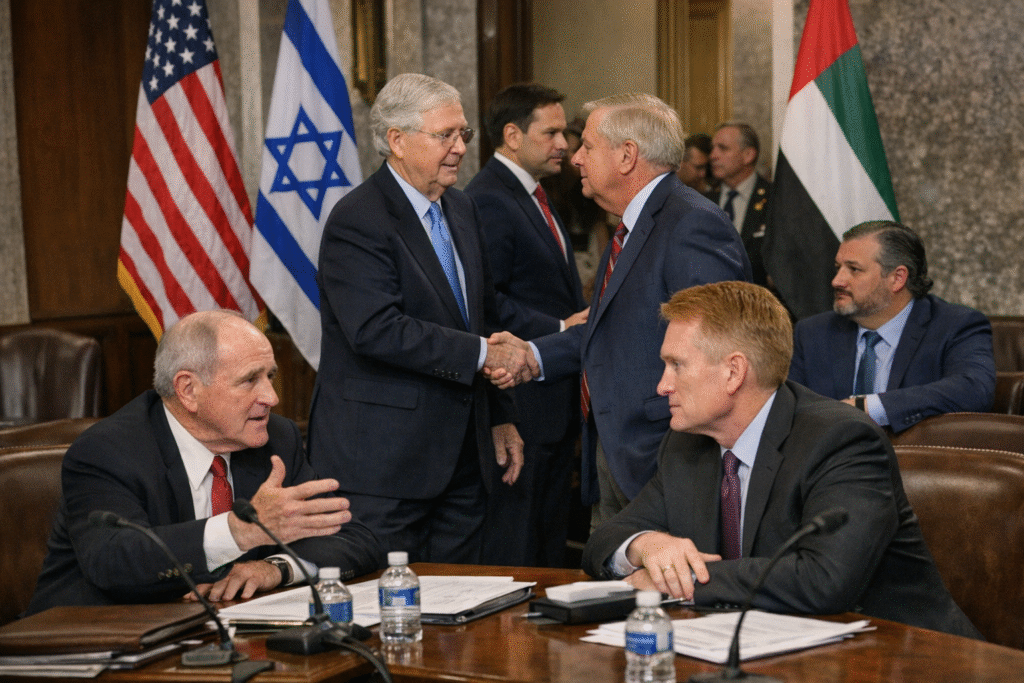
Senate Republicans have introduced legislation aimed at strengthening defense cooperation among countries that are part of the Abraham Accords, reflecting a broader push to formalize and expand security ties between Israel and its Arab partners.
According to a report published by the Washington Free Beacon, titled “Senate Republicans Introduce Bill Boosting Defense Cooperation Between Abraham Accords Members,” the proposed measure seeks to deepen military coordination, intelligence sharing, and joint strategic planning among the United States and participating Middle Eastern nations. Lawmakers backing the bill argue that expanding these partnerships would bolster regional stability while countering shared threats, particularly from Iran and affiliated groups.
The legislation would require the Pentagon and the State Department to develop a comprehensive strategy for enhancing multilateral defense cooperation among Abraham Accords signatories, which include Israel, the United Arab Emirates, Bahrain, and Morocco. It also envisions greater integration of air and missile defense systems, a step proponents see as critical amid escalating concerns over missile and drone attacks in the region.
Supporters of the bill frame it as a natural evolution of the Abraham Accords, the normalization agreements brokered during the Trump administration that reshaped diplomatic relations between Israel and several Arab states. While those agreements initially focused on political and economic ties, Republican lawmakers now argue that a more structured security framework is necessary to sustain and expand their impact.
The proposal emphasizes the role of the United States as a central coordinator of these efforts, underscoring Washington’s continued strategic interest in the Middle East despite shifting global priorities. Advocates say that by institutionalizing defense collaboration, the United States can reduce the likelihood of conflict while ensuring that allied nations are better equipped to share the burden of regional security.
Critics, however, may question whether formalizing such arrangements risks heightening regional tensions or complicating U.S. diplomatic flexibility. There are also potential challenges related to interoperability, intelligence sensitivities, and differing threat perceptions among partner countries.
Still, Republican sponsors of the bill contend that the benefits outweigh the risks, presenting the initiative as both a deterrent against adversaries and a mechanism for reinforcing alliances. As the legislation moves forward, it is likely to prompt broader debate in Congress over the future of U.S. engagement in the Middle East and the role of multilateral defense frameworks in shaping that strategy.