Democrats Reassess Senate Leadership Strategy
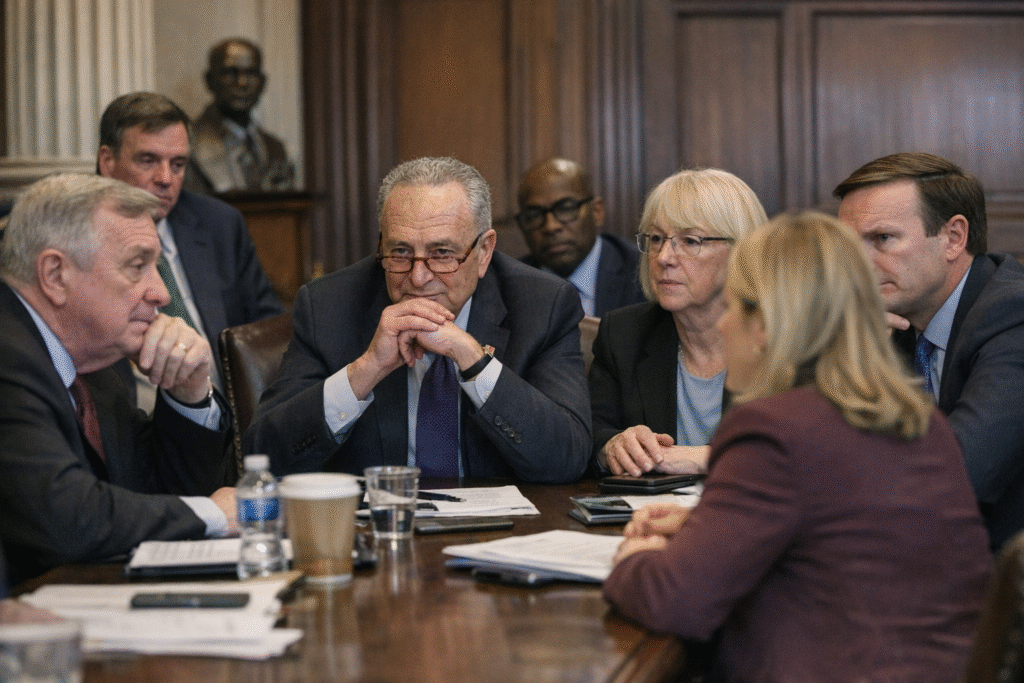
Discussion within Democratic circles about Senate leadership has begun to surface more openly, reflecting a mix of electoral anxiety and strategic recalibration ahead of upcoming political cycles. According to reporting published by The Wall Street Journal in the article titled “Chuck Schumer Faces New Questions About His Leadership,” conversations—once confined to private political circles—are increasingly entering the public domain, signaling a moment of introspection for Senate Democrats.
At the center of these discussions is Senate Majority Leader Chuck Schumer, whose tenure has been defined by narrow margins, intense partisan polarization, and the challenge of holding together a diverse caucus with competing priorities. While Schumer has successfully maintained unity on several key legislative efforts, some Democratic strategists and donors are reportedly questioning whether the party’s current leadership structure is best positioned to navigate an evolving political landscape.
The Wall Street Journal reports that concerns are not necessarily rooted in a single legislative failure, but rather in a broader sense that the party may need to recalibrate its leadership approach as it confronts shifting voter dynamics and prepares for future elections. The debate reflects deeper tensions between the party’s establishment wing and voices pushing for generational change and a more aggressive policy agenda.
Supporters of Schumer point to his experience, fundraising capabilities, and skill in managing a narrowly divided Senate as critical assets that should not be underestimated. They argue that leadership stability is especially important during periods of political uncertainty. Critics, however, suggest that new leadership could bring renewed energy and a clearer strategic message to voters who have shown signs of skepticism toward entrenched political figures.
The conversations described in the Journal’s reporting stop short of a coordinated effort to replace Schumer, but they underscore a willingness among some Democrats to at least contemplate alternatives—an unusual development for a party that has historically emphasized unity in its Senate ranks.
As Democrats weigh their future strategy, the discussion around leadership reflects broader questions about identity, direction, and electoral viability. Whether these early-stage conversations translate into concrete action remains uncertain, but they indicate that even at the highest levels of party leadership, assumptions are being tested in response to a rapidly changing political environment.